Guides
How to care for an aglaonema in a pot
Care difficulty3 out of 10
Pay attention to watering and growing conditions.
Editorial guide, with suitable light and climate. 0: very easy; 10: very delicate. More stars mean more care.
Aglaonemas need indirect light, stable warmth and watering once the top of the potting mix has dried. Wet the root ball, let it drain and empty the outer pot. Some shade is tolerated, but a lightless room is unsuitable. Avoid cold draughts and do not add water just because a leaf turns yellow. The plant is toxic if eaten.
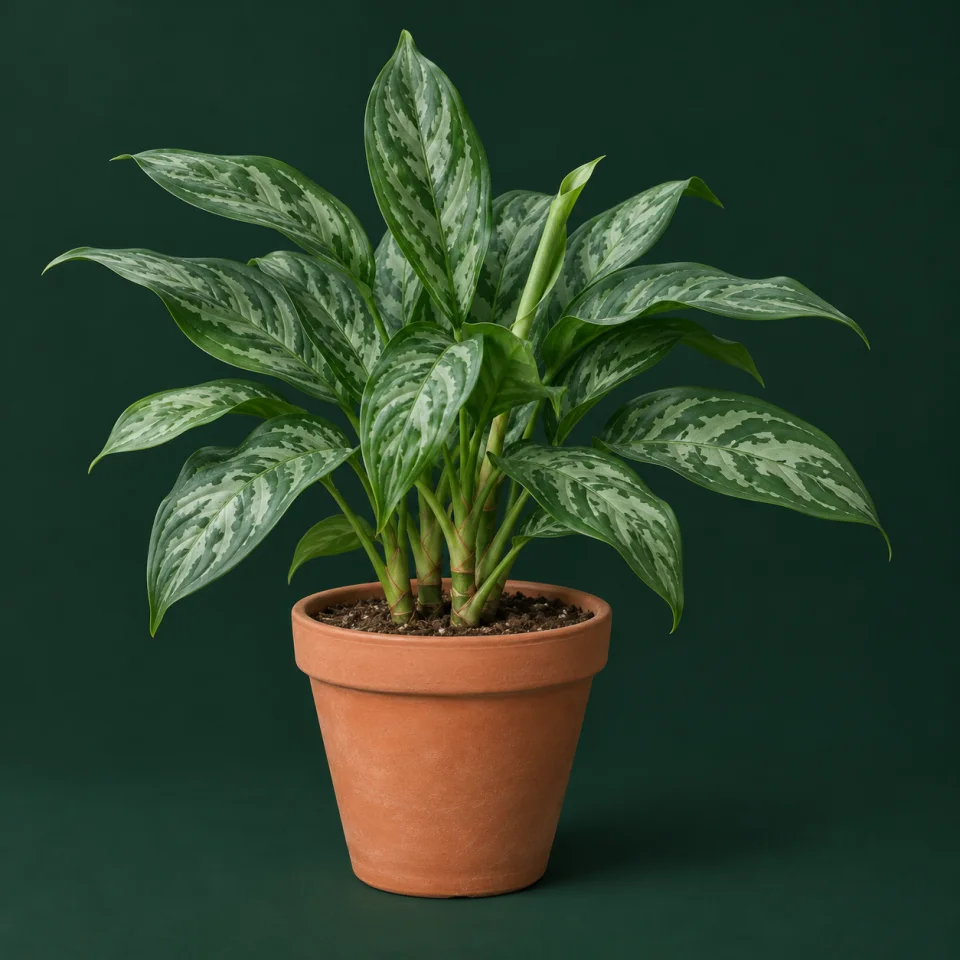
Botanical reference: Aglaonema commutatum
Check the label before choosing
This guide covers Aglaonema commutatum, with elongated green leaves and silver markings. Shops also sell other species and many colourful hybrids. Not every red aglaonema belongs to this species, and a single picture cannot name a cultivar. Choose firm stems and leaves without spreading wet-looking patches. Leave enough room for the foliage to open out.
Enough light and steady warmth
Choose a bright window with indirect light, away from harsh sun on the leaves. Low-light tolerance does not make a windowless bathroom a good position. If growth is very slow, check its location first. Keep it in a warm, stable room away from cold glass, outside doors and air conditioning. Protect it on the journey home from the shop in cold weather too.
Let the top dry, not the entire pot
Feel a little way into the mix and compare the weight with a freshly watered pot. Once the upper few centimetres are dry, water slowly until excess drains through the holes. Empty the saucer or outer pot afterwards. The inside may still be damp even when the surface looks pale; check before adding water. Low light and slow growth often lengthen the interval. Do not wait until the entire root ball is parched either.
Airy mix and a sensible pot size
Use houseplant mix that holds moisture without becoming a dense mass. Choose a stable pot with real drainage; a closed decorative container is only an outer cover. Repot when roots fill the space or the mix loses its structure, preferably during growth. Move up a modest size and keep the planting depth. You need not replace the whole pot every year or force the roots apart.
Feed lightly and wipe the leaves
While new leaves grow, consider foliage-plant fertiliser according to its label and the nutrients already in the mix. Extra feed cannot replace light. Excess salts can damage edges and tips; do not combine fertilisers to fix one leaf. Reduce or pause feeding when growth stops. Remove dust with a soft damp cloth and move it away from very dry air. Misting cannot replace a suitable position or justify soggy roots.
It does not need constant pruning
Remove dried leaves with a clean tool without pulling off healthy tissue. Do not routinely cut every stem back to rejuvenate it. A modest spathe-and-spadix flower may appear; it is not a faulty new leaf. You can remove it if you prefer foliage, without expecting a longer life as a result. Consider division at repotting only if there are sections with their own roots, rather than tearing a small plant apart.
Check yellowing or soft growth first
An old leaf may be replaced naturally. Several yellow leaves, soft stems or rapid decline call for moisture, drainage and recent cold checks before fertilising. Brown tips also have more than one possible cause. Inspect undersides and stem joints for insects or damage. Separate a plant with spreading patches and seek identification; a photo of one dry edge is not enough to prescribe treatment.
Absences, trimmings and pets
Leave a simple instruction for anyone helping: check the mix and empty excess water. Do not submerge the plant to cover several days away. Keep it away from children and animals that chew leaves, stems or fruit. It is toxic if eaten; wear gloves when cutting, keep sap away from eyes and mouth, and wash your hands. Consult a vet after suspected pet chewing or ingestion, without home remedies.
Guides to help with your decision
Which flowers to give to someone with cats or dogs
Flowers for a home with cats or dogs: options to consider, checking the whole bouquet and precautions with lilies, holly and mistletoe at Christmas.
How to care for a peace lily without waterlogging its pot
Light, drooping leaves, watering, green spathes and repotting: practical peace lily care with precautions for children and pets.
How to care for an arrowhead plant in a pot
Light, watering, potting mix and pruning for Syngonium podophyllum, with help choosing between trailing stems and a climbing support.
How to care for a dieffenbachia in a pot
Light, watering, bare stems, repotting and pruning for Dieffenbachia seguine. Clear care for its large leaves and irritating sap.
How to care for a polka dot begonia in a pot
Filtered light, moist roots without waterlogging and moving air for Begonia maculata. Supports, trimming and signs to check before reaching for water.
Frequently asked questions
Is it a plant for a dark corner?
It can tolerate less light than some plants, but still needs light to maintain itself and grow. Choose indirect brightness and adjust watering to actual use. Its tough reputation does not make a room without adequate lighting suitable.
Does Chinese evergreen always mean commutatum?
No. That common name covers different aglaonemas. Check the species and cultivar on the label; some commercial varieties have hybrid origins. This guide does not make colour, size or cold tolerance identical across the genus.
Sources and what they support
- NParks · Aglaonema commutatum
Identity, green/silver leaves, diffuse light, overwatering and ingestion hazard. Shade tolerance in Singapore is not advice for a lightless room.
- New York Botanical Garden · Aglaonema care
Water through and discard excess, let the top dry; no direct sun and repot as needed. No universal final pot size or calendar.
- UF/IFAS · Interior care of Aglaonema
Interior care: chilling sensitivity, moisture without saturation, excess salts and cleaning/minimal pruning. No production recipes, monthly doses or longevity promises copied.
- Universität Zürich · Aglaonema commutatum
Toxicology profile naming Aglaonema commutatum. Modestum is not treated as a taxonomic synonym or a different species profile as the sole proof.
How we put these guides together
We review dates, care and recommendations to help you plan each gift.
Spotted something we should review? Contact Agenda Floral.