Flowers
When to give cymbidium orchids
For an anniversary or a thank-you gift I would choose a cut spike in a stable vase. The recipient can put it on display without taking on a plant. If they enjoy growing orchids you could give a potted cymbidium instead. Before ordering check which format they want and where they would put it.
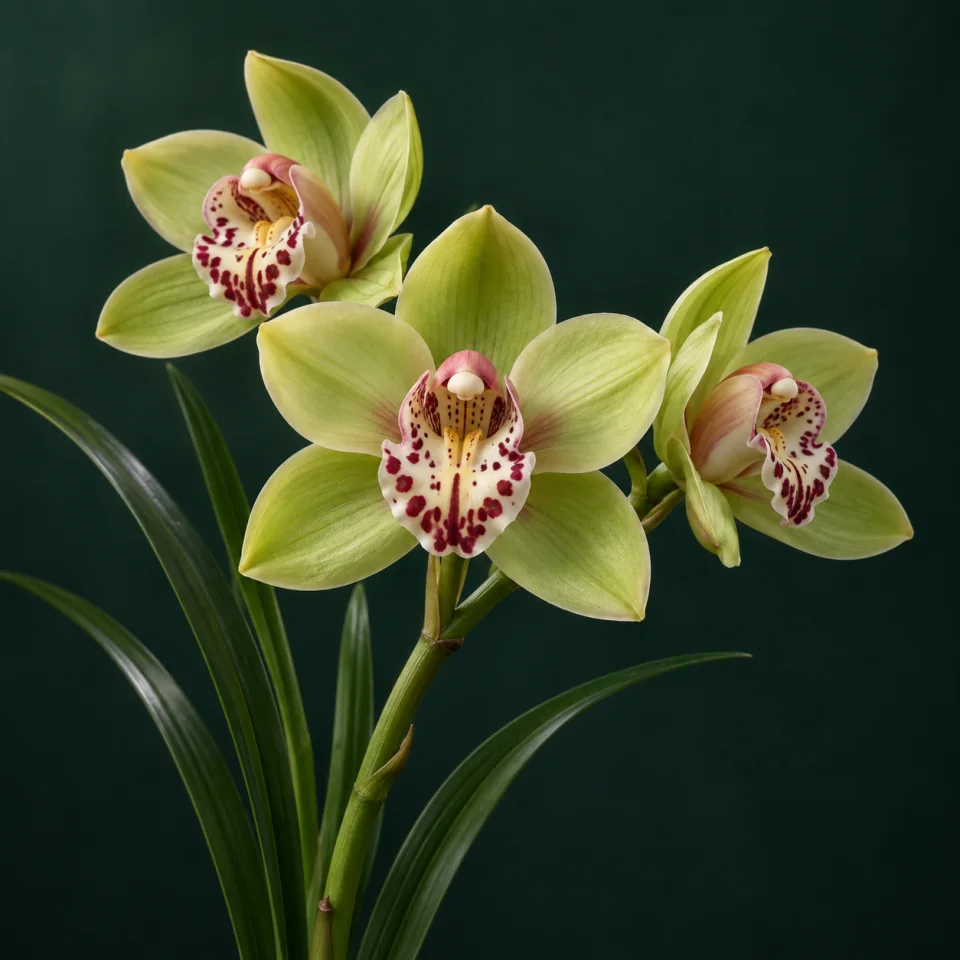
Botanical reference: Cymbidium
What you are giving
Cymbidium is an orchid genus. Its flowers grow on spikes and there are different species and hybrids. Check the label because a Phalaenopsis orchid is not a cymbidium.
A cut spike lets you give a finished arrangement. A plant also brings a care decision. If you do not know whether the recipient wants that responsibility ask first or choose cut flowers.
Open flowers for the day of delivery
For a cut spike look for at least two open flowers. If you need the arrangement for a particular celebration ask for it to look ready to give. Do not rely on every closed bud opening in time.
Ask which colours can be supplied for your date. You can name a favourite shade and agree on an alternative. The guide image helps explain the gift idea but does not guarantee a particular variety at the florist.
An order for a small table
You could ask: “I would like to give cymbidium for an anniversary. It will go on a small table and I would like it delivered in a vase. I am looking for one main spike with little foliage and open flowers for the delivery day.”
Ask for the height and width of the finished arrangement before confirming. A lovely vase can be awkward if the spike blocks the view across the table. If you want other flowers alongside it leave each one visible.
Preparing the journey and handover
Protect the flowers without squeezing them and avoid touching their centres. Removing the small pollen masses from the centre can make the flower deteriorate sooner. Secure the container so it cannot tip over or hit the spike. If the stem arrives in a water tube ask how to transfer it to a vase on arrival.
Arrange a time when someone can receive it and a place for it to go. For a surprise delivery you can ask someone close to the recipient whether there is room. The container and journey matter as much as the colour.
Caring for a cut spike
Use a clean vase and recut the stem base with a sharp tool before placing it in water. Remove leaves that would sit below the waterline. If flower food is supplied follow the amount on the packet.
Check the water daily and replace it if it is cloudy or smells. Keep the arrangement away from heat sources. Its lifespan depends on the condition of the flowers and their handling. Do not promise a number of days when giving it.
Choosing a position for a potted cymbidium
Start by identifying the type of plant. Large-flowered standard hybrids are usually grown in cool conditions; miniatures include both temperate types and others needing more warmth. The location advice below is for cool-growing standards, not every Cymbidium.
In winter, look for plenty of light and a cool setting, around 10–14 °C for those hybrids. A sheltered glazed porch can work if it maintains those conditions at night too. A warm room with little light may sustain leaves without providing the conditions for another flowering.
To produce new spikes, standards benefit from nights cooler than the days. This does not mean exposing them to frost. During mild weather they can stand outside in a sheltered position with light shade, provided you can protect them when cold weather arrives. Acclimatise them gradually to avoid scorching in strong sun.
For someone with a cool glazed porch, you could order it like this: “I’m looking for a potted cymbidium for this space. I’d like to know the hybrid and its growing temperatures so I can tell when it can go outside and when it needs protection.” If they only have a warm room, a cut spike prepared in a vase may be a better fit.
What to do with the plant after flowering
Once every flower on a spike has faded, cut that spike off at the base with a clean tool. Keep the green leaves and firm pseudobulbs, the swellings at the base where reserves are stored. An old pseudobulb losing its leaves does not mean it needs removing if it is still healthy.
Keep checking the moisture in the potting mix. During growth it needs regular watering with good drainage; reduce watering in cooler conditions when growth slows. Let the water drain and empty the outer pot. The end of flowering is not a signal to dry the plant out completely.
It does not need repotting every time flowering ends. Consider it if the mix has broken down or the plant is outgrowing its container; when necessary, repot after flowering and before new growth. Use a cymbidium mix that holds moisture without becoming soggy, and avoid moving it into an oversized pot.
If the recipient has pets
Cymbidium is a low-risk choice for bouquets in homes with pets. That does not mean the whole arrangement is suitable. Check the supporting flowers and foliage before ordering.
Keep it out of reach. Even plants on that list may cause digestive upset if eaten. If your pet eats part of the arrangement or develops symptoms contact a vet and keep the names of its components.
When we suggest this flower
Compare flowers to choose the format, colours and care that suit the occasion.
Christmas
Spain · Nationwide
Main flower in our selectionOur suggestion for an arrangement with defined lines.
How to choose flowers for a wedding
Start choosing wedding flowers by deciding what you need. As a guest ask before bringing a bouquet. If you are planning the wedding treat the handheld bouquet, ceremony arrangements and table flowers as separate pieces. That lets you agree sizes and budget with the florist without asking one design to do everything. Then choose colours and flowers you enjoy and confirm what can be prepared for your date.
Montecarlo Orchid Festival: choosing a plant to give as a gift
To give an orchid bought at Montecarlo’s festival, choose a plant that suits the recipient’s home. Ask for its name and check the specimen with the seller before deciding by flower colour. It also helps to know whether the recipient wants flowers on arrival or would rather grow a young plant. That conversation can help more than choosing only by how striking a plant looks in the exhibition.
Guides to help with your decision
When to give a phalaenopsis orchid
Phalaenopsis to give and care for: light, watering, spikes and aerial roots. When to repot, which mix to use and how to choose a pot.

Which flowers to give for an anniversary
Which flowers to give for an anniversary and how to order around a memory. Compare roses, ranunculus, callas and proteas and agree on substitutions.
Which flowers to give as a thank-you
Which flowers to give to thank a friend, colleague or professional. Ideas for the card, a group gift and an agreed handover.
How to care for a bouquet when it arrives
Bouquet care on arrival: water, stem cutting, flower food and mixed flowers. What to check if it looks limp and how to keep the flowers still doing well.
Should you give a bouquet or a potted plant?
Choose between a bouquet and a plant according to space and care. Compare houseplants with a rose bush for Sainte-Catherine in France on 25 November.
How to transport a bouquet by car or plane
How to carry a bouquet, a potted plant or dried flowers without crushing them. Packing, water and checks for flights and bringing plants into your destination.
Which flowers to give to someone with cats or dogs
Flowers for a home with cats or dogs: options to consider, checking the whole bouquet and precautions with lilies, holly and mistletoe at Christmas.
Frequently asked questions
Is a cut spike or potted cymbidium a better gift?
A spike in a vase makes delivery easier and does not add growing responsibilities. A pot makes sense if the recipient wants a plant and you can confirm they have a suitable place.
Can I order it with all the buds closed?
For a gift being handed over that day I would choose flowers that are already visibly open. Agree on the finished appearance with the florist rather than relying on later opening.
Will a cut spike become a plant?
A cut gift is a flowering part removed from the plant. If you want to give a cymbidium to grow ask for a rooted potted plant with care instructions.
Do all orchids need the same care?
No. Confirm the genus and variety before using a care guide. Even within Cymbidium different types have different temperature needs.
Does it have to be a romantic gift?
No. You can choose it to say thank you or celebrate an achievement if it suits the recipient’s taste. A short card explains the reason without assigning the flower a universal meaning.
Sources and what they support
- NC State Extension · Cymbidium
Genus identity, pseudobulbs and standard/miniature types with different temperature needs; not all miniatures need warmth or all Cymbidium the same cool regime.
- UC Davis · Orchids
The postharvest guide recommends spikes with at least two open flowers and protection against flower damage. Removing pollinia can speed up deterioration.
- Iowa State Extension · Cut flower care
Explains general cut flower care with a clean container, fresh cut and water checks.
- RHS · Growing cymbidium orchids
Cool, bright cultivation of commonly grown cymbidiums, outdoor acclimatisation, drainage and removing a spike at its base once its flowers finish; repotting after flowering when needed. UK months are not extrapolated.
- ASPCA · Pet-safe bouquets
Includes cymbidium in its selection of flowers for pet-safe bouquets and warns that eating plants can cause digestive upset.
- American Orchid Society · Cymbidium Culture
Common large-flowered hybrids and cool nights, with more warmth-tolerant exceptions; repot only when needed after flowering. March 2009 article, not a universal temperature regime or household fertiliser recipe.
- Orchid Society of Great Britain · Cymbidium care
Distinguishes standards, miniatures and species; retain old pseudobulbs unless shrivelled and dead because they store reserves. Moist, draining cultivation, acclimatisation and avoiding unnecessary repotting; its frequencies and months are not universal.
How we put these guides together
We review dates, care and recommendations to help you plan each gift.
Spotted something we should review? Contact Agenda Floral.