Guides · Argentina
Montecarlo Orchid Festival: choosing a plant to give as a gift
To give an orchid bought at Montecarlo’s festival, choose a plant that suits the recipient’s home. Ask for its name and check the specimen with the seller before deciding by flower colour. It also helps to know whether the recipient wants flowers on arrival or would rather grow a young plant. That conversation can help more than choosing only by how striking a plant looks in the exhibition.
Two festivals in one visit
The National Orchid Festival and Provincial Flower Festival share Parque Vortisch in Montecarlo, Misiones, Argentina. The 2026 edition is announced for 8–12 October. You can plan a single visit for both.
The 2026 programme schedules public pavilion opening for Thursday 8 October at 7pm. This applies to the first day. For other days, check the current programme and admission conditions before setting off. Do not use another edition’s hours to plan your arrival.
Distinguish exhibition plants from plants for sale
Misiones’ Tourism Ministry announces a commercial fair with nurseries and orchid growers. There is also a competitive exhibition. If a plant catches your eye, ask whether it is for sale and which specimen you would receive. Do not assume every display plant can be bought.
A specimen can help you explain the look you want without having to find an identical one. Compare the plants available for your gift and their care needs. An award-winning flower does not by itself tell you whether you can care for it at home.
Ask for the name before comparing care
Ask for a label with the plant’s name and its hybrid or variety name if known. “Orchid” is too general for looking up instructions. Also ask whether that specimen has flowered before and whether any photos show that plant or are a reference for the flower it might produce.
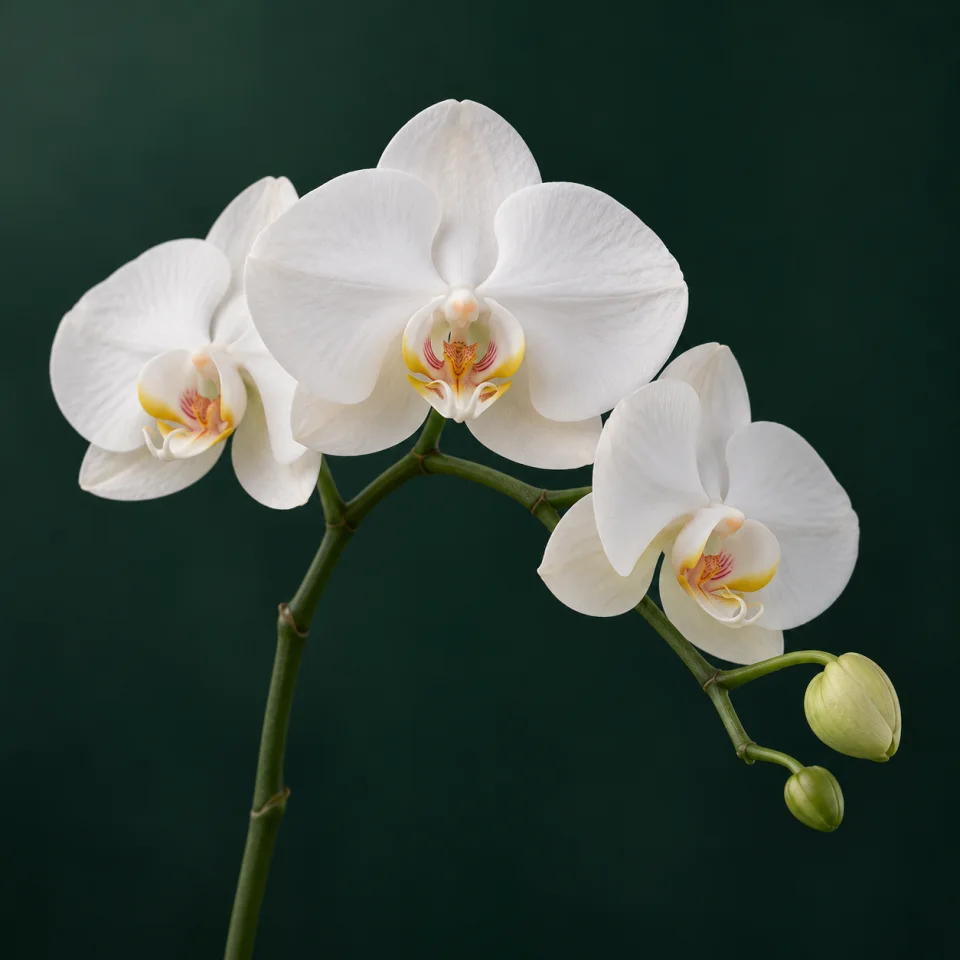
Phalaenopsis and cymbidium are two examples from our catalogue for comparing questions. The American Orchid Society recommends little or no direct sun for phalaenopsis. The RHS describes bright indirect light and cooler conditions for cymbidium than for many indoor orchids. Check the particular specimen’s needs and the stall’s stock before choosing. The cover illustrates a phalaenopsis rather than showing the fair’s inventory.
Look at the whole plant, not just the flowers
The American Orchid Society recommends checking foliage, flowers and buds. Ask the seller to show you the specimen and any visible roots without taking it apart. Another of its recommendations is to choose a plant established in its pot. If it wobbles noticeably, ask whether it has just been repotted and what attention it will need.
If you see insects, soft areas or spots that concern you, ask for an explanation before buying. An isolated blemish does not by itself establish that a plant is diseased. For a gift, you can compare another specimen when its condition remains unclear. A visual check helps you choose but does not guarantee there are no hidden problems.
Choose between flowers now and a plant to grow
If you want flowers visible at handover, look for a specimen already in bloom and ask about unopened buds. The AOS suggests considering these too when buying. Do not turn that criterion into a promise about how many weeks the flowers will last.
A young plant without flowers may interest someone who enjoys growing orchids. Ask about its growth stage and what it needs before flowering. If you want a flowering gift for an upcoming date, do not base your purchase on an estimate the seller cannot make specific.
Specify the location and the gift’s care instructions
You could say: “I want to give an orchid to someone just starting to care for plants. They have a bright window without direct sunlight and would like to receive it in bloom. Which specimen suits that spot, and how will they check whether it needs water?” Add the temperature of that space and the room available. If none of the options fits, you can keep the idea and choose the gift with the recipient.
For phalaenopsis, the AOS recommends thorough watering and watering again when the medium is nearly dry, without allowing it to dry out completely. Do not pass this on as an instruction for every orchid. Ask to be shown how to check the chosen plant’s medium and to have its care instructions written alongside its name.
What to bring home besides the plant
Keep the label and instructions with the gift. Before paying, check the overall size and ask how to protect the flower spikes on the way home. Explain whether you are travelling by car or public transport so you can agree on packaging you can carry comfortably.
You can add a card with the reason for the gift and leave care instructions on a separate note. The recipient gets a personal gesture as well as the information to look after it. For a future visit, confirm the next edition through official channels rather than automatically carrying over the 2026 dates.
Which flowers to choose
We suggest flowers that may suit each occasion. Where a custom is documented, we explain it separately. For a personal gift you can choose another flower if you know the recipient will like it more.
Cymbidium orchid
Before giving a cymbidium, decide whether you want a cut spike or a plant. The first can form part of an anniversary or thank-you bouquet. The second needs space and someone who wants to care for an orchid. Both are suggestions you can adapt to the recipient’s preferences.
Phalaenopsis orchid
A phalaenopsis can make an anniversary or new-home gift when the recipient wants a plant to care for. It can also accompany a thank-you. Check that there is a suitable bright position and room for the pot and flower spikes. If they prefer flowers without ongoing plant care, choose a bouquet.
Guides to help with your decision
Should you give a bouquet or a potted plant?
Choose a bouquet or plant around taste, light and daily routines. Compare phalaenopsis and kalanchoe care and use practical delivery examples.
What to write in a card with flowers
Ideas for writing a flower card in your own words. Examples for birthdays, thanks, anniversaries and sensitive moments.
Frequently asked questions
Are the Orchid and Flower Festivals in different places?
In the 2026 edition, both share Parque Vortisch in Montecarlo, Misiones. A visit takes place locally even though their names include national and provincial designations.
Can you buy the orchids on display?
There is a commercial fair, but that does not mean every plant in the competition pavilion is for sale. Ask which specimen is available and what your purchase includes.
Is a label saying “orchid” enough?
Ask for the most precise name the seller can provide and instructions for that plant. This lets you look up care without accidentally applying advice for another genus.
Is a plant without flowers a poor purchase?
Not necessarily. It may suit someone who wants to grow it. If you need visible flowers at handover, choose a specimen already in bloom rather than promising a flowering date for a young plant.
Will an award-winning plant adapt better to my home?
The award does not establish whether you have the light, temperature and space it needs. Compare those conditions with its future location before buying.
What information should go with the gift?
The plant’s name and instructions for checking its growing medium, watering and placement. Also keep the nursery’s details if provided so you can ask questions later.
Sources and what they support
- Gobierno de Misiones · Programa 2026
Confirms both festivals on 8–12 October 2026, pavilion opening at 7pm on 8 October and the competitive exhibition.
- Ministerio de Turismo de Misiones · Feria y recinto
Places the festival at Parque Vortisch in Montecarlo and announces a commercial fair with nurseries and orchid growers. Does not establish stock by genus.
- American Orchid Society · Elegir al comprar
Recommends checking the plant, leaves, flowers and buds before buying. Does not guarantee a fixed flowering duration.
- American Orchid Society · Planta establecida y revisión
Recommends an established plant in its pot and checking for possible pests. An isolated blemish does not by itself establish disease.
- American Orchid Society · Cuidados de Phalaenopsis
For Phalaenopsis, advises little or no direct sun and thorough watering when the medium is nearly dry. These are not rules for every orchid.
- RHS · Condiciones de Cymbidium
Describes bright indirect light and cooler conditions than for many indoor orchids. Its UK calendar does not determine Argentine stock.
How we put these guides together
We consult institutional sources to check dates and customs. For plant facts, we use horticultural sources. Our gift ideas start with each flower’s appearance and the recipient’s taste. A shop link documents a particular offer. It does not prove that a flower is popular or part of a tradition. We keep adding to this selection rather than claiming to cover every species.
Spotted something we should review? Contact Agenda Floral.