Occasions
International Women’s Day in the UK: flowers for 8 March
United Kingdom · Nationwide
International Women’s Day is on 8 March. In 2027 it falls on a Monday, the day after Mothering Sunday on Sunday 7 March, so the two are easy to mix up. It is not a bank holiday anywhere in the UK. Flowers are a personal, optional gesture: we suggest purple anemones with white and green, the suffragette colours, or her favourite colour, with a card about something she has done.

Upcoming calendar dates
United Kingdom
Agenda Floral, with you
Add it to your calendar
Subscribe to receive our updates, or download the .ics file to import a copy. The copy will not receive later changes.
Use in Google Calendar or another calendar
Open Google Calendar on a computer. Beside “Other calendars”, click “+” and choose “From URL”. Paste the address below to add the subscription. You can then view that calendar on devices using your account.
Guide to adding Agenda Floral to Apple and Google Calendar
Your calendar app decides when to refresh a subscription. Importing the file again may duplicate events. Agenda Floral adds no alarms; you can check alerts in your calendar settings.
Two dates in one weekend
In 2027 Mothering Sunday falls on 7 March, three weeks before Easter Sunday on 28 March. International Women’s Day comes the next day, Monday 8 March. One date moves with Easter every year; the other is always 8 March. This year they land on consecutive days.
They mark different things. Mothering Sunday is for mothers and the people who have mothered us. 8 March is about women’s rights and equality. If both are for your mum, give the flowers on Sunday and keep Monday for a call or a card about what she has achieved rather than her role as a mother. Our Mothering Sunday guide has its own ideas.
Monday 8 March 2027: a normal working day
8 March is not a bank holiday in England, Wales, Scotland or Northern Ireland. The March bank holidays in 2027 are St Patrick’s Day on the 17th, in Northern Ireland only, and Good Friday on the 26th. On Monday 8 March offices and shops open as usual.
For an office delivery, ask for it to arrive in the morning, in water or in a vase. If you are buying flowers for Mothering Sunday and 8 March at the same time, collect both on Saturday 6 March and keep the second bunch in water in a cool room until Monday.
Purple, white and green: the suffragette colours
In 1908 the WSPU, the militant votes-for-women group whose members came to be called suffragettes, adopted purple, white and green. Emmeline Pethick-Lawrence explained them: purple for dignity, white for purity and green for hope. The colours appeared on sashes, badges and banners, and British museums still hold objects that carry them.
Using those three colours links your flowers to the history of women’s suffrage in the UK. Purple anemones, a few white flowers and plenty of green foliage are enough to recognise the palette without a special arrangement. It is our suggestion, not a custom: if she loves yellow, give her yellow.
Choosing the flowers
The anemone on our cover has purple flowers with a dark centre and looks good in a small bunch. Iris adds height and a blue-purple tone. Stock adds scent and comes in white and lilac; if the bouquet is going to a shared office, keep it small so the fragrance doesn’t bother anyone.
For a desk, a small bunch in a narrow vase is enough; for home you can go bigger. When it arrives, trim the stems a little and put it in clean water, away from radiators. Our cut-flower care guide covers the rest.
At work and on the card
For a colleague, one bouquet from the team with a card where each person writes a specific line works best. If your workplace holds an event for 8 March, flowers can go with it, not replace it. You could order: “A small bunch of purple anemones and white stock with green foliage, in water, for delivery on Monday 8 March before 10 am at this address.”
On the card: “Thank you for seeing the pay review through to the end. Everyone on the team has felt the difference.” And if Monday’s flowers are for your mum: “Yesterday was for being my mum. Today is for everything else you’ve done.”
Which flowers to choose
Compare flowers to choose the format, colours and care that suit the occasion.

Anemone
Main flower in our selectionWe suggest purple anemones with white flowers and green foliage to echo the colours of the British suffragettes. It is our idea, not a custom: if she prefers another colour, choose that.

Dutch iris
Iris adds height and a blue-purple tone. It works in a narrow vase on a desk.
Stock
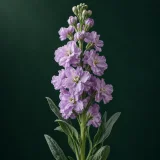
Stock adds scent and comes in white and lilac, two shades that go with anemones. If the bouquet is going to a shared office, keep it small.
Guides to help with your decision

Mother’s Day in the UK: Mothering Sunday and flowers
Mothering Sunday is the UK’s Mother’s Day, three weeks before Easter. Choose flowers for home and plan the handover around your gathering.

How to care for a bouquet when it arrives
Bouquet care on arrival: water, stem cutting, flower food and mixed flowers. What to check if it looks limp and how to keep the flowers still doing well.

What to write in a card with flowers
Ideas for writing a flower card in your own words. Examples for birthdays, thanks, anniversaries and sensitive moments.

Scented or low-fragrance flowers: how to choose
How to choose fragrant or low-scent flowers around the recipient and setting. What to ask about varieties, foliage and substitutions.

How to order flowers from a distance and plan delivery
Send flowers from a distance: format, date, address and handover, including a group gift. Examples and practical advice for different countries.
Frequently asked questions
Is International Women’s Day the same as Mother’s Day in the UK?
No. Mothering Sunday falls three weeks before Easter, on Sunday 7 March in 2027. International Women’s Day is always 8 March, and in 2027 it falls the next day, on the Monday.
Is 8 March a bank holiday in the UK?
No. It is not a bank holiday in any of the four nations. Monday 8 March 2027 is a normal working day.
Do the flowers have to be purple?
No. Purple, white and green recall the suffragettes and are a good choice if you want that nod, but there is no required flower or colour. Choose her favourite colour if you prefer.
Can I give one bouquet for both days?
Yes. Give it on Sunday for Mothering Sunday and write a line for each day on the card: one for being your mum and one for something she has achieved.
Sources and what they support
- GOV.UK · UK bank holidays
In 2027 the March bank holidays are St Patrick’s Day on 17 March (Northern Ireland only) and Good Friday on 26 March; Easter Monday is 29 March, except in Scotland. 8 March is not listed in England and Wales, Scotland or Northern Ireland.
- Diocese of York · Collective Worship, planning 2026–2027 · p. 4
The March table places Mothering Sunday on 7 March, International Women’s Day on 8 March and Easter Day on 28 March 2027, 21 days after Mothering Sunday. Diocesan school planning; does not cover flowers.
- V&A · Scarf, ca. 1910, “Votes for Women”
The WSPU, the militant suffrage group whose members embraced the term “suffragette”, used purple, white and green from 1908. Emmeline Pethick-Lawrence explained the symbolism: purple for dignity, white for purity and green for hope; the colours appeared on sashes, badges and banners. Does not cover flowers.
- London Museum · WSPU “Votes for Women” badge
Tin badge in the suffragette colours of purple, white and green, issued by the WSPU to promote its message and raise funds. A collection object; does not cover 8 March or flowers.
- United Nations · International Women’s Day, background
The UN began celebrating 8 March as International Women’s Day in 1975, and the General Assembly adopted a resolution in December 1977. Does not cover the UK or flowers.
How we put these guides together
We review dates, care and recommendations to help you plan each gift.
Spotted something we should review? Contact Agenda Floral.