Occasions
Boże Ciało in Poland: petals, birch branches and the Spycimierz flower carpets
Poland · Nationwide
Boże Ciało, Polish Corpus Christi, falls on Thursday 27 May 2027 and is a public holiday across the country. The procession visits four altars decorated with flowers and birch branches, and girls strew petals before the Blessed Sacrament. The law closes shops that day but exempts those that mainly sell flowers: they may open, though none has to. Buy the petals or the bouquet on Wednesday the 26th, which is also Mother’s Day. In Spycimierz the procession walks over almost two kilometres of flowers, a tradition inscribed on UNESCO’s intangible heritage list in 2021.
Upcoming calendar dates
Poland
Agenda Floral, with you
Add it to your calendar
Subscribe to receive our updates, or download the .ics file to import a copy. The copy will not receive later changes.
The Corpus Christi in Poland series includes dates from 2026 to 2046. The agenda can calculate later years but the file and subscription currently end in 2046.
Use in Google Calendar or another calendar
Open Google Calendar on a computer. Beside “Other calendars”, click “+” and choose “From URL”. Paste the address below to add the subscription. You can then view that calendar on devices using your account.
Guide to adding Agenda Floral to Apple and Google Calendar
Your calendar app decides when to refresh a subscription. Importing the file again may duplicate events. Agenda Floral adds no alarms; you can check alerts in your calendar settings.
Thursday 27 May 2027: a holiday when florists may open
Boże Ciało falls on the Thursday sixty days after Easter Sunday, so its date moves with Easter: it was 4 June in 2026, it is 27 May in 2027 and it will be 15 June in 2028. Poland’s law on public holidays lists it as a holiday, alongside Sundays.
On public holidays almost all shops are banned from trading. The same law exempts businesses whose main activity is selling flowers, and flower stalls next to cemeteries: they may open on the Thursday, but none is obliged to.
In 2027 another date comes into play: Wednesday 26 May is Dzień Matki, Polish Mother’s Day, and florists will be busy. Order your Corpus Christi flowers on Tuesday the 25th or collect them first thing on Wednesday; that way you sort out your mother’s bouquet and the petal basket in one go.
Four altars, birch branches and petals
The procession leaves the church and stops at four open-air altars decorated with flowers and birch branches. At each one the Gospel is sung and the faithful are blessed with the Blessed Sacrament. Afterwards many people break off a green twig from the altars and take it home: in folk tradition it was a way of asking for protection and prosperity for the household.
Flowers are strewn before the Blessed Sacrament. In Spycimierz, for example, it is the girls, starting with the youngest, who scatter petals. In Łowicz, whose procession has been on the national intangible heritage list since 2014, residents wear regional dress and whole families decorate the altars and strew flowers.
In some parishes, especially in Silesia, the feast continues for eight days, the oktawa. On the following Thursday, 3 June 2027, the priest blesses the wianki, small wreaths of flowers and medicinal herbs that are then hung at home beside holy pictures.
The flower carpets of Spycimierz and Opole
In Spycimierz, a village in the Łódź region, residents have covered the procession route with a carpet of flowers for around two hundred years. It runs for more than a kilometre, close to two according to recent descriptions, and is about two metres wide. The tradition joined the national list in 2018 and, in 2021, UNESCO’s Representative List of the Intangible Cultural Heritage, together with that of four villages in the Opole region: Klucz, Olszowa, Zalesie Śląskie and Zimna Wódka.
Families gather the flowers in the days before, from fields and their own gardens, and keep them in cellars, garages or barns, in the dark and damp, because petals lose their colour quickly. On the Thursday they start laying them at around nine in the morning and finish between two and three in the afternoon. White sand holds the flowers in place and dark earth adds contrast; leaves, stems, bark and twigs are used as well.
Because the date changes every year, in the Opole villages people use whichever flower is most plentiful at the time: some years roses dominate, others peonies, poppies or cornflowers, along with garden flowers and field herbs. The designs are usually religious, such as the lamb, the chalice, the dove or the M for Mary.
Similar traditions exist elsewhere: the guides to Hüfingen in Germany, Ponteareas in Galicia and the infiorate of Spello in Italy explain when to see them.
If you go to see Spycimierz
In Spycimierz Mass is usually held in the afternoon, at five, and the procession then visits the four altars. The priest carrying the monstrance walks on the carpet with the rest of the procession behind him, so the design can only be seen whole until then. To see it finished, arrive mid-afternoon; if you would like to watch it being made, go in the morning.
Each family on the route looks after its own section, and other villages in the parish take specific areas. The parish prepares it first of all as an act of faith, and the variety of designs draws visitors every year from all over Poland and from abroad.
A petal basket and flowers for the table
For the petal basket we suggest peonies and roses, which give large, colourful petals, plus a few cornflowers for blue: this is our idea, not a rule. Buy whole flowers, keep them in water until the day before and pull off the petals that evening. Store the petals somewhere cool and dark under a damp cloth, the way flowers for the carpet are kept in Spycimierz.
Boże Ciało is not a gift-giving occasion. If you are invited to lunch that day, a bunch of peonies is a seasonal gesture; the guide on what to bring to a dinner helps you choose the format.
A sample order: “For Wednesday the 26th in the morning: ten pink peonies about to open, ten short-stemmed white roses and a handful of cornflowers, all for pulling apart, no wrapping. Separately, a bouquet of peonies for my mother for Dzień Matki.”
And for the card with the lunch bouquet: “Thank you for having us on Boże Ciało. These are seasonal peonies: may they brighten your whole week.”
Which flowers to choose
Compare flowers to choose the format, colours and care that suit the occasion.
Peony
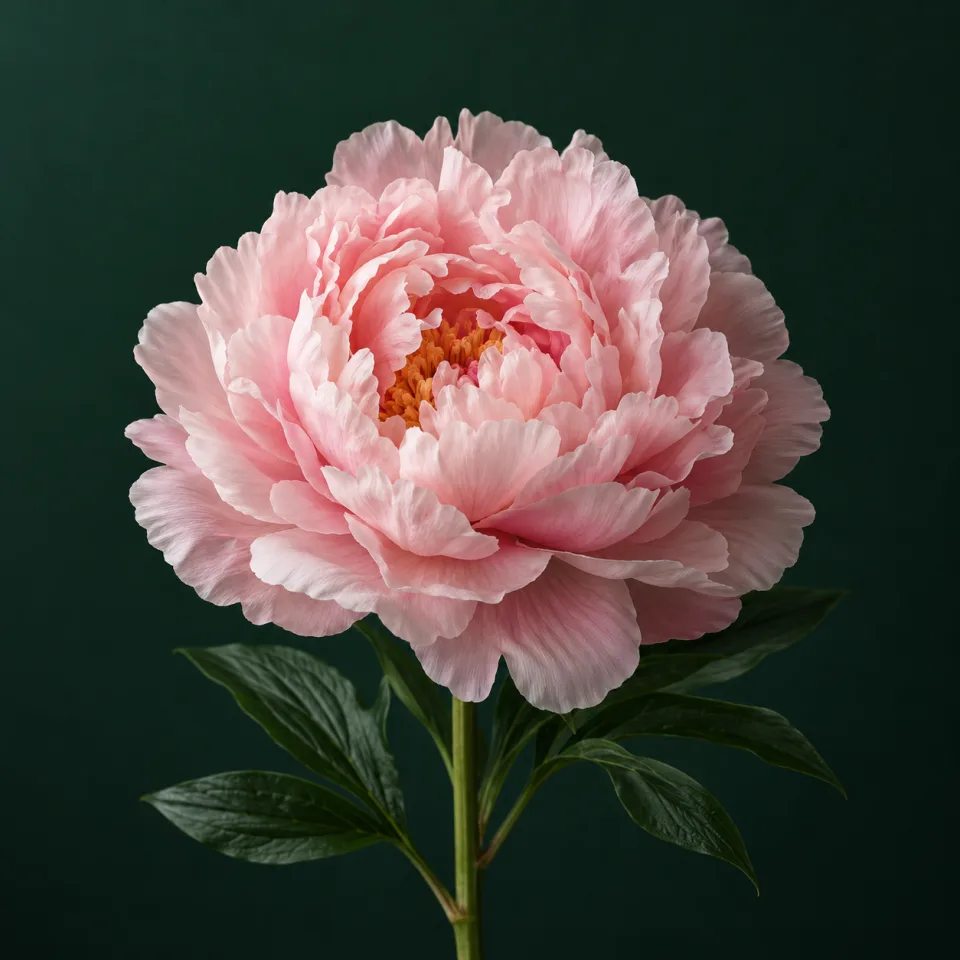
Main flower in our selectionPeonies are among the flowers used in the Boże Ciało carpets of the Opole villages, depending on what is in bloom that year. For the petal basket or the table, buy them on Wednesday 26 May 2027: Thursday is a public holiday and only florists may open, with no obligation to do so.

Cornflower
Cornflowers, chabry, also appear in the Opole carpets in some years. A few in the basket add a touch of blue next to pink and white peony petals; the combination is our own suggestion.
Guides to help with your decision

Mother’s Day in Poland
In Poland, Mother’s Day, Dzień Matki, is celebrated on 26 May. Bouquet and delivery ideas for a visit or sending flowers.

Wielkanoc in Poland: Easter flowers and the Saturday 2 pm cut-off
Easter falls on 28 March 2027 and the Monday is a public holiday in Poland too. On Holy Saturday shops sell until 2 pm: get hyacinths, tulips and boxwood in time.

Fronleichnam in Austria: petals, birches and processions on the lake
Fronleichnam is Thursday 27 May 2027, a public holiday in Austria. When to buy the petals and how to see the Hallstatt and Traunkirchen processions.

How to care for a bouquet when it arrives
Bouquet care on arrival: water, stem cutting, flower food and mixed flowers. What to check if it looks limp and how to keep the flowers still doing well.

Which flowers to bring to a dinner host
Bouquet with a vase or a table arrangement for dinner. Includes Italy’s Capodanno cenone: choosing flowers and planning delivery for 31 December.
Ponteareas Corpus Christi: when to see the flower carpets
Choose overnight creation or the finished Corpus Christi flower carpets in Ponteareas. Check dates, ways to help and the museum outside the festival.
Corpus Christi in Hüfingen: when to see the flower carpets
When to see Hüfingen’s Corpus Christi flower carpets, how to offer flowers and what changes when visiting Sipplingen. Dates, routes and local participation.
Infiorate di Spello: the flower night and Sunday visit
Spello announces its Infiorate for 29–30 May 2027. Choose between watching the overnight work and seeing the carpets before the procession.
Frequently asked questions
Are florists open on Boże Ciało?
They may be. The law bans trading on public holidays but exempts shops that mainly sell flowers. None is obliged to open, so buy on Wednesday 26 May 2027.
Which flowers are used in the Boże Ciało carpets?
Petals and whole flowers from fields and gardens, with leaves, bark and twigs on a base of sand or cut grass. In the Opole villages they change with the year: roses, peonies, poppies or cornflowers, depending on what is in bloom.
When are the Spycimierz carpets best seen?
They are laid between nine in the morning and early afternoon, and the five o’clock procession walks over them. To see them finished, go mid-afternoon, before Mass.
Does the subscription include Boże Ciało every year?
Yes. This occasion adds Boże Ciało as an all-day event, with the dates from 2026 to 2046.
Sources and what they support
- U.S. Naval Observatory · The Date of Easter
Explains the Gregorian Easter calculation used by Western churches; it confirms that Easter 2027 falls on 28 March, so Boże Ciało, sixty days later, is Thursday 27 May. It does not cover customs or opening hours.
- Dziennik Ustaw 2025 poz. 296 · Ustawa o dniach wolnych od pracy
Consolidated text of the law on public holidays: the day of Bożego Ciała is listed among the holidays (art. 1.1.h), along with Sundays. It does not regulate shop hours.
- Dziennik Ustaw 2025 poz. 301 · Ustawa o ograniczeniu handlu w niedziele i święta oraz w niektóre inne dni
Consolidated text of the law restricting trade. It bans selling on Sundays and public holidays (art. 5) and exempts shops whose main business is selling flowers, as well as flower sales next to cemeteries (art. 6). It does not oblige shops to open.
- Łódzki Dom Kultury · Procesje Bożego Ciała w Łódzkiem (01/06/2021)
Processions leave the churches for four altars decorated with flowers and birch branches; the Gospel is sung and the faithful are blessed at each, and as they leave they break off green twigs to take home; the custom of strewing flowers is still alive; in Spycimierz, carpets of flowers and herbs almost 2 km long have been laid for more than two hundred years. Regional cultural institution; scope: Łódź region.
- Narodowy Instytut Dziedzictwa · Krajowa lista niematerialnego dziedzictwa kulturowego (n.º 5, 28, 41 y 120)
No. 5 (23/05/2014), Łowicz: four altars in the same places, regional dress, and families who decorate the altars and strew flowers; many of the faithful take twigs from the altars home, a custom of protective origin. No. 28 (14/02/2018), Spycimierz: around two hundred years old, a carpet of about a kilometre of petals and garden and field flowers, some 600 parishioners. No. 41 (10/03/2020), Klucz, Olszowa, Zalesie Śląskie and Zimna Wódka: a base of cut grass, sand or fern; roses, peonies, poppies or cornflowers depending on the year; religious motifs. No. 120 (27/11/2025), Skęczniew: a post-war tradition, developed from 1958 by a parish priest who came from Spycimierz. Official, informative list.
- UNESCO · Flower carpets tradition for Corpus Christi processions (16.COM, 2021)
Inscribed in 2021 on the Representative List of the Intangible Cultural Heritage of Humanity, nominated by Poland: families in several villages lay flower carpets along the procession route, up to almost two kilometres, with field and garden flowers, soil, sand, bark, grass or calamus; they gather flowers a few days before and start early on the Thursday itself. The attached inventory covers Spycimierz and the four Opole villages. It gives no visiting times.
- Spycimierskie Boże Ciało · Corpus Christi procession
Solemn Mass begins at 5 pm, followed by the procession with the Blessed Sacrament to four altars; girls, starting with the youngest, strew petals before the Blessed Sacrament; the priest with the monstrance walks on the carpet and the rest of the procession follows. Parish association page, undated; each year’s programme is set by the parish.
- Spycimierskie Boże Ciało · Flower carpets
Laying usually starts around nine and ends between two and three, depending on helpers and section; the route is over a kilometre and the carpet about two metres wide; the roadsides are decorated with young birches and alders; flowers are usually gathered the Sunday before; white sand holds the flowers and dark earth adds contrast; each family on the route takes its section and other villages take specific areas. The parish makes it first of all as an act of faith. Undated page.
- Spycimierskie Boże Ciało · Preparations
Flowers are gathered a few days before, about three according to one resident, from fields and gardens; they are kept in a cool, dark, humid place such as cellars, garages or barns, because they lose colour quickly; rain can force last-minute picking, as wet flowers cannot be stored. Undated page.
- Instytut im. Wojciecha Korfantego · R. Garstka, Rośliny i zioła w obrzędowości dorocznej (2025)
During the octave of Boże Ciało there is a procession around the church; on the following Thursday, after the procession, the priest blesses the wianki the faithful bring, small wreaths of flowers and medicinal herbs whose make-up varies by region; back home they are hung on religious pictures. Scope: Silesia, Zagłębie and the Częstochowa area; it also describes older practices.
How we put these guides together
We review dates, care and recommendations to help you plan each gift.
Spotted something we should review? Contact Agenda Floral.