Guides
How to care for a zonal geranium in a pot
Care difficulty4 out of 10
Pay attention to watering and growing conditions.
Editorial guide, with suitable light and climate. 0: very easy; 10: very delicate. More stars mean more care.
A zonal geranium suits a bright balcony if water can drain away and you protect it from frost. Its stems grow upright, and many varieties have a dark band on rounded leaves. This guide covers the Pelargonium Zonal Group, not trailing ivy pelargoniums or cold-hardy Geranium. Before buying, think about where it will spend winter.
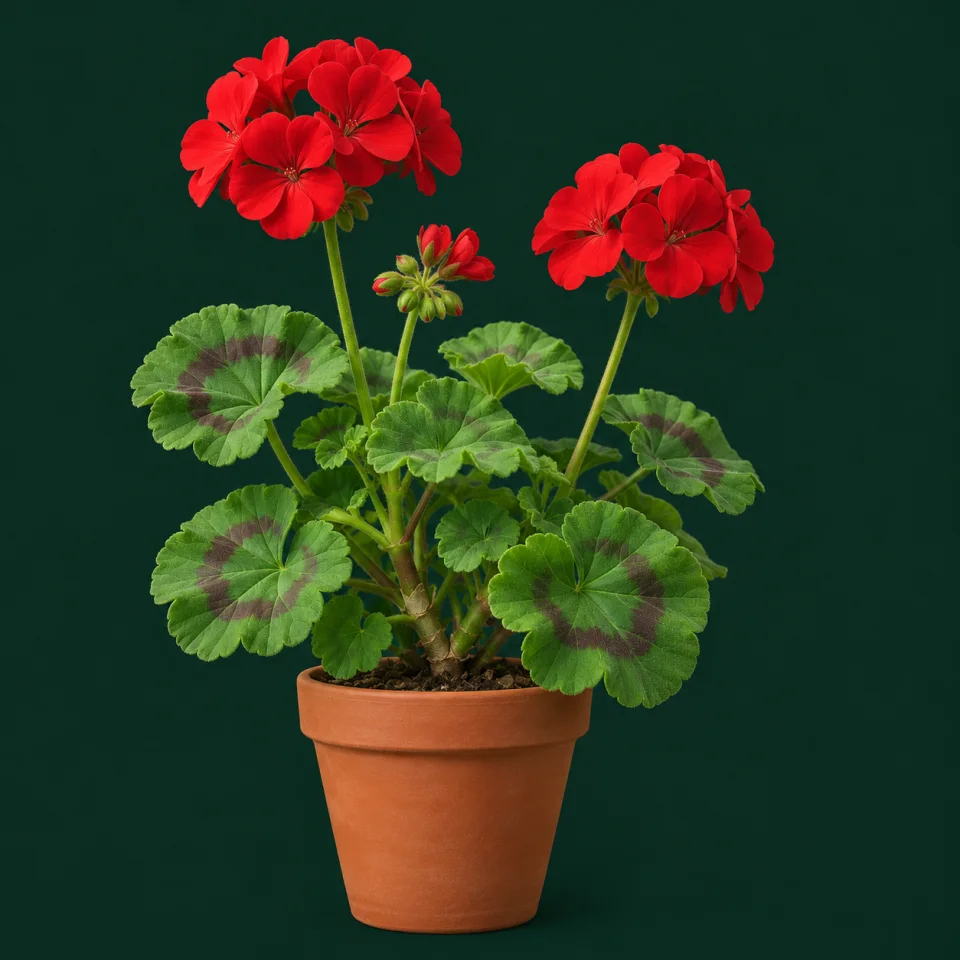
Botanical reference: Pelargonium, Zonale Group
A sunny balcony, introduced gently
Choose a sunny spot with air around the plant. On a very hot terrace, some shade during the harshest hours can help; constant shade usually means fewer flowers. If it has been grown under cover, get it used to outdoor conditions gradually. Secure the pot against wind and make sure you can reach it to water.
Water the compost after the top layer dries
Feel a few centimetres below the surface and lift the pot if possible. If it is still damp and heavy, wait. Once the top layer has dried, water slowly around the base until excess drains below, then empty the saucer. Avoid repeatedly soaking flowers and leaves. A pot may dry quickly in heat, but rain or a cool week changes the pace: do not repeat a fixed daily amount.
A pot and mix that will not stay waterlogged
Use a container with clear drainage holes and free-draining potting compost. Allow space for the variety’s size rather than packing several plants into a small window box. Keep the base of the stems at the original planting depth. A decorative cover is fine if you can remove the growing pot and empty the water; it does not replace drainage holes.
Feed and repot with a purpose
During growth and flowering you can use flowering-plant fertiliser according to its label. Check first whether the compost already contains feed and for how long: combining products will not ensure more blooms. Do not feed a dry, wilted plant as a rescue treatment. If roots fill the pot or compost breaks down, renew the mix and move to a slightly larger container as growth resumes in mild conditions.
Remove spent flowers and encourage branching
Remove faded flower clusters with their stalks and dead leaves using clean tools. This avoids damp debris on the compost. You can pinch out shoot tips at the start of a growing period to encourage branching, without routinely stripping the whole plant. If it does not flower, check sun, season and feeding first; a pause does not always call for hard pruning.
Plan winter before the first frost
To keep it in its pot, find a bright, airy, frost-free place before cold arrives. Check for pests before placing it with other plants. A resting plant needs much less water: inspect the compost and stop the summer feeding routine if it is not growing. Once mild weather returns and frost risk is over, gradually reintroduce it outside. A dark garage is not the same as this overwintering method.
Yellow leaves, spots or holes in stems
With wet compost and soft stems, check drainage and roots before adding water. If you see mould or spots, remove debris and improve spacing; spots alone do not identify a disease. Check leaf undersides for whitefly too. Stem holes and dying shoots can indicate Cacyreus marshalli larvae where that pest occurs. Separate the plant and show photographs to a nursery before choosing a treatment.
Pets, routine checks and time away
Pelargoniums are toxic to dogs and cats if eaten. Prevent access and contact a vet for suspected ingestion; aromatic leaves do not make it a culinary plant. In warm weather check moisture, flowers and leaf undersides regularly. Before going away, show the carer where to feel the compost and how to empty the saucer. Do not compensate for days away by leaving the pot submerged.
Guides to help with your decision

Which flowers to give to someone with cats or dogs
Flowers for a home with cats or dogs: options to consider, checking the whole bouquet and precautions with lilies, holly and mistletoe at Christmas.
How to care for lavender in an outdoor pot
Sun, drainage, watering and pruning for potted Lavandula angustifolia, including winter care and warning signs.
How to care for an ivy geranium in a pot
Sun, watering, flowers, edema and winter care for trailing pelargoniums, with hanging-pot advice and pest checks.
How to care for a wax begonia in a pot
Light, watering, flowers, repotting and winter care for wax begonias. Distinguish fibrous-rooted semperflorens plants from tuberous begonias.
Frequently asked questions
Must I throw away the geranium after summer?
Not necessarily. It can live for several years if conditions and care allow. Where frost occurs, it needs suitable shelter; being classed as an outdoor plant does not mean surviving any winter. Keeping it does not guarantee continuous flowers or a particular lifespan.
Is the brown band on the leaf a disease?
Many zonal varieties have a natural dark band. See whether it repeats similarly on healthy leaves. New spreading spots, pustules, soft tissue or heavy leaf drop need a separate check. Do not treat a variety’s marking as a pest or diagnose by colour alone.
Sources and what they support
- RHS · Pelargonium
Upright zonal group, sun, drainage, feeding, pinching and deadheading; pot overwintering in a bright, airy, frost-free place. Do not apply British months worldwide or confuse Pelargonium with Geranium.
- University of Minnesota Extension · Growing geraniums
Water after the top layer dries; drain holes, feed already in compost, active growth and pest checks before bringing inside. Uses pot overwintering, not a bare-root storage recipe.
- UC Marin Master Gardeners · Growing geraniums
Distinguishes Pelargonium from Geranium; sun and some shade in intense heat. Exposure follows the microclimate, not fixed hours for every country.
- Museo di Storia Naturale di Venezia · Cacyreus marshalli
Larvae tunnel through pelargonium stems, with partial dieback and exit holes; Italian account. Does not establish presence in every country or diagnose every dry stem.
- ASPCA · Geranium (Pelargonium species)
Pelargonium listed toxic to dogs and cats; contact a vet for suspected ingestion. Not a classification for every member of Geranium.
How we put these guides together
We review dates, care and recommendations to help you plan each gift.
Spotted something we should review? Contact Agenda Floral.