Guides
How to care for an ivy geranium in a pot
Care difficulty5 out of 10
Pay attention to watering and growing conditions.
Editorial guide, with suitable light and climate. 0: very easy; 10: very delicate. More stars mean more care.
An ivy geranium needs light, drainage and a pot you can inspect even when it hangs. Its stems trail and its lobed leaves resemble ivy, but it is Pelargonium peltatum or an ivy-type hybrid, rather than true ivy or an upright zonal pelargonium. Trapped water and frost can damage it; intense heat calls for adjusting its exposure too.
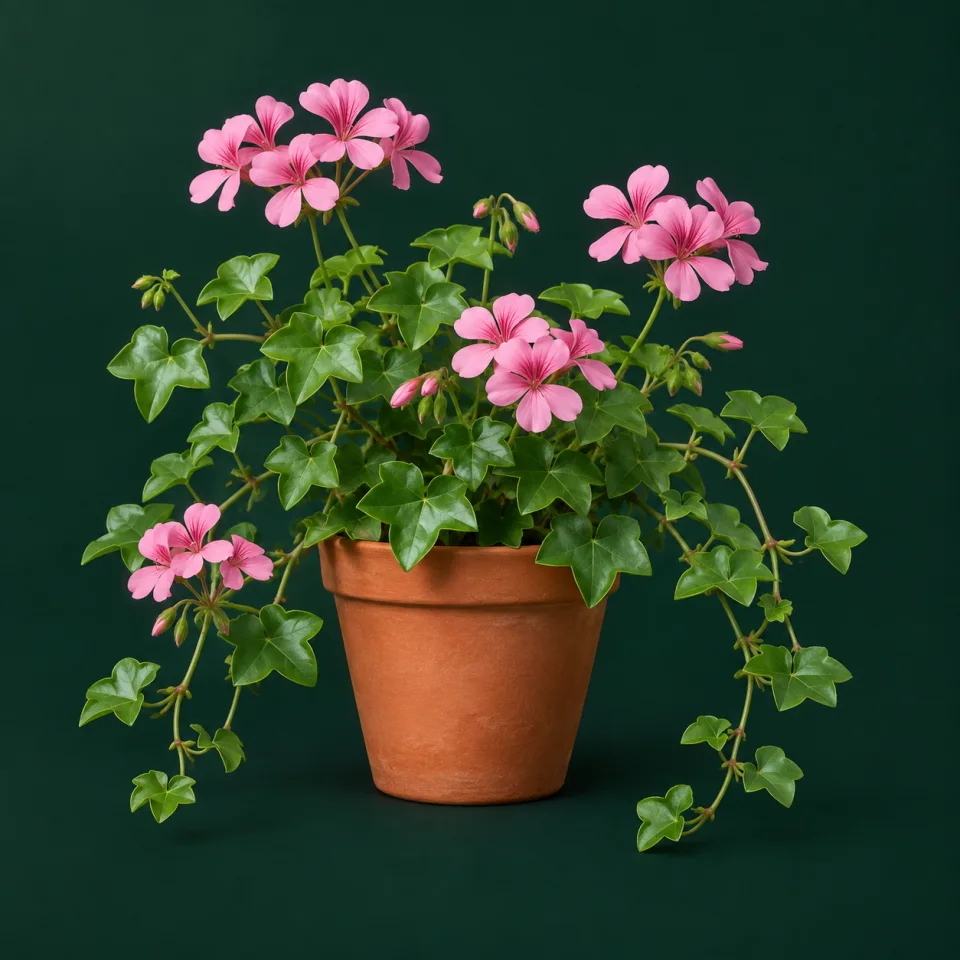
Botanical reference: Pelargonium peltatum
A position that protects the trailing stems
Choose a sunny spot with good airflow. On a scorching terrace, morning sun and some afternoon shade may work better than all day against a hot wall. Acclimatise a plant raised under cover to outdoor conditions. If hanging it, use a fixing suitable for its watered weight, somewhere you can reach without pulling the stems. Wind can break them and speed up drying.
Watering a basket that dries unevenly
Feel beneath the surface and check the pot weight. If it is damp and heavy, wait; let the upper compost dry before watering again. When needed, wet the mix slowly and let it drain, emptying retained water from saucers or covers. It needs open drainage holes and a free-draining potting mix. Wet leaves after rain do not prove that water reached the centre.
Feeding and room for roots
While it grows and flowers, use flowering-plant fertiliser at the labelled strength and interval if needed. Check whether compost already contains feed rather than combining products unnecessarily. If roots fill the pot or the mix has broken down, move to a slightly larger container as growth resumes in mild weather. Keep the crown, where stems start, at its previous height rather than burying stems to anchor them.
Spent flowers and overlong stems
Remove faded flower clusters with their stalks and lift away dead leaves carefully. Use clean scissors rather than tugging on a branch that may snap. Pinching shoot tips at the start of a growth phase encourages branching. If flowers are scarce, check light, heat and roots first: more feed or drastic pruning is not always the answer.
Keeping it through cold weather
Before the first frost, find a bright, airy place where the pot will not freeze. Check for pests before putting it with indoor plants. If resting, it needs less water and no full-growth feeding routine; keep checking the compost. Once frost risk has passed, gradually get it used to outdoors again. Being classed as an outdoor plant does not mean coping with every winter.
Corky bumps are not always pests
Small blisters under leaves that later turn brown and corky may be edema. This happens when roots absorb more water than leaves lose, and can occur with wet compost and cool or humid air. Check watering, drainage and airflow, and watch new leaves. Do not apply insecticide simply because there are bumps: other injuries look similar and need identification.
When to inspect stems and seek help
Look under leaves for mealybugs or signs of mites. With mould or spreading spots, separate the plant and remove debris; a spot photograph alone cannot establish the cause. Stem holes with drying shoots can indicate Cacyreus marshalli larvae where that pest occurs. Keep photographs of leaves, stems and the whole plant and ask a nursery before choosing treatment.
Pets and a routine for days away
Pelargoniums are toxic to dogs and cats if eaten. Prevent access to trailing stems and clippings too; contact a vet for suspected ingestion. Check moisture and stems regularly in warm weather. Before leaving, show the carer how to feel the mix and let water drain. Do not fill an outer pot with water for your absence or leave it unchecked because it tolerates some drought.
Guides to help with your decision

Which flowers to give to someone with cats or dogs
Flowers for a home with cats or dogs: options to consider, checking the whole bouquet and precautions with lilies, holly and mistletoe at Christmas.
How to care for a zonal geranium in a pot
Sun, water, feeding, pruning and winter care for zonal pelargoniums, with pest checks and a practical balcony routine.
How to care for petunias in pots and window boxes
Sun, watering, feeding and spent flowers for garden petunias, with variety differences and end-of-season care.
How to care for calibrachoa in pots and keep it flowering
Sun, watering, feeding, yellow leaves and cold: practical care for garden calibrachoa in containers and hanging baskets.
Frequently asked questions
Can I care for ivy and zonal geraniums in exactly the same way?
They share drainage and frost-protection needs, but their shape changes placement and access to watering. A hanging ivy geranium may dry faster in wind and needs room for stems. Check each pot rather than copying water amounts from the other.
Should the stems trail or have a support?
Trailing growth is normal. Give stems room without forcing them across a sharp edge. It need not become an upright plant on a pole; secure the container and check damaged branches instead. A naturally trailing stem differs from one becoming soft and dark.
Sources and what they support
- NC State Extension · Pelargonium peltatum
Lobed leaves and trailing habit, light, drainage, drying between waterings, pinching, deadheading and winter protection. Local months and care are not applied to all geranium hybrids.
- RHS · Pelargonium
Potting mix, feeding, pinching ivy types and bright, airy, frost-free overwintering. Pot method retained without mixing bare-root storage instructions.
- UC Marin Master Gardeners · Growing geraniums
Trailing Pelargonium peltatum and afternoon shade in intense heat. Exposure follows the microclimate, not universal sunlight hours or a survival threshold.
- Iowa State Extension · Edema of Geraniums
Blisters becoming corky in ivy geranium from water imbalance; airflow and avoiding excess in cool/cloudy weather. Historical 1995 article cross-checked with Maryland, not diagnosis from one photograph.
- University of Maryland Extension · Edema
Physiological edema can resemble pests or disease; allow adequate drying between waterings. Not every brown mark is edema and no pesticide is prescribed.
- Museo di Storia Naturale di Venezia · Cacyreus marshalli
Larvae bore into Pelargonium stems, making tunnels and causing shoots to dry where the pest occurs. Italian account does not prove presence in every country or identify every hole.
- ASPCA · Geranium (Pelargonium species)
Pelargonium toxic to dogs and cats; contact a vet for suspected ingestion. Not a classification of every member of Geranium.
How we put these guides together
We review dates, care and recommendations to help you plan each gift.
Spotted something we should review? Contact Agenda Floral.