Guides
How to care for a Pachira money tree in a pot
Care difficulty4 out of 10
Pay attention to watering and growing conditions.
Editorial guide, with suitable light and climate. 0: very easy; 10: very delicate. More stars mean more care.
Pachira needs bright filtered light, steady warmth and mix that holds some moisture without staying soaked. Check the upper layer and pot weight: let the mix dry substantially between waterings without leaving the whole root ball dry for days. Water thoroughly when needed and empty the outer pot. If leaves fall, also check moves, draughts and roots before adding water.
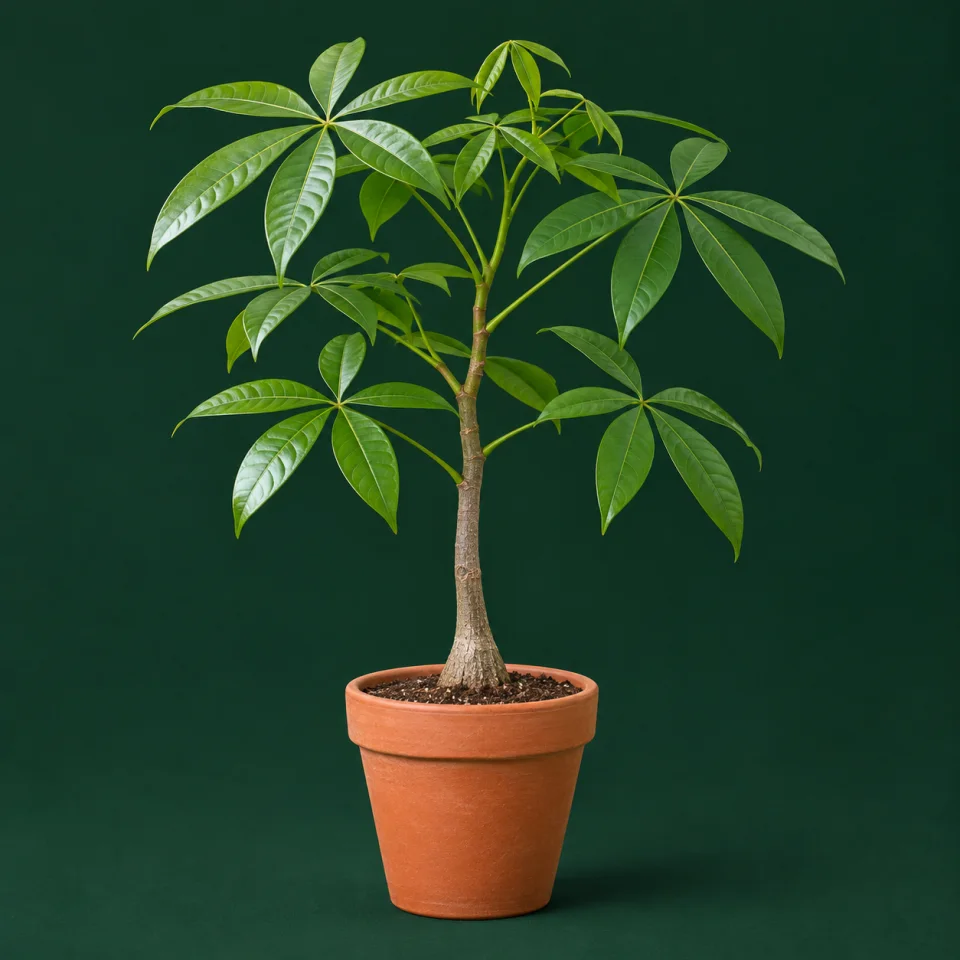
Botanical reference: Pachira aquatica
Not every money tree is a Pachira
This guide covers Pachira aquatica, whose leaves divide into several pointed leaflets meeting at one point. It is sold with one trunk or several braided together; braiding is a presentation, not a plant requirement. Money tree also names jade, which needs different care. Keep the label and allow space for the canopy without branches catching people walking past.
Plenty of light in a settled spot
Choose a bright window with strong sun filtered. A dark corner may hold a plant for a while but does not offer good growing conditions. Avoid sudden direct sun, air vents and radiators. A warm room without frost or abrupt changes suits it. If tips dry with heating, check surrounding humidity and watering; misting leaves cannot repair poorly cared-for roots.
Feel the mix before reaching for water
Check the top few centimetres, a little deeper and the weight. Once the upper layer has dried and the pot is substantially lighter, water slowly until it runs out, then drain. Do not repeat while heavy and wet or leave every root completely dry for a long time. Heating can speed drying even on short days. Before going away, show a helper these checks rather than leaving a water reserve in the saucer.
A proportionate pot and gentle root handling
Use drainage holes and an airy houseplant mix that retains moisture without compacting. Aquatica does not mean it should stand submerged: a natural habitat is not a pot indoors. Repot when roots fill the container or mix deteriorates, preferably in active growth. Increase size modestly, keep the previous planting level and avoid routinely teasing healthy roots apart. Some leaves may drop after disturbance.
Feed growth rather than trying to rescue it
If it is growing and needs nutrients, use suitable balanced feed according to its label and existing mix reserves. Reduce or pause when growth slows. Fertiliser cannot rescue waterlogged roots; do not combine several schedules. Wipe dust gently from leaflets so light reaches them, without leaf shine. A healthy canopy is a useful goal without expecting flowers or fruit indoors.
Prune the canopy without cutting the braid
Pruning is optional. Shorten an overlong shoot above a leafy node with a clean tool during growth, leaving enough foliage. Do not cut into the braided section or strip the entire canopy to reduce size. If it has just moved and is dropping leaves, settle conditions first instead of adding a hard prune.
Choose a healthy shoot for an optional cutting
One option is a semi-ripe shoot, firm at the base but flexible at the tip. Cut below a node, remove lower leaves and insert the base into moist draining propagation mix without burying leaves. Give gentle warmth and light away from harsh sun. Ventilate any cover and avoid constant condensation. Wait for rooting and establishment before moving to its own pot, without promising roots in a particular week.
Yellow leaves need more than a colour diagnosis
Check moisture, drainage, environmental changes and leaf undersides. Identify scale, mites or aphids before using a suitable product according to its label. A softening base in wet mix needs root inspection, not another watering. ASPCA lists Pachira aquatica as non-toxic to dogs and cats but also notes digestive upset: it is not pet food. Keep trimmings and products out of reach and ask a vet if an animal is unwell.
Guides to help with your decision
Which flowers to give to someone with cats or dogs
Flowers for a home with cats or dogs: options to consider, checking the whole bouquet and precautions with lilies, holly and mistletoe at Christmas.
How to care for clivia in a pot
Light, watering, cool rest and Clivia miniata roots. Keep healthy leaves after flowering and learn when repotting is worthwhile.
How to care for a jade plant in a pot
Light, watering, a stable pot and Crassula ovata cuttings. Tell a thirsty plant from roots that have stayed too wet.
How to care for a dwarf umbrella tree in a pot
Filtered light, watering without waterlogging and care for Heptapleurum arboricola, formerly Schefflera arboricola. Understand leaf loss and sensible trimming.
Frequently asked questions
Why does it drop leaves after a move?
Draughts, changed light and root disturbance can cause leaf loss. Check dryness or saturation and look for pests too. Choose a suitable stable spot, remove fallen leaves and water according to the mix. Avoid daily moves or blindly adding water and feed; a soft base deserves closer inspection.
Must I keep braiding the trunks?
No. It can grow without new turns. Do not force rigid stems or tighten wire or ribbons to hold a shape. If a display tie starts marking bark, carefully remove it without injury. Treat the trunks and canopy as a living plant rather than an ornament that must stay fixed.
Sources and what they support
- NYBG · Pachira aquatica
Filtered light, moderate moisture without completely drying roots, drainage, stable surroundings, gentle repotting and pruning without cutting the braid. Adjust water to heating/light, not months; no homemade pest remedies.
- RHS · Pachira aquatica
Identity, airy mix, light, cold protection, optional pruning and semi-ripe cuttings. UK hardiness or wet habitat does not justify stagnant water indoors.
- NC State Extension · Pachira aquatica
Palmately compound leaves, identity, indirect light, moisture with drainage and rot/pest risks. No food or medical uses, or guaranteed indoor flowers.
- RHS · Semi-ripe cuttings
Healthy shoot with firm base and flexible tip, preparation below a node, lower leaves removed, moist draining mix and light without harsh sun. Optional ventilated cover; no guaranteed timetable.
- ASPCA · Money Tree (Pachira aquatica)
Pachira aquatica non-toxic to dogs/cats, not pet food: the entry also lists digestive upset. Does not cover other money trees, fertilisers or products.
How we put these guides together
We review dates, care and recommendations to help you plan each gift.
Spotted something we should review? Contact Agenda Floral.