Guides
How to care for clivia in a pot
Care difficulty4 out of 10
Pay attention to growing conditions and watering.
Editorial guide, with suitable light and climate. 0: very easy; 10: very delicate. More stars mean more care.
Clivia needs bright light without harsh sun, a draining mix and water once the upper few centimetres have dried. Let it drain and empty the outer pot. Keep green leaves after flowering and avoid routine repotting. A cool rest with less water can help a mature plant prepare flowers, without frost or drying it into a wilt. It is toxic to dogs and cats.
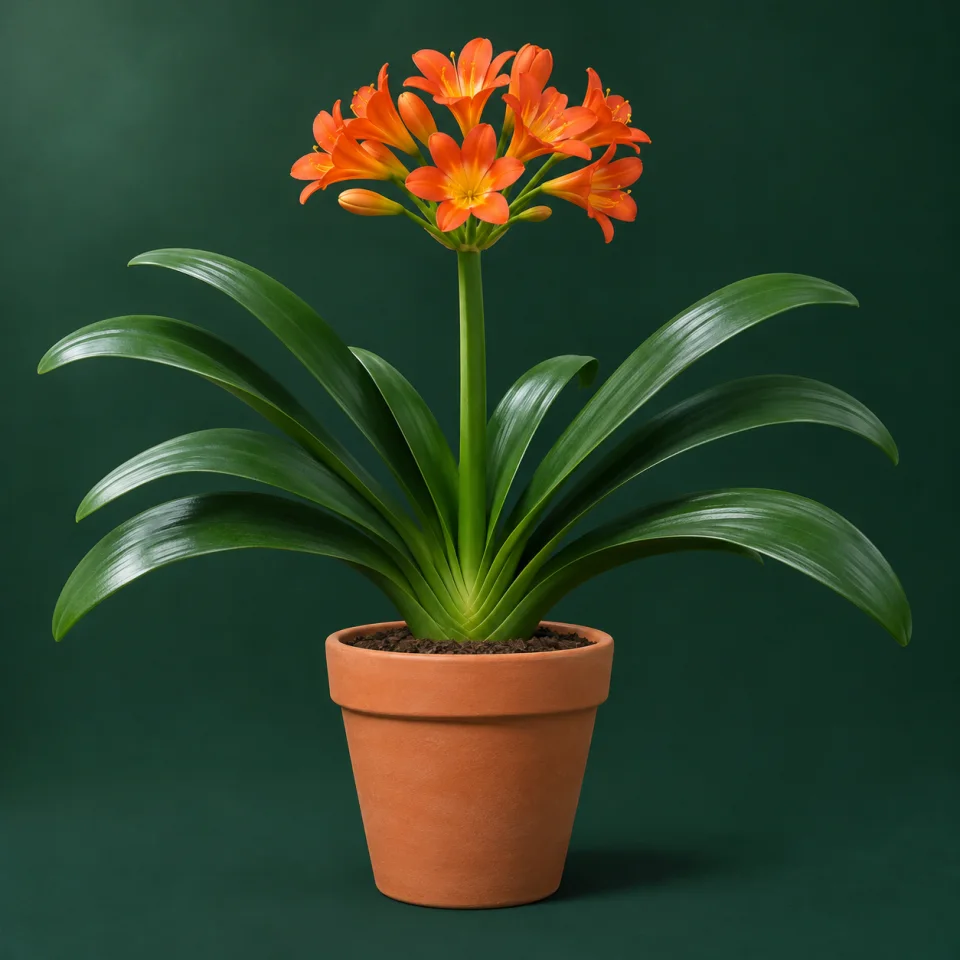
Botanical reference: Clivia miniata
A leafy fan that lives beyond its flowers
This guide covers Clivia miniata, a perennial with long leathery leaves and clustered flowers on a sturdy stalk. Other colour selections and hybrids exist, so keep its label. Allow room for the leaves without brushing a walkway. Once the flower cluster finishes it remains a foliage plant: avoid cutting everything down or discarding it as though life has ended.
Filtered brightness and a sheltered position
Choose a bright window without intense sun on the leaves, away from radiators and cold draughts. It can tolerate lower light, but a dark corner makes flowering harder. For outdoor stays in mild weather, acclimatise gradually and choose bright shade. Shelter before cold arrives; its indoor category is not determined by the country where you read this guide.
Water after surface drying and allow drainage
Check a few centimetres below the surface and the container’s weight. During growth, when that layer dries, moisten the rootball slowly and drain. Wait if it is still damp. Avoid water trapped in the centre or saucer. Ask helpers to use these checks while you are away, without filling an improvised reservoir in advance. Cool conditions and reduced growth usually lower demand.
Crowded roots do not mean keeping exhausted mix forever
Use a porous container mix and clear holes. It can remain in a proportionate pot for several years; one visible root does not demand repotting. When roots become truly crowded, little medium remains or it deteriorates, move up only slightly during growth. Keep the neck where leaves emerge above the mix and handle fleshy roots gently.
Plan a cool rest for repeat flowering
A mature clivia may benefit from several weeks somewhere bright and cool, around 10°C, without frost. Reduce water according to how slowly the mix dries, without fixed months or prolonged drying of the whole rootball. It need not lose leaves or live in darkness. As growth or buds appear, restore gentle warmth and increase water gradually. Flowers on a chosen date cannot be guaranteed.
Light feeding and removal of faded stalks
If growing and needing nutrients, use suitable houseplant feed according to the label and existing reserves; reduce or pause during rest. More cannot replace light or a cool spell. Once every flower in a cluster finishes, cut the stalk at its base with a clean tool, protecting foliage. Remove only genuinely dry or damaged leaves rather than trimming green ones to fit a space.
Divide a healthy clump only when useful
For another pot, use repotting time after flowering on an established clump. Gently separate an offset retaining leaves and its own roots, using a clean tool if necessary. Avoid tearing fleshy roots or breaking weak plants into tiny pieces. Give each division a proportionate pot, indirect brightness and adjusted water. Keeping the clump together is fine; division does not promise quick flowers.
Check the base, leaves and roots before treatment
Yellowing can accompany overwatering or nutrient shortage, while dry tips have several possible causes. Check moisture and drainage before more water or feed. Look between leaf bases for mealybugs; separate affected plants while assessing the issue. Wear gloves if sap irritates. Keep plant, any fruit and trimmings away from children and pets. Contact a vet promptly for possible animal ingestion without waiting for symptoms or trying home remedies.
Guides to help with your decision

Which flowers to give to someone with cats or dogs
Flowers for a home with cats or dogs: options to consider, checking the whole bouquet and precautions with lilies, holly and mistletoe at Christmas.
How to care for a Phalaenopsis orchid indoors
Light, watering and roots: care for a Phalaenopsis pot, spot problems and keep the plant after flowering.
How to care for a Christmas cactus in a pot
Light, watering, buds and cuttings for Schlumbergera × buckleyi. Care for this forest cactus without treating it like a desert plant.
How to care for a Pachira money tree in a pot
Light, watering without trapped water, repotting and pruning Pachira aquatica. Check leaf loss and look after a braided trunk.
Frequently asked questions
Is a clivia that does not flower unwell?
Not necessarily. It may be young, recently repotted or lacking suitable light and resting conditions. Check roots and water too, without trying to solve everything with feed. Healthy foliage can persist through a flowerless cycle; maturity takes different amounts of time in different homes.
Can I shorten the leaves to make it smaller?
Avoid treating green leaves like a hedge. They are foliage the plant needs to retain. Remove damaged leaves carefully and gently wipe dust away. If the clump no longer fits, choose more space or consider division during repotting rather than cutting down the entire fan.
Sources and what they support
- RHS · Growing clivias
Indirect light, growth-based water, cool rest around 10°C, limited root disturbance, raised neck, deadheading and division. No UK months, combined feeding recipes or guaranteed flowering; rest is not extreme drying.
- Iowa State Extension · Growing Clivia Indoors
Clivia miniata, surface drying before watering/draining, light feeding, cool rest, division and overwatering signs. Its drier rest advice is compared with RHS: no forced wilting or compulsory weeks/years.
- NC State Extension · Clivia miniata
Identity, strap leaves, clustered orange flowers, fleshy roots, rest and problems. Outdoor zone tolerance is not transferred to every pot or inferred from language.
- ASPCA · Clivia
Clivia spp. is toxic to dogs and cats; seek prompt advice for possible ingestion. No safe dose, home remedies or extension of a common lily name to other plants.
How we put these guides together
We review dates, care and recommendations to help you plan each gift.
Spotted something we should review? Contact Agenda Floral.