Guides
How to care for a kalanchoe in a pot
Care difficulty4 out of 10
Pay attention to watering and growing conditions.
Editorial guide, with suitable light and climate. 0: very easy; 10: very delicate. More stars mean more care.
Kalanchoe needs plenty of brightness, a draining mix and drying between waterings. Check soil and weight before watering thoroughly and draining. Its fleshy leaves store water, so a full saucer can harm roots. You can keep it after flowering; new buds need long nights. It is toxic to dogs and cats and must stay out of reach.
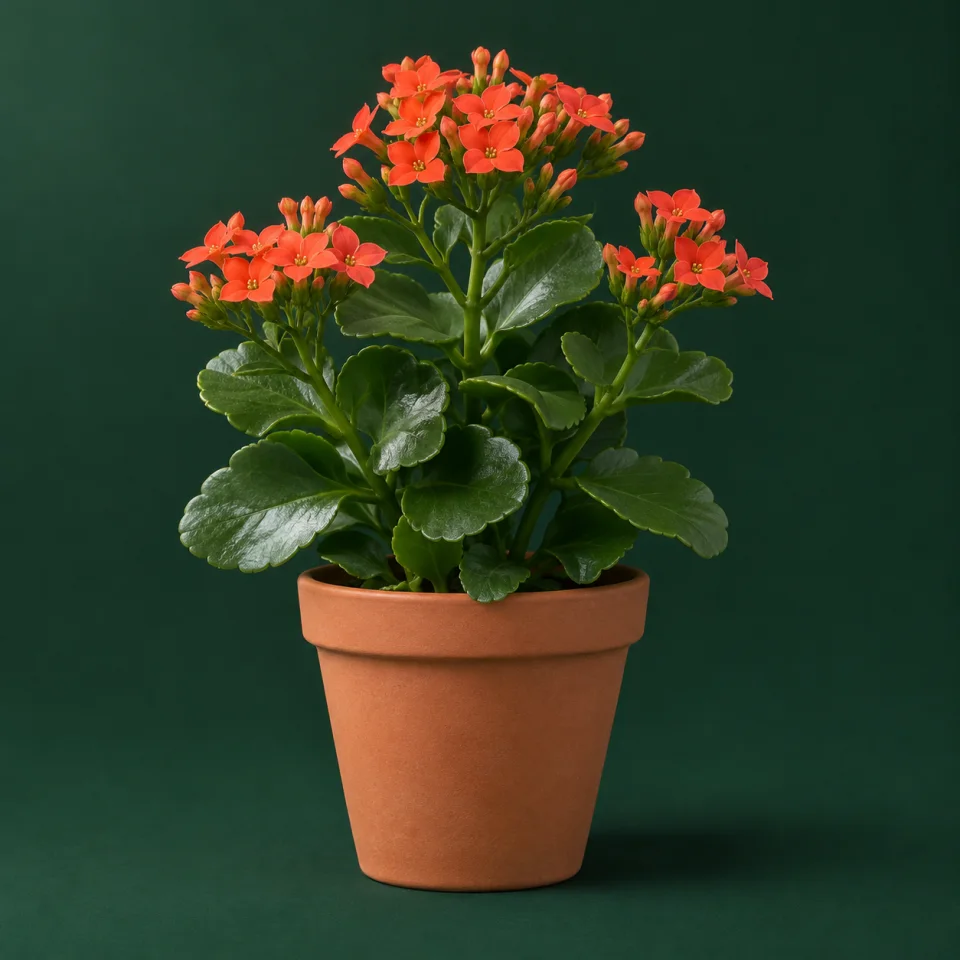
Botanical reference: Kalanchoe blossfeldiana
A flowering kalanchoe with its own identity
This guide covers Kalanchoe blossfeldiana, a perennial succulent with thick glossy leaves and flower clusters above the foliage. Cultivars include single four-lobed flowers and doubles such as Calandiva types. The genus contains other very different plants, so avoid transferring care simply from a shared name. Keep the label and do not expect plantlets along every leaf edge as on some other kalanchoes.
Plenty of brightness without a sudden move into strong sun
Choose a very bright place near a window, protected from intense sun through glass. Introduce any gentle direct sun gradually; sudden exposure can scorch leaves. Low light makes stems long and weak. Keep comfortably warm, away from cold draughts. If it goes outside in mild weather, shelter it again before cold arrives: it cannot tolerate frost.
Let it dry, then water the rootball
Feel a few centimetres below the surface and check that the pot is lighter. When the mix has dried between waterings, wet the rootball slowly until water drains out, then empty surplus. Wait if it remains damp inside. Avoid daily sips or a fixed watering day. Slower growth usually means less water. If someone will water it while you are away, explain these checks instead of filling the saucer in advance.
Drainage must work inside the outer pot too
Use clear holes and an airy succulent mix. Remove wrapping that prevents drainage and check for water hidden in the decorative container. If roots fill the pot or the medium deteriorates, repot during growth, preferably after flowering, into a slightly larger size at the same depth. Builder’s sand, a stone layer hiding compacted soil or an enormous pot are unnecessary.
Remove faded flowers without forcing with feed
When a cluster finishes, cut its flower stalk with a clean tool, protecting leaves and shoots. Long stems can be lightly shortened after flowering, retaining healthy growth. If growing and needing nutrients, use suitable feed according to the label and nutrients already present. Reduce or pause during rest. Extra feed cannot fix a soft base or poor light, or make the plant flower continuously.
Night matters for new buds
Losing flowers does not end the plant’s life. Try several weeks of bright days and nights without lamps or television: about 14 dark nighttime hours for roughly six weeks is an induction reference, not a promise. A bright room that becomes dark at night can work; do not shut it away all day. Avoid excessive heat and keep matching water to the mix. There is no universal month for this, and flowers for a particular holiday cannot be promised.
A tip cutting is optional
After flowering as growth resumes, take a healthy non-flowering tip with a clean tool. Let the wound dry before placing the base in a light, barely moist mix, removing leaves that would be buried. Keep the cutting in a warm, bright place out of strong sun while roots form. Avoid tugging to check or soaking through impatience. Rooting products are not compulsory, and cuttings can fail; keeping the original plant without multiplying is fine.
Check symptoms and protect pets
Soft or drooping leaves can follow dryness or roots damaged by overwatering. Check moisture, drainage and the base before adding water. Separate a plant with mealybugs, aphids or other damage and identify the cause before treatment. Kalanchoe is toxic to dogs and cats: keep plant, flowers and cuttings away from them and children. It is not food. If an animal may have eaten it, contact a vet promptly without waiting for symptoms or improvising remedies.
Which flowers to choose
Compare flowers to choose the format, colours and care that suit the occasion.
Guides to help with your decision

Which flowers to give to someone with cats or dogs
Flowers for a home with cats or dogs: options to consider, checking the whole bouquet and precautions with lilies, holly and mistletoe at Christmas.
How to care for a Christmas cactus in a pot
Light, watering, buds and cuttings for Schlumbergera × buckleyi. Care for this forest cactus without treating it like a desert plant.
How to care for an African violet in a pot
Light, watering, velvety leaves and Saintpaulia cuttings. Keep air around roots without wetting the crown or trying to force flowers with extra feed.
How to care for aloe vera in a pot
Light, watering, potting mix and aloe offsets. Learn when the plant needs water and how to tell dry leaves from a damaged base.
Frequently asked questions
Must I discard it after flowering?
No. It is perennial, and good light and adjusted watering can maintain leaves and shoots. Remove faded flowers and check whether the mix needs refreshing. Repeat flowering requires suitable conditions, especially long nights; it does not require buying another plant or guarantee the exact compact shop-grown shape.
Why does it stretch and stop flowering?
Light may be insufficient, or nights may not be long enough to prepare buds. Check roots and water too. Move gradually to better brightness without sudden strong sun and avoid compensating with extra feed. Response depends on cultivar and plant condition.
Sources and what they support
- NC State Extension · Kalanchoe blossfeldiana
Identity, fleshy leaves, single/double flowers, light without scorch, drying/deep watering, drainage, long nights and toxicity. No local calendar, frost tolerance, compact form or flowering guaranteed.
- RHS · Kalanchoe blossfeldiana
Perennial succulent, draining mix, filtered light, adjusted water and pet risk. Its Calandiva photo/description does not represent every cultivar; panda plant is not adopted as species identity.
- Clemson Extension · Kalanchoe · HGIC 1563 (2007)
Four-petalled or double flowers, drainage, acclimatisation and buds with long nights over several weeks. A 2007 sheet checked against current sources; no Carolina months, peat recipe or fixed regrowth/flowering date.
- New York Botanical Garden · Kalanchoe cultivars
Water after checked drying and emptying runoff, post-bloom pruning, tip cuttings with dry wounds and nights without lights. No month recipe, compulsory hormones, builder’s sand, permanent daytime darkness or guaranteed Christmas bloom.
- ASPCA · Kalanchoe
Kalanchoe spp. toxic to dogs and cats; prompt veterinary advice for suspected ingestion. No safe dose, home treatment or waiting for symptoms before advice.
How we put these guides together
We review dates, care and recommendations to help you plan each gift.
Spotted something we should review? Contact Agenda Floral.