Guides
How to care for a French marigold in a pot
Care difficulty3 out of 10
Pay attention to watering and light and placement.
Editorial guide, with suitable light and climate. 0: very easy; 10: very delicate. More stars mean more care.
A French marigold needs a sunny outdoor position, draining mix and water as the surface begins to dry. It usually needs little fertiliser: excess may mean more leaves and fewer flowers. Removing spent heads keeps the pot tidy and can encourage new buds.
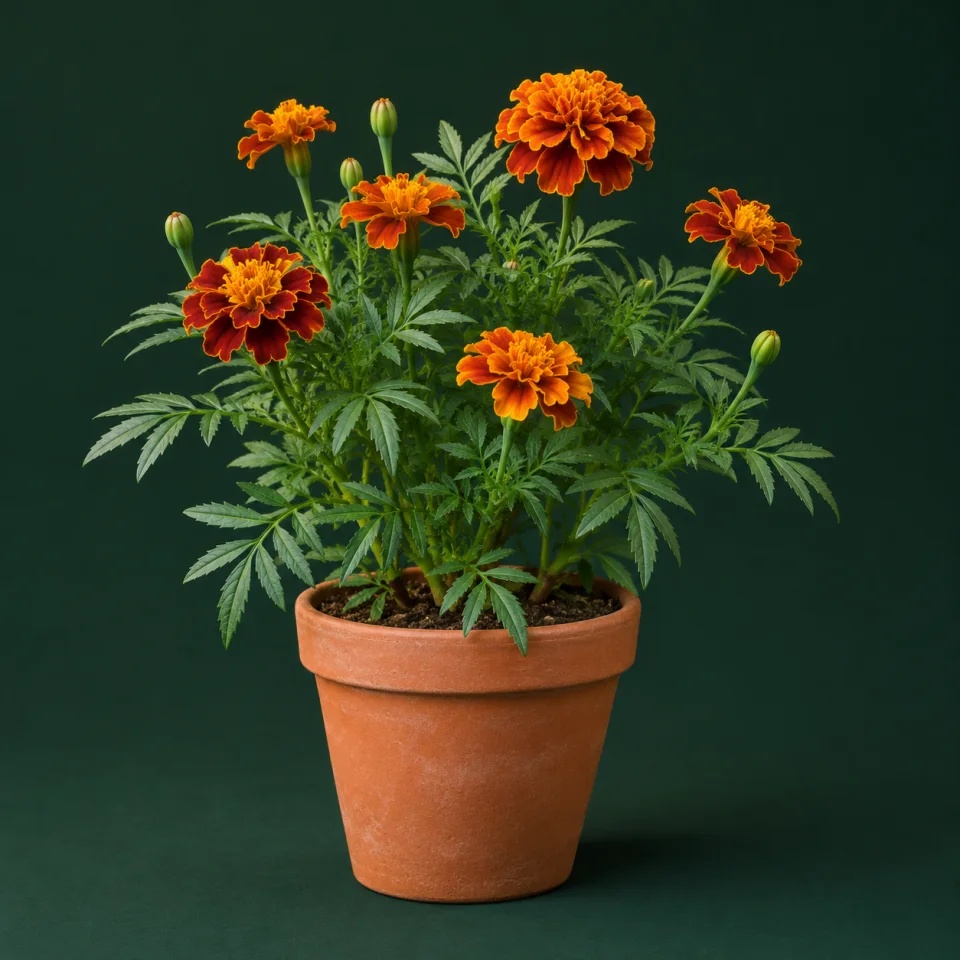
Botanical reference: Tagetes patula
A compact plant for one season
This guide covers Tagetes patula, with divided leaves and yellow, orange or reddish single or double flowers depending on variety. It is not Calendula officinalis or the generally larger Tagetes erecta. Choose a healthy plant and a position where you can check the compost. It is an annual: it need not last for years to have been well cared for.
Sun and space between leaves
Find a sunny outdoor spot and gradually acclimatise a plant raised under nursery protection. Shade can reduce flowering. Leave air between plants rather than packing a planter for an immediately full effect. An accessible pot makes spent-flower removal and moisture checks much easier.
Check the mix before watering
Feel the top few centimetres and lift the pot if possible. When that zone starts to dry, water slowly to moisten the rootball, let it drain and empty the saucer. Heat and wind can speed drying. Avoid sodden mix, but do not interpret drought tolerance as permission for repeated wilting. Direct water onto the mix rather than constantly wetting flowers.
Drainage and straightforward repotting
Use draining potting mix and clear drainage holes, without treating an outer pot as a reservoir. If roots fill the nursery pot with hardly any compost left, move to a modestly larger one at the same planting depth. A compact plant does not need a huge container. Allow space for the size on its label.
Feed lightly, not automatically
Check whether nutrients are already in the mix. Marigolds are light feeders; if feeding is needed during growth, choose a flowering-plant product according to its label. Avoid combining products or increasing doses because flowers are scarce: excess can favour foliage. Review sun, roots, moisture and buds first.
Remove finished heads and respect its cycle
Cut a deteriorated head with its short stalk back to a point with healthy leaves, using clean scissors. Leave new buds intact. This reduces debris that can rot in humidity and helps maintain flowering. A young plant can be pinched if it needs branching, but constant trimming is unnecessary. Frost often ends the season; extra feed cannot reverse that.
Spots, webbing or rotting flowers
Check leaf undersides, shoots and heads. Mites, thrips, mildew or other diseases are possible, but a mark alone does not identify them. Remove rotting heads, improve airflow and check retained water. Decline in wet compost calls for root checks before more watering. Isolate confirmed problems and seek identification if uncertain; avoid automatic preventive spraying across all pots.
Holidays, skin contact and pets
Before a trip, arrange weather-led moisture checks without leaving a standing-water reserve. Sap may irritate skin, particularly with sunlight exposure; wear gloves when cutting if sensitive and wash hands. Discourage pets from eating it: Tagetes can cause digestive irritation. The name marigold does not establish edibility or a home remedy; contact a vet for suspected ingestion.
Guides to help with your decision

Which flowers to give to someone with cats or dogs
Flowers for a home with cats or dogs: options to consider, checking the whole bouquet and precautions with lilies, holly and mistletoe at Christmas.
How to care for petunias in pots and window boxes
Sun, watering, feeding and spent flowers for garden petunias, with variety differences and end-of-season care.
How to care for garden verbena in a pot
Sun, water, feeding, spent flowers and white powder on leaves: care for compact or trailing garden verbena through heat and cold.
How to care for pot marigold through its growing season
Sun, moderate water, spent flowers, seeds and heat: Calendula officinalis care in containers, distinct from Tagetes marigolds.
Frequently asked questions
Will one marigold keep pests off the other pots?
Placing one nearby does not guarantee general protection. Uses of Tagetes patula against certain soil nematodes have specific conditions and do not replace checking each plant or addressing an identified problem.
Do I have to keep it through winter?
No. Tagetes patula is an annual and frost commonly ends its cycle. Enjoy the season and plan another planting when conditions are suitable, without treating its natural end as a failure of care.
Sources and what they support
- NC State Extension · Tagetes patula
Identity as a compact annual, pinnate leaves, single or double heads, sun and drainage; possible mildew, rots, mites and thrips. Sap can cause contact dermatitis with sunlight; no food-safety inference.
- University of Minnesota Extension · Marigolds
Distinguishes T. patula, T. erecta and T. tenuifolia; light feeding, excess favouring leaves over flowers, beneficial spent-head removal and frost damage. Ground-growing advice is not copied as fixed pot watering.
- University of Wisconsin Extension · Marigolds
Sun, even moisture without waterlogging, low feeding needs and distinction from Calendula officinalis. T. patula cover-crop studies against certain nematodes do not establish a universal repellent in a pot.
- Pet Poison Helpline · Marigold
Tagetes spp. may irritate the digestive tract if eaten and skin through sap. Distinguishes Calendula officinalis, whose classification must not be transferred to T. patula; no dose or home treatment.
How we put these guides together
We review dates, care and recommendations to help you plan each gift.
Spotted something we should review? Contact Agenda Floral.