Guides
How to care for a Chinese money plant in a pot
Care difficulty4 out of 10
Pay attention to watering and growing conditions.
Editorial guide, with suitable light and climate. 0: very easy; 10: very delicate. More stars mean more care.
Pilea needs bright light away from strong sun and a freely draining pot. Water when the top few centimetres start drying and empty excess; neither keep it constantly wet nor wait for complete wilting. Turn the pot occasionally to share the light. Offsets may stay with the parent or be separated when large enough with roots.
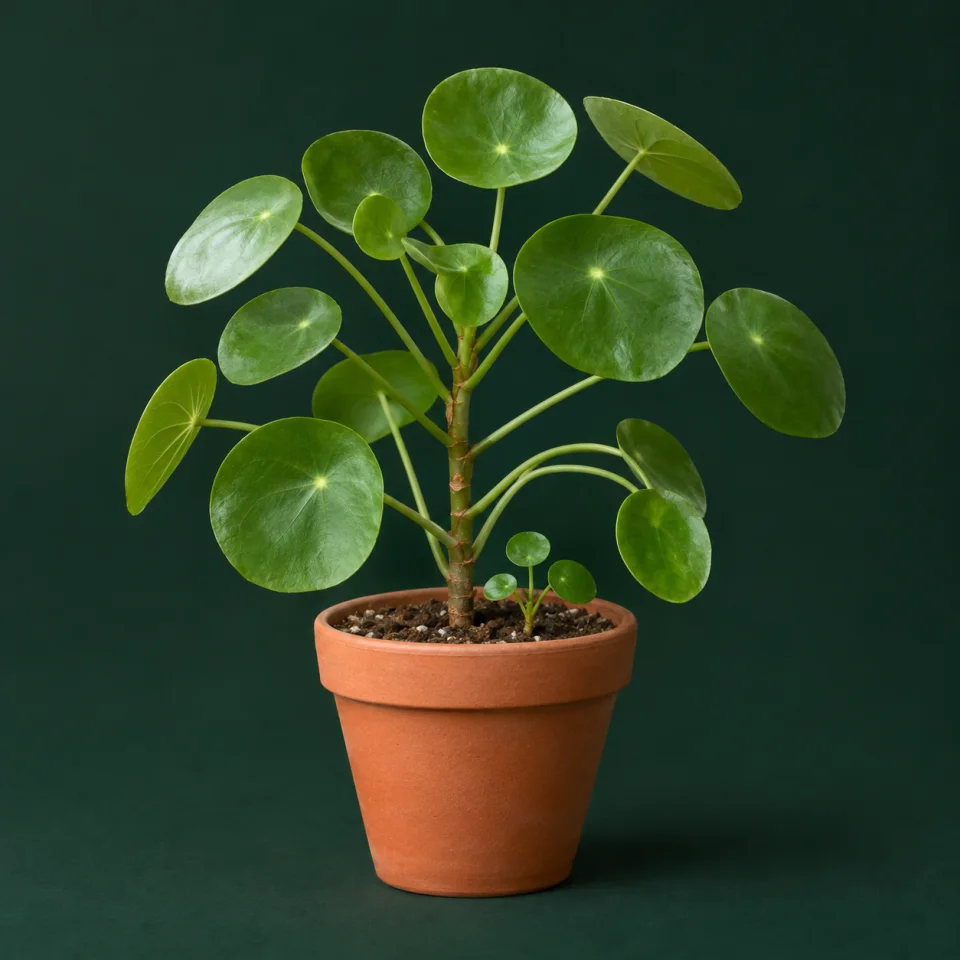
Botanical reference: Pilea peperomioides
Recognise the coin-shaped leaves
This guide covers Pilea peperomioides. Its round, slightly fleshy leaves have a stalk attached near the centre underneath. Not every money plant is this species, and not all pileas need identical care. Keep the label. Choose a firm stem and healthy leaves without treating absent flowers as a problem: indoors it is grown mainly for foliage.
Even light and a warm room
Place it near a bright window protected from strong sun, rather than deep in a dark room. If it leans towards light, gradually turn the pot during checks. Avoid sudden changes, radiators and cold draughts; keep above roughly 10°C without using that minimum as an ideal temperature. If moved outside in mild weather, acclimatise it and bring it back before cold.
Feel the mix before watering
Check the upper few centimetres and lift the pot to feel its weight. As they start drying, slowly moisten the root ball and allow drainage. Empty saucers or cover pots. Less light and slower growth mean less water, without a fixed day or a completely dry rest. If leaves droop in still-wet mix, inspect drainage before watering again.
An enormous pot is unnecessary
Use airy houseplant mix retaining some moisture and clear drainage holes. Check roots if growth is poor or the pot becomes full; repot during growth only slightly larger at the same depth. A healthy newly bought plant can wait. An oversized container holds wet mix around roots that do not yet occupy it.
Modest feed and simple cleaning
During active growth a balanced feed may help according to its label and existing nutrients. Reduce or pause when growth slows, and do not fertilise damaged roots back to health. Wipe dust with a soft damp cloth while supporting each leaf. It generally tolerates household air: belonging to Pilea does not require a humid terrarium or daily misting.
Separate offsets without pulling leaves
Leave them to make a fuller clump or separate one during growth. Wait for several leaves and its own roots. Gently expose the connection and cut with a clean tool if needed, rather than pulling blindly. Pot the offset in a small draining container and maintain moderate moisture while establishing. Not every offset must be removed or is guaranteed to root successfully.
Check signs before taking action
One ageing lower leaf differs from many rapidly yellowing leaves. Check mix, light, cold and roots. An excessively stretched stem may need more light rather than water. Inspect undersides and stems for mealybugs, mites or other insects. Some white dots can be mineral deposits rather than pests. Separate an affected plant and identify the cause before treatment or feed.
Absences and pets
Leave instructions for checking moisture and emptying surplus instead of filling a saucer for days. Correctly identified, it is considered non-toxic to dogs and cats, but is not food: any plant ingestion may cause upset. Prevent chewing and access to mix, feed and applied products. Collect fallen leaves and consult a vet for symptoms or uncertain ingestion.
Guides to help with your decision

Which flowers to give to someone with cats or dogs
Flowers for a home with cats or dogs: options to consider, checking the whole bouquet and precautions with lilies, holly and mistletoe at Christmas.
How to care for a spider plant and understand brown tips
Light, watering, roots, plantlets and dry leaf tips: what to check when caring for a spider plant at home without overdoing water or feed.
How to care for a parlour palm in a pot
Light, watering, roots and brown tips: care for Chamaedorea elegans without overwatering or mistaking slow growth for trouble.
How to care for a baby rubber plant in a pot
Peperomia obtusifolia light, watering and pot care: judge partial drying, choose a container and check problems without drowning the roots.
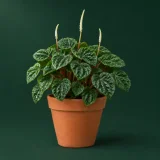
How to care for a ripple peperomia indoors
Watering, light and roots for Peperomia caperata, with checks for normal leaf ridges versus stress and a practical leaf-cutting method.
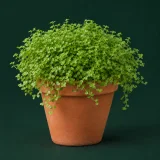
How to care for baby’s tears indoors
Moisture, light and roots for Soleirolia soleirolii: keep its green cushion hydrated without waterlogging, trim it and divide an established clump.
Frequently asked questions
Must every offset be removed?
No. Keep them if you like a fuller plant. Check that the pot still drains and roots are not overcrowded. Separating offsets produces other plants, rather than being obligatory maintenance or a guarantee of faster parent growth.
Why does it lean to one side?
It may be seeking light. Provide enough indirect brightness and gradually turn the pot. If the stem is soft or collapses at the base, check moisture and roots: turning or staking cannot solve every leaning plant.
Sources and what they support
- NC State Extension · Pilea peperomioides
Identity, peltate leaves, indirect light, household humidity, drainage, offsets and problems. Popularity is not project demand; no guaranteed size or flowering.
- RHS · Growing pilea
The group includes peperomioides: upper-centimetre drying, excess removed, turning, suitable pot, modest feed and offsets. No British months, fixed watering or thin-leaved species’ humidity applied to all.
- RHS · Pilea peperomioides
Species, fleshy round leaves, frost-free conditions, separating rosettes and no required pruning. H1C is not an ideal room temperature; growth rates are not guaranteed deadlines.
- NParks · Pilea peperomioides
Corroborates identity, containers and moisture with good drainage. Moderate-water or succulent icons do not mean fixed watering intervals or a completely dry rest.
- Veterinary Poisons Information Service · Pet-safe plants
August 2023 list, page 2: Pilea peperomioides. Any plant ingestion may cause digestive upset; this does not establish food safety or harmless feed, mix and treatments.
How we put these guides together
We review dates, care and recommendations to help you plan each gift.
Spotted something we should review? Contact Agenda Floral.