Guides
How to care for calathea orbifolia in a pot
Care difficulty8 out of 10
Pay attention to watering and growing conditions.
Editorial guide, with suitable light and climate. 0: very easy; 10: very delicate. More stars mean more care.
Calathea orbifolia needs plenty of light away from strong sun, steady warmth and lightly moist, well-drained mix. Check the upper layer before watering and empty excess water. Extra watering cannot correct dry air. Brown edges call for checks of moisture, water and position before adding fertiliser.
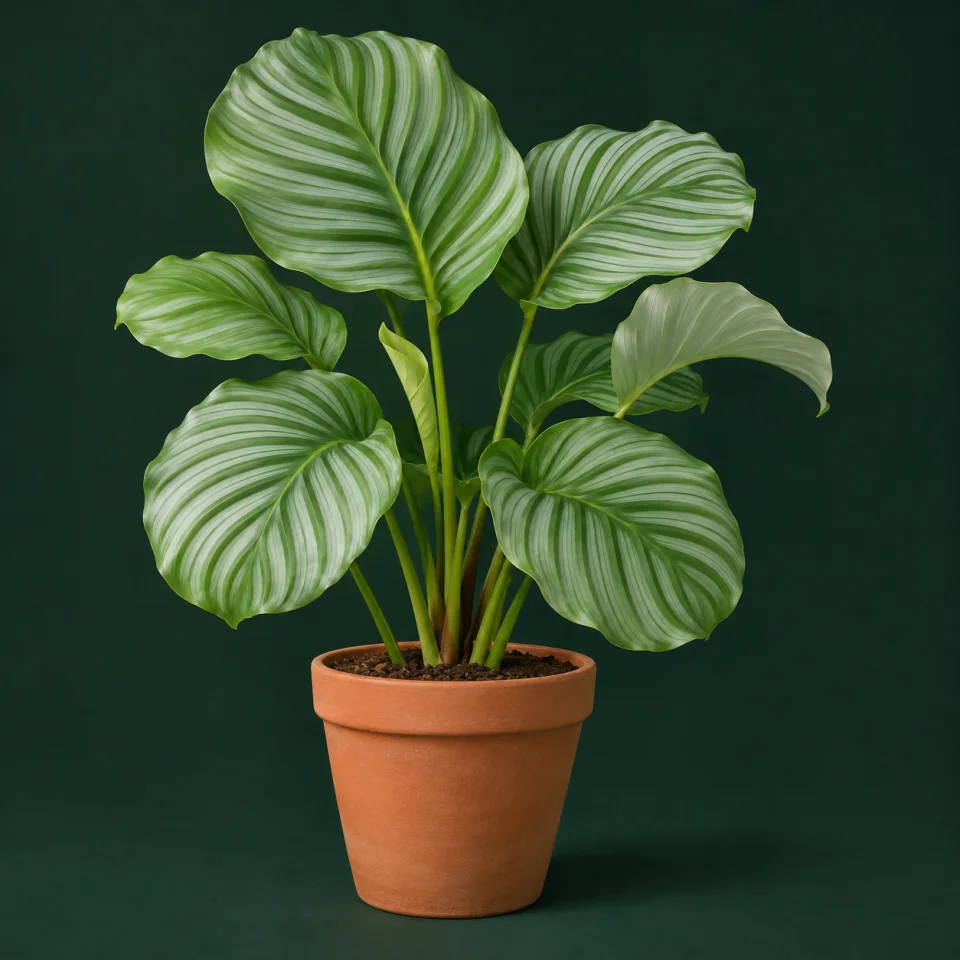
Botanical reference: Goeppertia orbifolia
Recognise its rounded leaves
Look for Goeppertia orbifolia, also sold as Calathea orbifolia. It makes an upright clump of large rounded leaves striped green and silver. Allow room for them to open without rubbing a wall. Grown for foliage, it rarely flowers indoors; flowers are not a requirement for health. A new leaf may emerge rolled before opening.
Gentle light and steady warmth
Place it near a bright window with indirect light or a sheer curtain, away from the glass. Strong sun can scorch it, while a dark corner is not filtered shade. A steady room temperature of roughly 18–24°C is a useful guide; avoid falling below about 16°C. Keep it away from radiators, air conditioning and cold draughts, including on the journey home.
Let the mix guide watering
Feel beneath the surface and lift the pot to learn its weight. When the upper mix starts losing moisture, water slowly to moisten the root ball and let it drain. Empty saucers and cover pots. With slower growth and less light, allow a little more surface drying, without drying the whole interior. Wet mix and drooping leaves call for a root check before more water.
Consider air humidity and water quality
Seek sustained air humidity away from heating. A bathroom only works with suitable light and warmth too. In a very dry room a clean humidifier may help; a quick mist does not keep air humid all day. Use room-temperature water. If tips scorch and water is hard or mineral-rich, try clean rainwater or distilled water. Standing water does not remove hardness or fluoride.
Give roots air in a suitable pot
Choose drainage holes and airy houseplant mix that retains some moisture. An enormous pot is not a way to avoid future repotting. Repot during growth when roots fill their space or the mix deteriorates, keeping the previous planting level. Propagation involves dividing a healthy clump with roots and shoots; a single cut leaf is not a substitute.
Modest feeding and clean leaves
Feed only during growth, following the label and nutrients already in the mix. Do not stack products or try to repair damaged roots with fertiliser. Wipe dust with a soft damp cloth, supporting each leaf so its stalk does not bend. Remove dead leaves with a clean tool. Brown tissue will not turn green; retain healthy parts and watch new leaves.
Look at the whole plant when it changes
One ageing yellow leaf differs from several yellow leaves in constantly soaked mix. For dry edges or persistently rolled leaves, check root moisture, dry air, water, sun and cold. Inspect undersides and stalks for mites or mealybugs. Separate an affected plant and identify the problem before treatment. Changes in leaf position at night can be natural.
Absences and pets at home
Leave instructions for feeling the mix and emptying surplus water before going away. Do not submerge roots as a reserve for days. Correctly identified, it is considered non-toxic to dogs and cats, but is not food: eating leaves can cause upset. Prevent chewing and access to feeds or treatments. Consult a vet for symptoms or uncertain ingestion.
Guides to help with your decision

Which flowers to give to someone with cats or dogs
Flowers for a home with cats or dogs: options to consider, checking the whole bouquet and precautions with lilies, holly and mistletoe at Christmas.
How to care for a spider plant and understand brown tips
Light, watering, roots, plantlets and dry leaf tips: what to check when caring for a spider plant at home without overdoing water or feed.
How to care for a prayer plant in a pot
Light, humidity, watering and moving leaves in Maranta leuconeura. Keep its patterns healthy without mistaking night movement for thirst.
How to care for a Triostar stromanthe in a pot
Light, watering, humidity and pink leaves in Stromanthe thalia Triostar. Separate natural leaf movement from problems needing attention.
Frequently asked questions
Will misting alone prevent brown tips?
It rarely maintains humidity throughout a room. Check dry draughts and heating first, along with water quality and mix condition. A better position or well-maintained humidifier may help; soaking roots more cannot replace air humidity.
Must I cut off every leaf with brown edges?
No. Trim dry tissue if it bothers you, using a clean tool without cutting healthy parts. A partly dry-edged leaf still provides green surface. Improve the conditions and assess new growth, since dead tissue cannot recover.
Sources and what they support
- NC State Extension · Goeppertia orbifolia
Identity, foliage, habit, indirect light, moisture without saturation and sensitivity to water and dry air. Brown tips are not a single-cause diagnosis; no indoor flowering guarantee.
- RHS · Goeppertia orbifolia
Name and synonyms, filtered light, stable warmth of at least 16°C, division and dead leaves. No air-purification claim or promise of indefinite life.
- RHS · Growing calatheas
Group guide including orbifolia: surface moisture adjusted to growth, excess water removed, proportional repotting, nutrition and leaf movement. No British months or mandatory feeding calendar.
- New York Botanical Garden · Goeppertia
Genus guidance on tepid water, hardness, humidity and stability; the profile describes insignis and ornata and does not identify orbifolia. No peat recipes, months or compulsory terrarium.
- Veterinary Poisons Information Service · Pet-safe plants
Goeppertia species appears on the household pet-safe list; eating any plant may cause digestive upset. This does not establish edibility or safety of applied products.
- Ask Extension · Maryland horticulturists
Standing water: evaporating chlorine does not remove fluoride, chloramine or minerals. Multiple causes of brown edges and dead tissue that cannot heal; no compulsory annual repotting or root washing.
How we put these guides together
We review dates, care and recommendations to help you plan each gift.
Spotted something we should review? Contact Agenda Floral.