Guides
How to care for a Triostar stromanthe in a pot
Care difficulty8 out of 10
Pay attention to watering and growing conditions.
Editorial guide, with suitable light and climate. 0: very easy; 10: very delicate. More stars mean more care.
Triostar stromanthe needs filtered light, a warm room and moist mix that lets roots breathe. Check the upper layer before watering and empty the excess. Air humidity matters too. Raised leaves at night can be natural; leaves that stay rolled and damaged in daylight call for a check of their conditions.
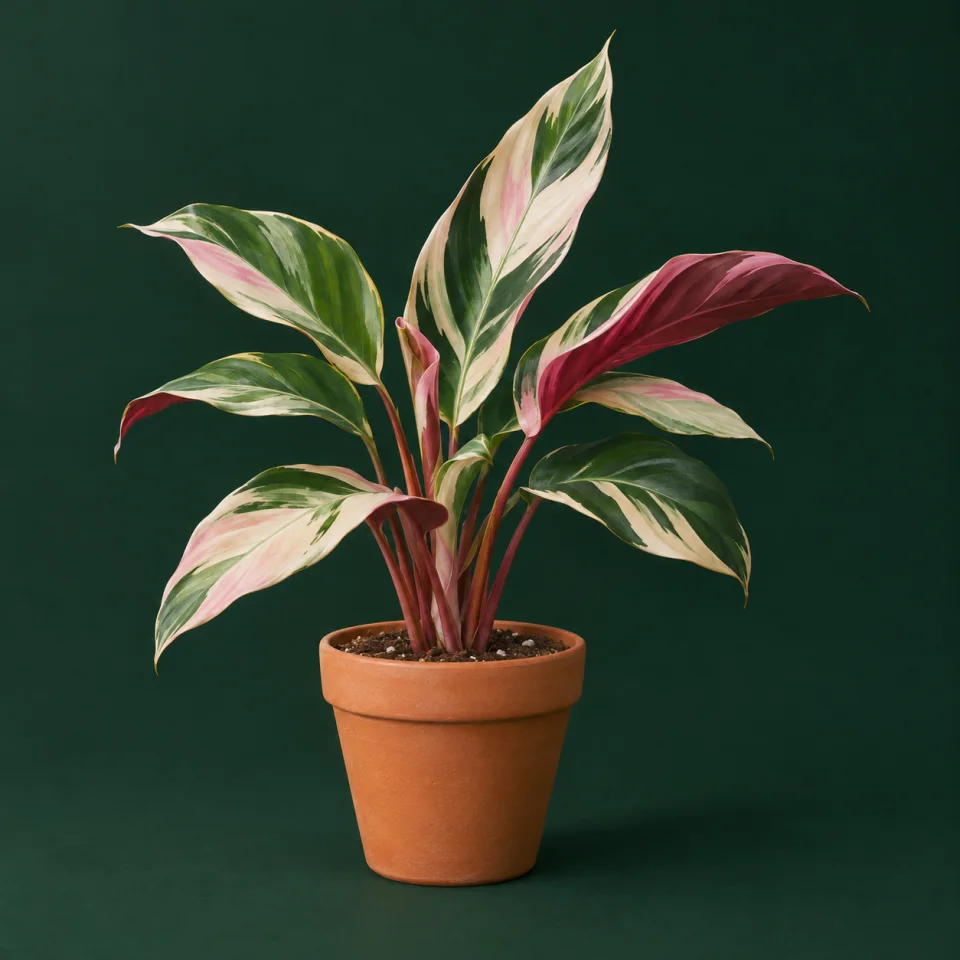
Botanical reference: Stromanthe thalia ‘Triostar’
Recognise the Triostar on the label
Look for Stromanthe thalia Triostar, also sold as Stromanthe sanguinea Triostar. Its elongated leaves combine green, cream and pink with burgundy undersides. Ctenanthe oppenheimiana Tricolor can look similar; colour alone cannot confirm identity. Keep the label and allow room for leaves without rubbing walls. It is a foliage plant and need not flower indoors to be healthy.
Plenty of light without strong sun
A bright window with a sheer curtain usually suits it better than intense direct sun or a dark corner. Acclimatise it gradually when changing position. Seek mild steady warmth, for example around 18–21°C, without cold draughts or heating blowing onto leaves. Protect the journey home too. Do not suddenly increase sun to try to produce more pink.
Keep moisture without water below
Feel beneath the surface and learn the pot’s weight. When the upper layer starts losing moisture, water slowly and drain, before the whole root ball dries. Empty saucers and cover pots. With less light and slower growth, the surface can dry a little further and less water is needed. Wet mix and drooping leaves do not automatically call for another glass of water.
Dry air needs different help
Keep it away from radiators and air-conditioning jets. A bright warm bathroom may work; a dark one will not. In very dry air a clean humidifier may help more than occasional misting. Do not leave the pot base submerged. Use room-temperature water; if yours leaves substantial mineral deposits, try a lower-mineral alternative. Standing it does not remove hardness or fluoride.
Airy mix and repotting when needed
Choose moisture-retaining houseplant mix that will not compact and a pot with holes. Neither an enormous pot nor immediate repotting after purchase is needed if all is well. If roots fill their space or mix deteriorates, repot during growth into a proportionate size at the same depth. To propagate, divide a healthy clump with roots and several shoots or leaves per piece. One cut leaf is not enough.
Feed and clean without forcing growth
During active growth use houseplant feed according to its label and existing nutrients. Reduce or pause when growth stops, and do not use fertiliser to rescue diseased roots. Wipe dust with a soft damp cloth while supporting each leaf. Remove dead parts with a clean tool. Regular hard pruning is unnecessary; tissue already dried cannot turn green again.
Observe leaves, undersides and base
Leaf position changes between day and night. Persistent rolling, several yellowing leaves or spreading brown tips instead call for checks of mix, air humidity, water, cold and sun. Inspect undersides and stalks for mites, mealybugs or aphids. Separate an affected plant and identify the issue before applying products. One brown tip cannot tell you whether there is too little or too much water.
Absences and life at home
Leave a helper instructions for feeling the mix and emptying excess, rather than watering every set number of days. A permanent saucer reservoir can harm roots. Prevent children or pets chewing foliage, mix or applied products; this is not a food plant. Collect trimmings and store feeds out of reach. For uncertain ingestion or animal symptoms, consult a vet with the label.
Guides to help with your decision
Which flowers to give to someone with cats or dogs
Flowers for a home with cats or dogs: options to consider, checking the whole bouquet and precautions with lilies, holly and mistletoe at Christmas.
How to care for a prayer plant in a pot
Light, humidity, watering and moving leaves in Maranta leuconeura. Keep its patterns healthy without mistaking night movement for thirst.
How to care for calathea orbifolia in a pot
Filtered light, water, air humidity and brown leaves in Goeppertia orbifolia. Learn to water it without keeping its roots soaked.
Frequently asked questions
Is it drying out when its leaves come together at night?
Not necessarily. Stromanthe may lift or fold leaves in the evening and open them afterwards. Check its daytime condition and feel the mix before watering. If leaves stay rolled, review root and air moisture, temperature and position.
Will more sun or feed make it pinker?
Do not force it. Colour patches vary between leaves of this cultivar; strong sun can scorch them and extra feed cannot fix that. Provide filtered light and healthy growth, keeping the identity on the label without expecting identical leaves.
Sources and what they support
- NC State Extension · Stromanthe thalia
Identity, sanguinea synonym, Triostar cultivar, leaves and night movement; moisture without saturation, filtered light, division and pests. Outdoor size, USDA zones and flowering are not promises for homes.
- NParks · Stromanthe thalia Triostar
Horticultural cultivar, green/cream/pink variegation, undersides and similarity to Ctenanthe oppenheimiana Tricolor; moist drainage and division. Singapore shade/water icons are not a universal indoor recipe.
- RHS · Stromanthe sanguinea Triostar
Triostar profile: filtered light, air humidity, less water in slower growth, feed and division. No compulsory two-to-three-week feeding, H1B hardiness transfer or obligatory pruning.
- RHS · Calatheas, including Stromanthe
The group includes Triostar: temperature guidance, surface drying in slower growth without drying the root ball, excess removed, suitable pot and leafy rooted divisions. No British months or misting guarantees.
- Ask Extension · Maryland horticulturists
Brown edges with multiple causes, minerals and dead tissue; standing water does not remove fluoride, chloramine or calcium. General advice, not a Triostar diagnosis or reason for annual root washing.
How we put these guides together
We review dates, care and recommendations to help you plan each gift.
Spotted something we should review? Contact Agenda Floral.