Flowers
Pussy willow branches: dry or in water, and where to get them
For a vase of silvery catkins, buy cultivated goat willow or another catkin willow from a florist or nursery. To keep them as they are, put them in a vase without water: they dry and the catkins keep their look. In water they carry on flowering, release pollen and may root. Leave wild branches alone: at the end of winter they are one of the first foods for bees.
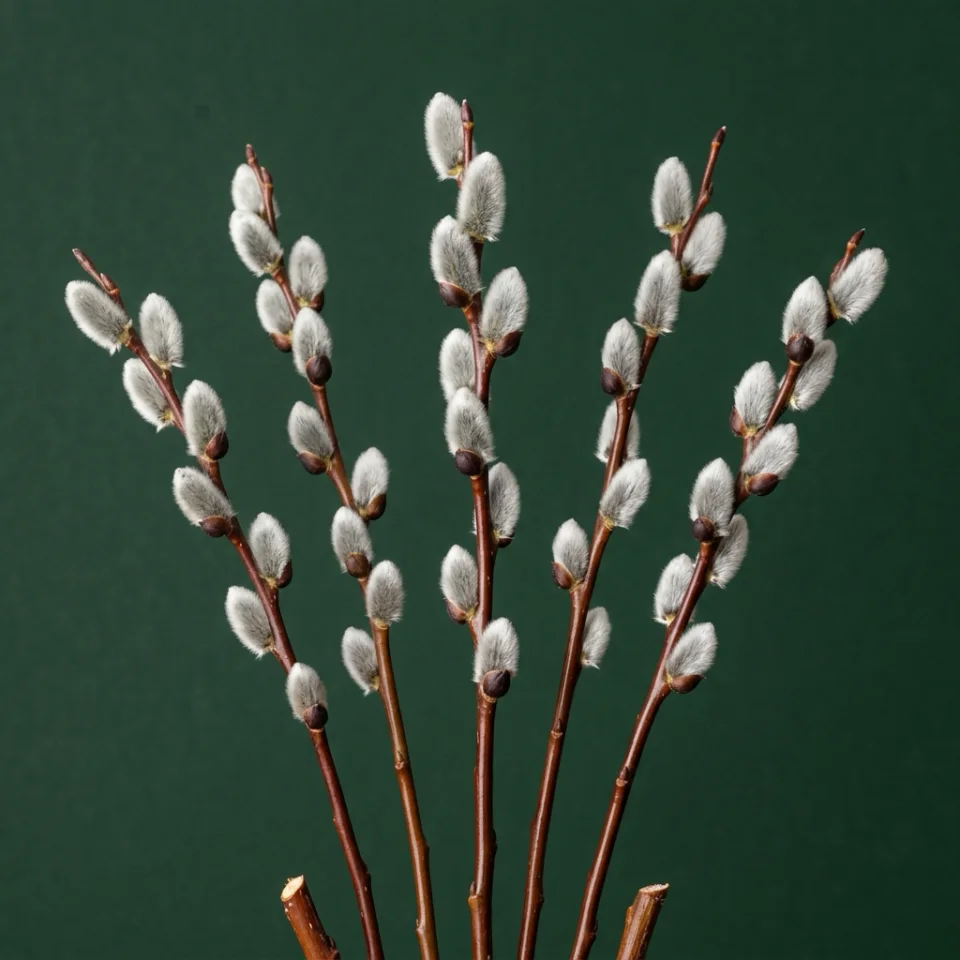
Botanical reference: Salix caprea L.
What you get when you ask for pussy willow
Catkins are the flowers of the willow. They appear on the branches before the leaves, grouped in spikes covered in silky hairs. Salix caprea, goat willow, is the species most associated with these branches, although other similar catkin willows are sold under the same name. If the species matters to you, ask for the botanical name.
Goat willow has male and female plants. Catkins on male plants eventually release pollen, and that stage comes sooner on a branch standing in water. The image on this page shows the silvery grey stage, before pollen appears.
Dry in the vase or in water
If you want the branch to stay as you bought it, stand it in a vase without water, somewhere cool and away from direct sun and radiators. It dries slowly and the catkins keep their fuzz. Many branches are sold already dried at that stage, and they can last for years.
In water the branch stays alive. The catkins open, those on male plants release pollen that can drop onto the table, and leaves may follow. Willows root easily, so roots can appear too. If you want to plant it, change the water regularly and move it outdoors once it has good roots; think about the spot first, because goat willow grows into a large shrub or a tree.
Why not cut them in the wild
At the end of winter few flowers are open. Catkins hold nectar and pollen, and goat willow is the first major food source for honeybees. In southern Germany almost sixty wild bee species collect pollen from flowering willows, and ten rely on willows alone. That is why it is best to enjoy them where they grow and take home bought branches.
In Germany, federal nature conservation law prohibits cutting back or removing hedges, bushes and other woody plants outside woodland from 1 March to 30 September, except gentle shaping and maintenance cuts (§ 39(5) BNatSchG). Whether a few branches fall under the exception for small quantities for personal use (§ 39(3)) depends on how much they affect the shrub, and that exception does not apply where access is prohibited or against the rules of protected areas.
In Austria, each federal state has its own species protection ordinance. In Burgenland, for example, traditional willows such as goat willow may only have the tips of their flowering branches taken for a personal hand-held bunch or for traditional events. The simplest option is to buy them from a florist, market or nursery, or cut them from a willow in your own garden.
Palm Sunday and Easter
Catkin branches are part of Palm Sunday in several countries. In Austria, Palmbuschen are blessed: bundles of green and flowering branches that often include willows with catkins. In the countryside they are carried around the house, or twigs are placed behind the crucifix or at the door. In Poland, traditional palms are based on bazie, willow branches with catkins, together with juniper, yew or boxwood and decorations that vary by region. In Lithuania, verbos are made with juniper and budding willow twigs; they are blessed and used to be kept all year.
These are religious and local customs, each with its own form. For a palm or a Palmbuschen for your parish, follow the local practice; bought branches work just as well. At Easter, the Austrian Osterstrauch is usually made with willow catkins, cherry or forsythia, branches brought indoors early and decorated with painted eggs.
Getting them ready as a gift
For an Easter visit, a bunch of branches in a tall, narrow vase takes up little room on the table. You could ask: “I’m looking for willow branches with silvery catkins, already dried, for a vase of about 40 centimetres. Are they cultivated?” If you would rather watch them open at home, ask for freshly cut branches.
When we suggest this flower
Compare flowers to choose the format, colours and care that suit the occasion.
Palm Sunday in Poland
Poland · Nationwide
Main flower in our selectionBazie, willow twigs with catkins, are the base of the palm blessed on Niedziela Palmowa. Choose them while the catkins are still silver, from a florist or your own garden. In 2027 it is a trading Sunday, but if Mass is early, get them on Saturday.
Palm Sunday · Palmsonntag
Austria · Nationwide
Main flower in our selectionPussy willow catkins, Palmkätzchen, are the base of many Austrian Palmbuschen, which are blessed on Palm Sunday. Buy them from a florist or nursery, or cut them in your own garden, while the catkins are still silver. Shops close on Sunday, so get them on Saturday.
Guides to help with your decision
Giving forsythia: flowering branches or buds
Yellow-flowered branches for a vase. Choose buds to watch open at home or flowering branches for the handover.
Palm Sunday in Lithuania: choosing a craft verba
When Verbų sekmadienis falls and how to choose a handmade Vilnius verba. Materials, size and the difference from a dried-flower gift.
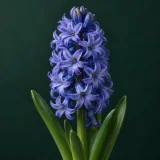
Wielkanoc in Poland: Easter flowers and the Saturday 2 pm cut-off
Easter falls on 28 March 2027 and the Monday is a public holiday in Poland too. On Holy Saturday shops sell until 2 pm: get hyacinths, tulips and boxwood in time.
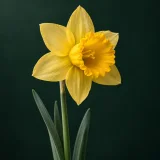
Easter Sunday 2027 in Austria: daffodils, the Osterstrauch and pot plants
In 2027 Easter Sunday is 28 March and the Monday is a public holiday. Choose flowers for an Easter visit and buy them before the shops close.
How to care for a bouquet when it arrives
Bouquet care on arrival: water, stem cutting, flower food and mixed flowers. What to check if it looks limp and how to keep the flowers still doing well.
Fresh, dried or preserved flowers: choosing a gift
Choose fresh, dried or preserved flowers by their finish and care. Questions about treatment, containers and keeping part of a bouquet.
Frequently asked questions
Can I cut branches from the willow in my garden?
A few, yes, without harming the shrub. In Germany only gentle cuts are allowed between March and September; cutting the willow back hard or removing it has to wait until October. Leave flowering branches for insects and do not cut where birds are nesting.
Why are my catkins shedding yellow dust?
That is pollen from male catkins: the branch is in water and still flowering. It is not a fault. To keep them silvery, leave them in a vase without water next time.
Sources and what they support
- Kew · Plants of the World Online · Salix caprea
Salix caprea L. is an accepted species in Salicaceae. Does not identify the species in a commercial bunch or separate similar catkin willows sold under the same name.
- Visuotinė lietuvių enciklopedija · Blindė
Lithuanian name blindė for Salix caprea, a tree or shrub in Salicaceae with flowers in catkins that appear before the leaves; a nectar plant. Used for naming, not collecting rules.
- RHS · How to grow shrubby willows
Catkins attract bees and other pollinators and provide pollen (on male plants) and nectar, especially in early spring; shrubby willows are easy to grow from hardwood cuttings. UK garden guide; does not cover cut branches or Salix caprea specifically.
- BUND Naturschutz in Bayern · Weidenkätzchen in der Natur lassen (09/04/2020)
Catkins are willow flowers with nectar glands; Salix caprea is the first mass food for honeybees and almost 60 wild bee species in southern Germany collect willow pollen, ten of them only from willows. Interprets § 39(5) BNatSchG and the small-quantity rule (§ 39(3)) for wild branches. Conservation group; its figures refer to southern Germany.
- Gesetze im Internet · § 39 BNatSchG
§ 39(5)(2): from 1 March to 30 September it is prohibited to cut, coppice or remove trees outside woodland and horticultural land, hedges, bushes and other woody plants, except gentle shaping and maintenance cuts. § 39(3): small quantities for personal use where access is not prohibited. German federal text; does not cover state rules or Austria.
- Umweltbundesamt Österreich · Artenschutzverordnungen der Bundesländer
Links to the species protection ordinances of each Austrian federal state. An index of links: it does not summarise what each one allows.
- Bgld. Artenschutzverordnung 2001 · § 1 (JUSLINE)
In Burgenland, above-ground parts of partly protected species may be taken for personal use (Handstrauß) or traditional events only in listed cases, including Palmkätzchen (Salix): tips of flowering branches of traditionally used species such as goat willow. Text reproduced on a legal portal; applies only to Burgenland and sets no quantities.
- Thursd · Could Salix be the next addition to your floral arrangements? (14/07/2021)
Branches dry naturally in a vase without water and many are sold dried at peak fuzziness; kept hydrated they continue flowering and can leaf out. Dried, they can last several years. Floral trade publication, not a technical study.
- Iowa State University Extension · How can I propagate a willow?
Willow cuttings can root in a container of water indoors; change the water regularly and plant outdoors once roots are well developed. US propagation guidance; no timings and not about dried shop branches.
- katholisch.at · Bräuche rund ums Osterfest (10/04/2025)
In Austria Palmbuschen are made of green and flowering branches, including willows with catkins, and blessed on Palm Sunday; in rural areas they are carried around the house or twigs are fixed behind the crucifix or at the door. The Osterstrauch is usually willow catkins, cherry or forsythia. Regional customs, not obligations.
- Narodowy Instytut Dziedzictwa · O tradycjach Niedzieli Kwietnej (22/03/2024)
Traditional Polish palms are based on willow branches with catkins (bazie), with juniper, yew or boxwood and regional decorations; they are blessed on Palm Sunday. Ritual uses involving swallowing catkins are not repeated or presented as current practice.
- Etninės kultūros globos taryba · Verbų sekmadienis
On the last Sunday before Easter, verbos of juniper with budding willow twigs and other winter greenery are taken to be blessed; they were kept all year. Historical beliefs are not presented as real effects.
How we put these guides together
We review dates, care and recommendations to help you plan each gift.
Spotted something we should review? Contact Agenda Floral.