Occasions
Palm Sunday 2027 in Austria: Palmbuschen and pussy willow
Austria · Nationwide
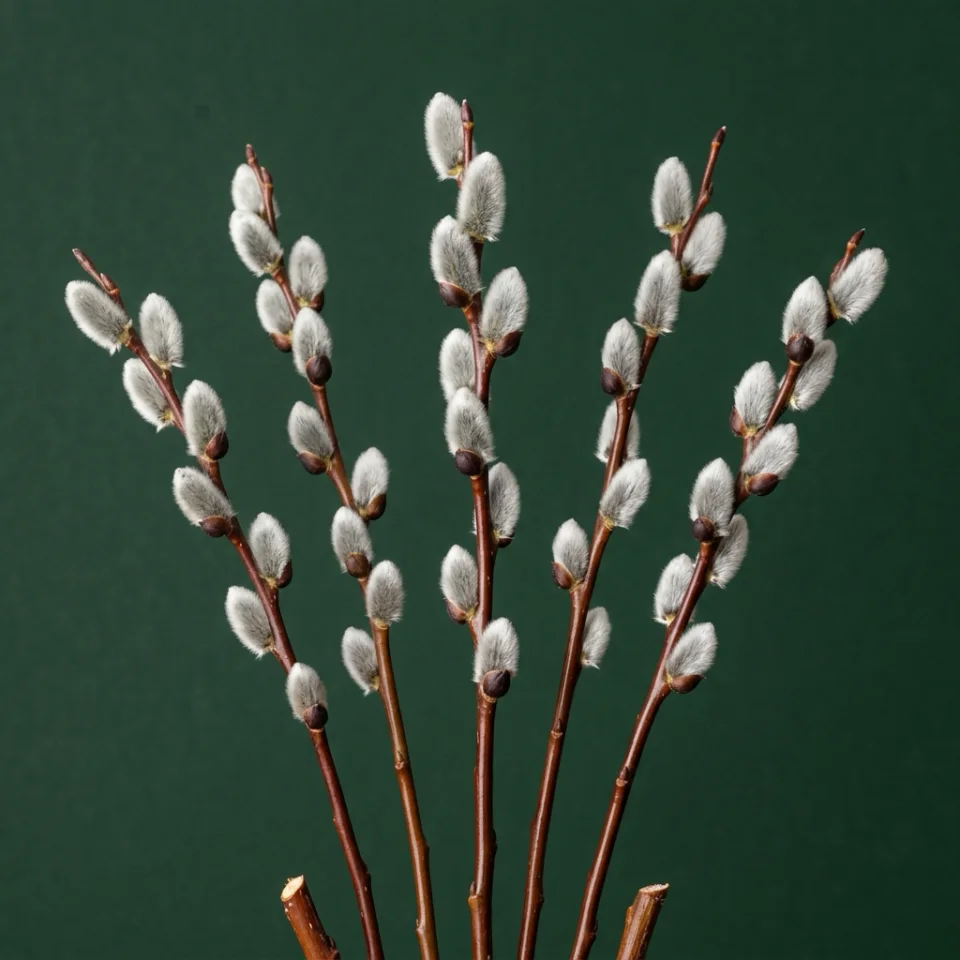
Palm Sunday, Palmsonntag, falls on 21 March in 2027, one week before Easter. On that day Palmbuschen are blessed in church: bunches of pussy willow, the Palmkätzchen, with box, juniper, holly and other branches that vary by region, which are then kept at home. As it is a Sunday, shops are generally closed, so buy the Palmbuschen or its branches on Saturday the 20th, by 6 pm at the latest. Get the catkins from a florist, a nursery or your own garden rather than the wild: they are among the first food for bees.
Upcoming calendar dates
Austria
Agenda Floral, with you
Add it to your calendar
Subscribe to receive our updates, or download the .ics file to import a copy. The copy will not receive later changes.
The Palm Sunday · Palmsonntag series includes dates from 2026 to 2046. The agenda can calculate later years but the file and subscription currently end in 2046.
Use in Google Calendar or another calendar
Open Google Calendar on a computer. Beside “Other calendars”, click “+” and choose “From URL”. Paste the address below to add the subscription. You can then view that calendar on devices using your account.
Guide to adding Agenda Floral to Apple and Google Calendar
Your calendar app decides when to refresh a subscription. Importing the file again may duplicate events. Agenda Floral adds no alarms; you can check alerts in your calendar settings.
21 March 2027: buy on Saturday
Palmsonntag is the Sunday before Easter and opens Holy Week. Its date moves with Easter: it was 29 March in 2026, it is 21 March in 2027 and it will be 9 April in 2028. It is not on Austria’s list of statutory public holidays, but it always falls on a Sunday, and on Sundays shops stay closed unless an exception applies.
The exception that matters here covers florists, who may serve customers on up to six Sundays or public holidays a year; each one decides which. The rule also covers the Saturdays before certain holidays, such as Easter or Mother’s Day, but Palm Sunday is not on that list. Near cemeteries they may sell during opening hours. So you don’t depend on any of that, buy on Saturday 20 March, when shops may open until 6 pm. Each parish sets the time of the blessing: have the Palmbuschen ready the day before.
What goes into a Palmbuschen
Instead of palm and olive, Austria uses branches that are green or in flower at that time of year, such as box, spruce, juniper or willow. In Upper Austria the traditional list includes pussy willow, box, common juniper, holly, yew, heather, birch, oak, cherry, savin, hazel and pollarded willow. An old farmers’ recipe names seven plants wound round a hazel stick and tied with willow. That recipe included mezereon, Seidelbast, which is now protected and may no longer be used.
In Salzburg it is also seven branches: juniper, yew, holly, thuja, pussy willow and box, plus the hazel stick to carry it. They are decorated with ribbons, coloured wood shavings, Palmbrezen, apples or painted eggs.
The shape changes a great deal from one region to another. In some places the branches are tied into a bunch, in others they are fixed to sticks and poles. In Tyrol the decorated Palmlatten are dozens of metres long and take up to 30 people to carry; Imst even holds a contest for the longest. In Carinthia the Palmstangen procession of the Katschtal is well known.
Pussy willow: from the florist or your garden
The silver catkins of early spring are the male flowers of goat willow and other willows. As they ripen they turn yellow and release pollen, and in those weeks they are an early source of pollen and nectar for bees and other insects.
In Austria the protection of wild plants is up to each Land, and the rules are not the same everywhere. In Burgenland, for example, only the tips of flowering willow branches may be cut, for a bunch of your own or for a custom like this one. The simplest option is to buy the catkins from a florist or nursery, or to cut them from a willow in your own garden. In Salzburg ready-made Palmbuschen are also sold at markets and nurseries.
Choose branches whose catkins are still silver and closed: they travel better and won’t shed pollen at home. If you are tying it yourself, also get a straight stick, thread, some willow and pruning shears.
After the blessing
After the procession the blessed Palmbuschen is placed at home, often behind the cross in the Herrgottswinkel, the household’s devotional corner, or on the front door. In the country some families still carry it three times round the house or stick blessed branches into the fields in the hope of a good harvest.
The Palmbuschen that stays in church is burned, and its ashes are used to mark the cross on people’s foreheads on Ash Wednesday the following year.
Yew and box are toxic to dogs and cats, and yew to horses as well. If there are animals at home, hang the Palmbuschen out of their reach or ask for one without yew. A week later comes the Osterstrauch, branches that flower indoors for Easter: the guide to Easter in Austria explains how to choose them.
An order and a card
If someone in your family no longer ties their own Palmbuschen, you can order one as a gift. For example: “I’d like to reserve a small Palmbuschen for Saturday 20 March, about 40 centimetres tall, with catkins that are still silver, box and juniper, and no yew because we have a cat. Tied to a hazel stick with coloured ribbons. I’ll collect it in the morning.”
For the card: “For your home, until next Palm Sunday. See you at Easter.”
Which flowers to choose
Compare flowers to choose the format, colours and care that suit the occasion.
Guides to help with your decision
Which flowers to give for Easter in Germany
Flowers for Easter in Germany: the Sunday date, daffodils for the home or table and what to ask about mixed bouquets. Arrange the order and handover.
Palm Sunday in Lithuania: choosing a craft verba
When Verbų sekmadienis falls and how to choose a handmade Vilnius verba. Materials, size and the difference from a dried-flower gift.
Palmpasen in the Netherlands: buxus and a palmpaasstok for Palm Sunday
Palmpasen falls on 21 March 2027 and shops close on Sunday. Buxus, a bread rooster and how to make a palmpaasstok, with everything bought on Saturday.
Niedziela Palmowa in Poland: bazie palms and a Sunday with shops open
Palm Sunday falls on 21 March 2027 and in Poland it is a trading Sunday. Bazie, box and juniper, and the giant palms of Kurpie and Lipnica.
Easter Sunday 2027 in Austria: daffodils, the Osterstrauch and pot plants
In 2027 Easter Sunday is 28 March and the Monday is a public holiday. Choose flowers for an Easter visit and buy them before the shops close.

How to transport a bouquet by car or plane
How to carry a bouquet, a potted plant or dried flowers without crushing them. Packing, water and checks for flights and bringing plants into your destination.
Which flowers to give to someone with cats or dogs
Flowers for a home with cats or dogs: options to consider, checking the whole bouquet and precautions with lilies, holly and mistletoe at Christmas.
Palm Sunday in France: box and olive branches for the blessing
Rameaux falls on 21 March in 2027, a week before Easter. Prepare a box or olive branch, keeping it separate from a bouquet to take on a visit.
Frequently asked questions
Is Palm Sunday a public holiday in Austria?
No. Austria’s holiday law does not include it, although, as it always falls on a Sunday, shops close anyway. The only statutory holiday that week is Easter Monday, 29 March 2027; Good Friday is a working day.
Are florists open on Palm Sunday?
Only if the shop picks that Sunday as one of the six it may choose each year, or if it is next to a cemetery and sells during the cemetery’s opening hours. Palm Sunday has no preceding Saturday with special hours either. To be safe, buy on Saturday the 20th before 6 pm.
Can I cut pussy willow in the wild?
It depends on the Land, as each one regulates the protection of wild plants. In Burgenland only the tips of flowering branches are allowed, for a bunch of your own or for a custom. As the catkins are early food for bees, it is best to buy them or cut them in your own garden.
Does the subscription include Palm Sunday every year?
Yes. This occasion adds Palm Sunday as an all-day event, with the dates from 2026 to 2046. Easter has its own occasion.
Sources and what they support
- U.S. Naval Observatory · The Date of Easter
Explains the Gregorian Easter calculation used by Western churches; it confirms that Easter 2027 falls on 28 March, so Palm Sunday falls on the 21st. It does not cover customs or opening hours.
- katholisch.at · Bräuche rund ums Osterfest (10/04/2025)
Palmbuschen are blessed on Palm Sunday; Austria uses branches that are green or in flower, such as box, spruce, juniper or willow; some regions tie them into bunches, others fix them to sticks and poles; in Tyrol Palmlatten can be dozens of metres long and are carried by up to 30 people, and Imst holds a contest for the longest; Carinthia is known for the Palmstangen of the Katschtal; in the country they are carried three times round the house or stuck into fields, and at home they go behind the cross in the Herrgottswinkel or on the front door. Article from the Austrian Catholic portal; it describes customs, not purchases or opening hours.
- Diözese Linz · Palmbuschen (Palmbesen)
In Upper Austria the Palmbuschen is traditionally made with pussy willow, box, common juniper, holly, yew, heather, birch, oak, cherry, savin, hazel and pollarded willow; its size and make-up vary by region; an old farmers’ recipe names seven plants wound round a hazel stick and tied with willow, and the mezereon it included is now protected and may not be used; it is blessed on Palm Sunday and set up at home after the procession; the one left in church is burned for the following year’s Ash Wednesday ashes. Undated diocesan page; it describes the Upper Austrian tradition.
- Diözese Linz · Anleitung zum Palmbuschenbinden
Materials: traditionally seven plants depending on the region (for example pussy willow, box, juniper, holly, yew, winter heath, hazel shoots), a sturdy stick, thread, willow, pruning shears and decorations; the twigs are cut, arranged into a bunch, tied with thread and willow, and the hazel stick is fixed in. Undated diocesan how-to; it does not say where to buy the materials.
- SalzburgerLand Magazin · Palmbuschen: immergrün und bunt geschmückt
In Salzburg the Palmbuschen is traditionally tied from seven branches (juniper, yew, holly, thuja, pussy willow and box) with a hazel stick to carry it; it is decorated with ribbons, coloured wood shavings, Palmbrezen, apples or painted eggs; today it can also be bought at markets and nurseries; it is blessed on Palm Sunday and placed by the door or in the Herrgottswinkel at home. Magazine of the Salzburg tourist board, undated; it describes that region.
- RIS · Arbeitsruhegesetz § 7 (Feiertage)
List of Austria’s statutory public holidays: it includes Easter Monday; Palm Sunday and Good Friday are not on it. It does not regulate shop hours.
- RIS · Öffnungszeitengesetz 2003 (§§ 3, 4)
Shops close on Sundays and public holidays unless an exception applies; on Saturdays they may open until 6 pm. Consolidated text checked on 16/11/2026; it does not oblige anyone to open.
- RIS · Arbeitsruhegesetz-Verordnung, Anlage I Z 2 lit. c
Florists and nurseries may serve customers near cemeteries during opening hours, on six Sundays or public holidays a year and, until 5 pm, on the Saturdays before New Year, Valentine’s Day, Easter, Mother’s Day, Whitsun, All Saints, the Advent Sundays and Christmas. Palm Sunday is not listed. It is an exception to employees’ rest; it does not oblige shops to open or say which days each one chooses.
- RIS · LGBl. Burgenland 36/2001 · Bgld. Artenschutzverordnung 2001, § 1
In Burgenland, above-ground parts of certain protected plants may be taken for personal use (a hand-held bunch) or for customs; for Palmkätzchen (Salix), only the tips of flowering branches of traditionally used species such as goat willow. Text published in 2001 and still in force in the consolidated version; it applies only to Burgenland, as each Land sets its own rules.
- Woodland Trust · Goat willow (Salix caprea)
Goat willow is dioecious: male catkins are grey and stout and turn yellow when ripe with pollen; the catkins are an important early source of pollen and nectar for bees and other insects. British botanical profile; it does not cover Austrian rules.
- ASPCA · Yew · Taxus spp.
Classifies yew as toxic to dogs, cats and horses. US source; it does not replace veterinary advice.
- ASPCA · Boxwood · Buxus spp.
Classifies box as toxic to dogs, cats and horses. US source; it does not replace veterinary advice.
How we put these guides together
We review dates, care and recommendations to help you plan each gift.
Spotted something we should review? Contact Agenda Floral.