Flowers
When to give delphiniums
You can give delphiniums for a birthday or suggest them for a wedding when you want flowers that add height. Before ordering confirm the cultivar, shade and finished height including the container. Ask for an arrangement that looks as you need it to on the day and agree on transport. Where children or animals could reach it consider another flower because Delphinium elatum is toxic if eaten.
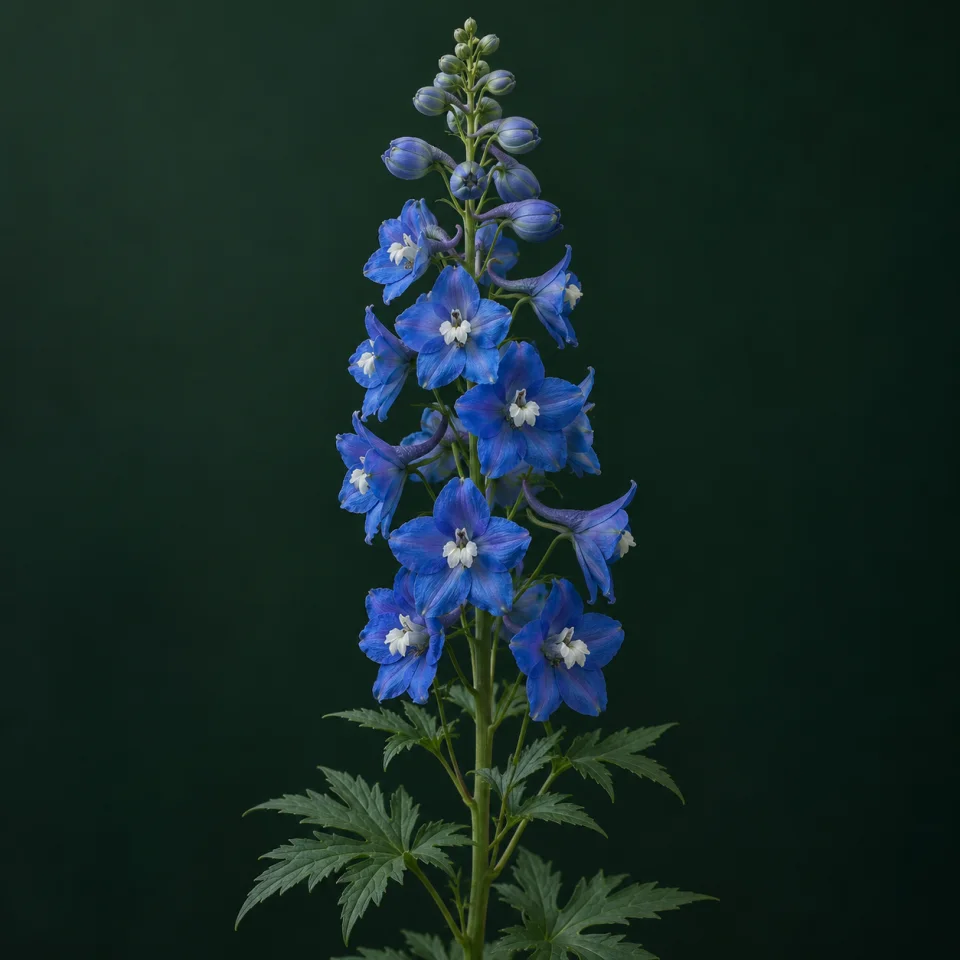
Botanical reference: Delphinium elatum
Confirm which delphinium you are ordering
This guide covers Delphinium elatum, a perennial also used as a cut flower. The name delphinium can refer to other species or hybrids. There can also be commercial naming confusion with plants called larkspur. Ask for the name and cultivar being offered before agreeing on the colour or appearance of the bouquet.
For a gift ready to display choose prepared cut stems with their container. A living plant is another option if the recipient wants to grow it and has space. D. elatum needs sun, well-drained soil and wind shelter. Tall cultivars need support. Confirm its needs in your climate before giving a potted plant.
Add height without taking over the table
You could suggest delphiniums for a birthday or wedding when you want an upright arrangement. With roses or dahlias lower down the spikes can remain visible without adding too many flowers. For a table where guests will sit ask for an arrangement that leaves sightlines clear. The plant’s garden height is not the finished centrepiece’s height.
A wedding order could sound like this: “We would like a centrepiece with blue delphiniums for the welcome table. Including the container it must be no taller than 60 cm and we want to collect it that morning. Which cultivar and opening stage can you prepare? If that blue is unavailable we would prefer to review another proposal.” The 60 cm height is an example of a space limit. Confirm achievable dimensions and the actual shade before finalising the order.
Check flower opening and plan the journey
For flowers displayed that day ask for a photo of the prepared arrangement and check that enough blooms are open for the effect you want. For garden spikes, wait until most flowers are open before cutting. In commercial handling they can be cut at an earlier stage. These are different contexts and do not justify promising that every bud in a bouquet will open in time.
Check for damaged stems and flower fall when moving the arrangement gently. Avoid leaves showing signs of mildew. Its stems are hollow and need support. Agree on packaging that secures the arrangement without crushing the spikes and a way to carry it upright where possible. If it will not fit in the car choose a smaller format or direct delivery. Professional transport in horizontal boxes requires conditions you should not improvise.
Care for the bouquet after handover
Place it in a clean vase with water and keep the lower leaves above the waterline. Ask whoever prepared the gift for instructions before taking an arrangement apart or trimming its stems. Wear gloves when handling them. If flower food is included follow its label without adding homemade mixtures or applying commercial treatments yourself.
Check the water level and position the bouquet away from heat. Refresh cut-flower stems and keep them away from ripe fruit because delphiniums are sensitive to ethylene. If a newly delivered bouquet loses many flowers send a photo to the florist so they can assess it. This symptom alone cannot establish the cause or tell you how many days it will last.
Consider another flower where ingestion is a risk
D. elatum is toxic if eaten and can irritate skin. Do not use its flowers to decorate food or drinks. Wear gloves when handling the plant and keep stems or fallen flowers away from children and animals. A blue colour does not identify an edible flower or give it a universal meaning.
The genus Delphinium is toxic to dogs and cats. If a pet chews plants and there is no inaccessible position choose another arrangement and check every flower and leaf. For suspected ingestion contact a veterinarian promptly and provide the plant’s name. Do not attempt a home remedy.
When we suggest this flower
Compare flowers to choose the format, colours and care that suit the occasion.
Virgin of La Victoria · Málaga
Málaga · Local
An editorial suggestion for a vertical line of colour, subject to availability.
How to choose flowers for a wedding
Start choosing wedding flowers by deciding what you need. As a guest ask before bringing a bouquet. If you are planning the wedding treat the handheld bouquet, ceremony arrangements and table flowers as separate pieces. That lets you agree sizes and budget with the florist without asking one design to do everything. Then choose colours and flowers you enjoy and confirm what can be prepared for your date.
Natural or dyed blue flowers: what to choose for a bouquet
For a blue bouquet without dye, I would choose cornflowers for small blooms, delphinium for height, sea holly for texture or a blue hydrangea for volume. Grape hyacinths are an option for a small pot. A real flower can still be dyed: establish its species, shade and any added colour before choosing it.
Guides to help with your decision
Which flowers to give for a birthday
Compare dahlias, gerberas, anemones and tulips for a birthday. Choose size and format, then plan the budget, card and delivery at home or work.
How to care for a bouquet when it arrives
Bouquet care on arrival: water, stem cutting, flower food and mixed flowers. What to check if it looks limp and how to keep the flowers still doing well.
Should you give a bouquet or a potted plant?
Choose between a bouquet and a plant according to space and care. Compare houseplants with a rose bush for Sainte-Catherine in France on 25 November.
How to transport a bouquet by car or plane
How to carry a bouquet, a potted plant or dried flowers without crushing them. Packing, water and checks for flights and bringing plants into your destination.
Which flowers to give to someone with cats or dogs
Flowers for a home with cats or dogs: options to consider, checking the whole bouquet and precautions with lilies, holly and mistletoe at Christmas.
Frequently asked questions
Is it the same as every plant called larkspur?
Do not assume so. This guide covers Delphinium elatum and the common name can refer to other plants. Confirm the botanical name and cultivar being ordered rather than identifying it by colour alone.
Can I replace gladioli with delphiniums?
They may work when you want an upright line but the flower shape and arrangement’s effect will change. Ask for the finished height, container and stem opening stage to be reviewed. Agree on the substitution before handover.
Will every bud open before the wedding?
This cannot be guaranteed. Confirm how the arrangement will look on delivery day with whoever prepares it. Garden cutting and commercial postharvest advice address different contexts.
Should I give them to a home with cats?
Delphinium is toxic to cats. If they can reach or chew the bouquet choose another arrangement and check all its plants. For suspected ingestion contact a veterinarian promptly.
Sources and what they support
- NC State Extension · Delphinium elatum
Identifies a perennial used as a cut flower with hollow stems and cultivars of different heights. Documents ingestion toxicity and skin irritation; does not establish arrangement dimensions.
- RHS · Cultivo de Delphinium elatum
Describes sun, drainage, wind shelter and support. Warns of harm if eaten and recommends gloves for handling. Its British context does not guarantee flowering in another climate.
- RHS · Delphiniums perennes
Distinguishes height, space and support by group or cultivar and advises moisture without waterlogging. Covers several delphiniums; not every measurement applies to Delphinium elatum.
- UC Davis · Poscosecha de delphinium
A 2004 professional sheet covering Delphinium and Consolida: early opening, flower fall and ethylene and gravity sensitivity. Chemicals and cold storage are not transferred to home care or presented as a D. elatum-specific trial.
- RHS · Preparación de flor cortada
For cutting garden delphiniums advises waiting for most flowers to open. Guides vase hygiene and positioning away from heat and ripe fruit; does not establish a lifespan for this species.
- ASPCA · Delphinium y mascotas
Lists Delphinium species as toxic to dogs, cats and horses and advises prompt veterinary contact for suspected ingestion. Covers the genus rather than a particular cultivar.
How we put these guides together
We review dates, care and recommendations to help you plan each gift.
Spotted something we should review? Contact Agenda Floral.