Flowers
When to give baby’s breath
Gypsophila can make up the whole bunch or accompany roses if you want a gift of small flowers. Start with the size and where it will go. For a wedding, request a sample that shows its proportions on the table. Confirm whether the material is fresh, dried or preserved because care differs. Its delicate appearance does not make it a flower to eat or guarantee it suits every home.
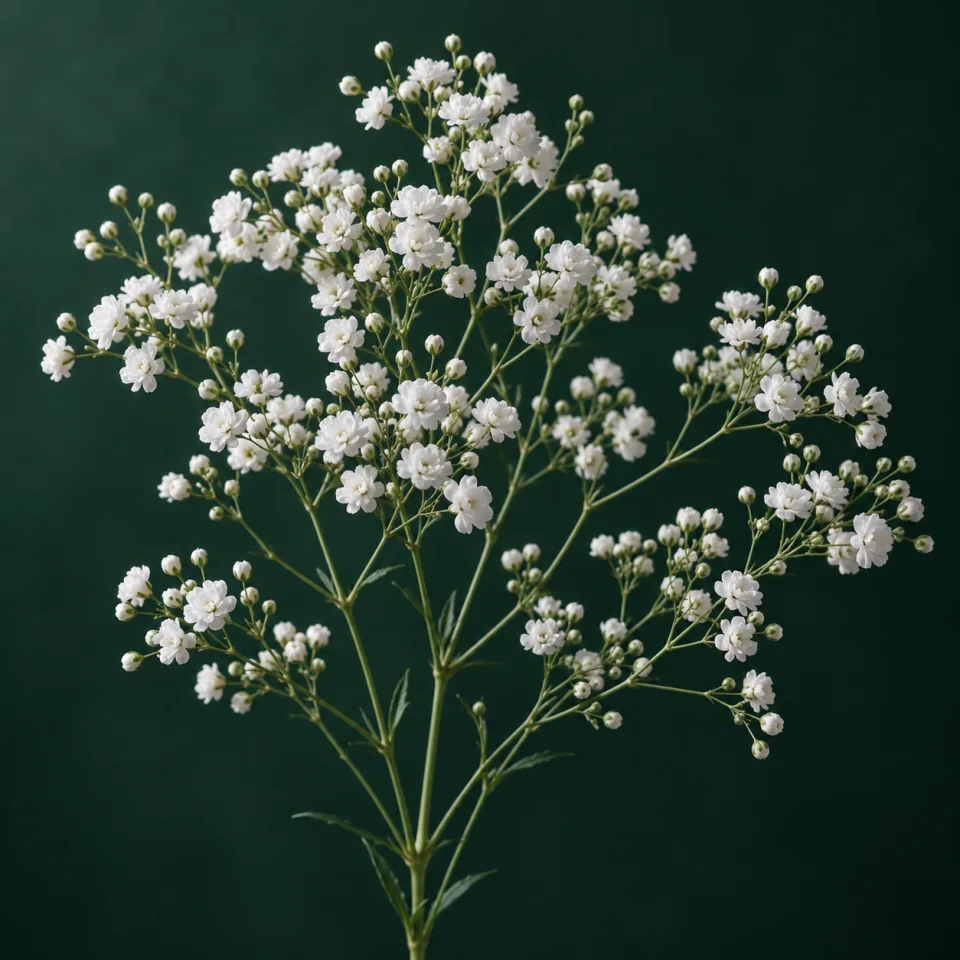
Botanical reference: Gypsophila paniculata
How much gypsophila to put in the bouquet
This guide covers Gypsophila paniculata. It can accompany roses in bouquets. The image shows green branches with small white flowers and buds. You can take it as a reference for the look you want without requesting a particular cultivar.
If the recipient prefers one type of flower, ask for a gypsophila bunch without other species. With roses, you can leave their heads visible and add gypsophila between them. Agree the overall width including the container. A small table needs room for other items and the people sitting around it.
An order for a small wedding
For a wedding with narrow tables, you could ask: “We would like small containers of white gypsophila for the centres. We need to see each other when talking and leave room for food. Please send the dimensions of the whole arrangement and a trial photo before we confirm the order.”
Agree who will deliver the containers and who will set them up and clear them away. If you want to give one away afterwards, check that the container is not hired. Also confirm which alternatives you accept if the planned material is unavailable. These are ordering decisions rather than rules for every wedding.
What to check in fresh gypsophila
Check that the flowers are not wilted and that there are no brown florets. Check those signs when buying. If you need it for a particular ceremony, explain when it will be used and agree how you want it to look that day. Ask for a photo of the material being delivered if you cannot see it in person.
Place fresh stems in a clean vase and keep foliage out of the water. Check the level daily and change the water if it becomes cloudy. Use any included flower food according to its label. These are general cut flower guidelines; follow the arrangement’s instructions too.
Fresh, dried or preserved
Ask about the format before buying. Gypsophila is used both fresh and in dried arrangements, but drying and preserving do not necessarily describe the same product. If it has colour, confirm whether it is natural or dyed and ask how to care for that finish.
For a dried gift, order it ready-prepared and keep it out of water. Display dried arrangements away from direct sunlight and damp rooms. For a preserved product, follow its specific instructions. Do not assume it needs water or will always keep the same shape.
Protecting the bouquet until delivery
Ask for packaging that leaves room for the branches and keep the container secure on the journey. Avoid stacking items on the bouquet. Fresh stems are sensitive to water deficit and intense sunlight. Agree how to keep them hydrated until delivery.
For an outdoor ceremony, confirm where the flowers will wait and who will receive them. Explain the journey time and setup location so the arrangement can be prepared for those conditions. Also ask for instructions for displaying and caring for it during the celebration.
Cakes, handling and pets
Keep ornamental gypsophila separate from food. Bought flowers may have been treated unless sold for eating. For a cake, ask the baker for decoration suitable for that use. Washing stems or wrapping them is not enough to assume food contact has been addressed.
Contact or repeated handling can cause irritation. Do not describe it as hypoallergenic. If pets chew flowers, check the species and every bouquet component before choosing it. A safety entry’s common name alone does not identify the plant.
When we suggest this flower
Compare flowers to choose the format, colours and care that suit the occasion.
Immaculate Conception
Peru · Nationwide
A little gypsophila lightens a bunch of calla lilies, or makes a simple gift on its own to leave before the image of the Virgin.
How to choose flowers for a wedding
Start choosing wedding flowers by deciding what you need. As a guest ask before bringing a bouquet. If you are planning the wedding treat the handheld bouquet, ceremony arrangements and table flowers as separate pieces. That lets you agree sizes and budget with the florist without asking one design to do everything. Then choose colours and flowers you enjoy and confirm what can be prepared for your date.
Fresh, dried or preserved flowers: choosing a gift
Choose fresh flowers to enjoy a bouquet in a vase of water. For an arrangement you want to keep, compare dried and preserved flowers by their finish and care. Dried flowers lose moisture during drying; preserved flowers may undergo other treatments. Where the arrangement will go and the appearance you want to retain will help you decide.
Guides to help with your decision
How to care for a bouquet when it arrives
Bouquet care on arrival: water, stem cutting, flower food and mixed flowers. What to check if it looks limp and how to keep the flowers still doing well.
How to transport a bouquet by car or plane
How to carry a bouquet, a potted plant or dried flowers without crushing them. Packing, water and checks for flights and bringing plants into your destination.
Scented or low-fragrance flowers: how to choose
How to choose fragrant or low-scent flowers around the recipient and setting. What to ask about varieties, foliage and substitutions.
Which flowers to give to someone with cats or dogs
Flowers for a home with cats or dogs: options to consider, checking the whole bouquet and precautions with lilies, holly and mistletoe at Christmas.
Frequently asked questions
Are paniculata and gypsophila the same?
Here, paniculata means Gypsophila paniculata. Gypsophila is a genus that includes other species. Confirm the name if you need a particular shape.
How many stems do I need for a centrepiece?
Request a quote for the arrangement’s dimensions and a trial photo. Stem count alone does not guarantee the volume you want. Explain whether you want gypsophila alone or alongside other flowers.
Can I keep the bouquet to dry it later?
Ask first how to prepare the gypsophila you have bought and what to do with the other bouquet species. A mixed arrangement may need the flowers separated. If the gift needs to arrive dried, order it ready-prepared so you can choose the finished appearance.
Is gypsophila safe for cats?
That reference does not establish this species as safe for cats. The entry called “baby’s breath” identifies Gypsophila elegans, while this guide covers Gypsophila paniculata. Do not transfer that classification. Consult your vet when choosing an appropriate arrangement and contact them if your pet ingests flowers.
Is it a cheap choice for a wedding?
There is no universal price and we cannot guarantee it will make the arrangement cheaper. Request a quote for your chosen size and format. Check whether containers, delivery, setup and removal are included before comparing proposals.
Sources and what they support
- NC State Extension · Gypsophila paniculata
Identifies the species and its use with roses. Notes irritation from contact and repeated handling.
- UC Davis · Selección de paniculata
Describes quality signs and sensitivity to water deficit and intense sunlight. Its treatments and storage times concern professional handling.
- Iowa State Extension · Flores cortadas
Explains general vase, water and flower food care. Does not guarantee a specific vase life for gypsophila.
- RHS · Arreglos secos
Recommends keeping dried displays away from direct sunlight and damp rooms. This is general display care.
- RHS · Flores y uso alimentario
Distinguishes flowers sold for eating from ornamental flowers that may be treated. Does not establish gypsophila as an edible decoration.
- ASPCA · Baby’s breath: alcance de la especie
Its entry concerns Gypsophila elegans. It does not classify Gypsophila paniculata or guarantee the safety of a mixed bouquet.
How we put these guides together
We review dates, care and recommendations to help you plan each gift.
Spotted something we should review? Contact Agenda Floral.