Occasions
Weltfrauentag 2027 in Austria: flowers for a working Monday
Austria · Nationwide
In Austria International Women’s Day, known as Weltfrauentag or Internationaler Frauentag, is on 8 March; in 2027 it falls on a Monday. It is not a public holiday, so offices and shops run as on any Monday and you can buy the flowers on the day. Austria has no traditional Frauentag flower: we suggest ranunculus or tulips, or a potted primrose for the desk, with a card that names something specific.
Upcoming calendar dates
Austria
Agenda Floral, with you
Add it to your calendar
Subscribe to receive our updates, or download the .ics file to import a copy. The copy will not receive later changes.
Use in Google Calendar or another calendar
Open Google Calendar on a computer. Beside “Other calendars”, click “+” and choose “From URL”. Paste the address below to add the subscription. You can then view that calendar on devices using your account.
Guide to adding Agenda Floral to Apple and Google Calendar
Your calendar app decides when to refresh a subscription. Importing the file again may duplicate events. Agenda Floral adds no alarms; you can check alerts in your calendar settings.
Monday 8 March 2027: a working day across Austria
8 March is not among the public holidays in the Arbeitsruhegesetz, Austria’s rest-period act, so in 2027 it is an ordinary Monday in every Land. Shops may open from 6:00 to 21:00 on weekdays, and each florist sets its own hours within that range.
If the flowers are for work, order them for first thing on Monday or pick them up on the way. If you would rather have them earlier, shops may open until 18:00 on Saturday the 6th. On Sunday the 7th they are generally closed: florists may serve customers on six Sundays or public holidays a year and choose which ones, so don’t count on that day.
Germany is different: 8 March is a public holiday in Berlin and in Mecklenburg-Western Pomerania. If you are sending flowers to someone there, the guide to 8 March in Germany explains how to order ahead.
From the Ringstraße in 1911 to 8 March
The first Austrian Frauentag was on Sunday 19 March 1911. Social Democratic women organised it, following the resolution of the 1910 Copenhagen conference, and in Vienna some 20,000 people marched along the Ringstraße to the City Hall under the slogan “Den Frauen gleiches Recht!”, equal rights for women. Above all they demanded the vote, along with maternity protection and social insurance. Women’s suffrage came with the Republic on 12 November 1918.
The date took a while to settle. In the First Republic the Frauentag was mostly held in the last week of March, and the Social Democrats kept it between late March and early April until the 1970s. 8 March gained weight once the UN added it to its calendar in 1975; in 1986 Johanna Dohnal, state secretary for women’s affairs, opened her office to all women on that day.
Today museums, associations, institutions and city councils hold events around the date. In Vienna, the 2026 Wiener Frauenwoche ran from 2 to 8 March, with City Hall open to visitors on Saturday the 7th. If you want to pair the flowers with a visit or a talk, check the 2027 programme once it is out.
Ranunculus, tulips or a primrose
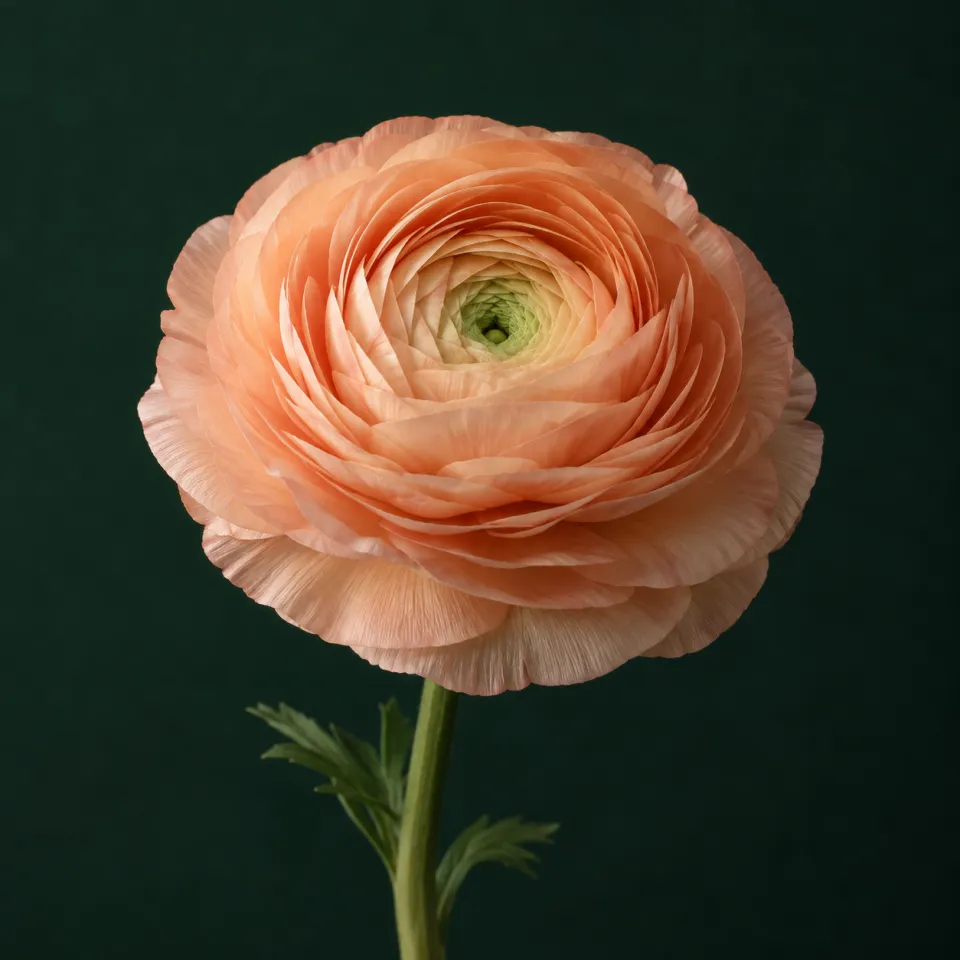
Austria has no flower of its own for the Frauentag, so choose by her taste and by where she will put it. We suggest ranunculus: their layered petals fill a small bouquet with only a few stems, and in cream, apricot or soft pink they suit early-March light. Tulips are the simple alternative.
In late winter, tulips, ranunculus and primroses are often grown in Austria.
For a desk or a windowsill, a potted primrose lasts longer than a bouquet and needs no vase. It likes a cool, bright spot away from the heating, with soil that is moist but not waterlogged; the primrose care guide covers watering and what to do once flowering is over.
Frauentag is not Muttertag
In the 1950s it was even proposed in Austria that the Frauentag and Muttertag be celebrated together. The idea was rejected and each date kept its meaning: 8 March is about rights and equality, while Mother’s Day comes on the second Sunday in May, 9 May in 2027.
So even if the flowers are for your mother or grandmother, the card works better when it recognises something she has done or stood up for than when it talks about her role in the family. For May, the Austrian Muttertag guide has its own ideas.
An order and a card
You could order like this: “For Monday 8 March, a small, loosely tied bouquet of ranunculus in cream and apricot, with a low vase that fits on a desk. I’ll collect it at 7:30 on my way to the office.” If the gift comes from a team, one bouquet with a card where each person writes a line works better than several.
For the card: “Thank you for pushing for training on the afternoon shift too. We notice it every week.” For more wording, the card messages guide has ideas, and the thank-you flowers guide helps you choose the size.
Which flowers to choose
Compare flowers to choose the format, colours and care that suit the occasion.
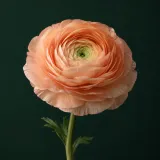
Ranunculus
Main flower in our selectionAustria has no traditional Frauentag flower. We suggest ranunculus in cream or apricot: a few stems fill a small bouquet. In 2027, 8 March is an ordinary working Monday, so you can buy them on the day.
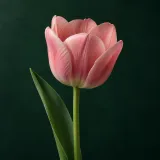
Tulip
The simple alternative to ranunculus. In late winter, tulips are often grown in Austria; choose the colour she likes.
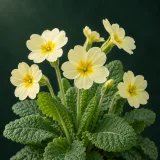
Primrose
For a desk or a windowsill, a potted primrose lasts longer than a bouquet and needs no vase. It is our suggestion, not a symbol of the day.
Guides to help with your decision
Flowers for 8 March in Germany: when giving them makes sense
8 March is a public holiday in Berlin and Mecklenburg-Western Pomerania. When to buy and deliver flowers in 2027 and what to write on the card.
8 March in Italy · Women’s Day
Mimosa for 8 March: a small bouquet, a card and protected transport.

Valentine’s Day 2027 in Austria: flowers for a Sunday
14 February 2027 falls on a Sunday, when most shops are closed. Here is how to arrange roses, tulips or ranunculus for the day.
Mother’s Day in Austria: when it is and which flowers to give
In Austria Mother’s Day falls on the second Sunday in May: 9 May 2027. Peonies, hydrangeas or lilac, and when to buy them when shops close on Sundays.
Which flowers to give as a thank-you
Which flowers to give to thank a friend, colleague or professional. Ideas for the card, a group gift and an agreed handover.
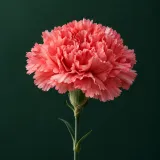
How to care for a bouquet when it arrives
Bouquet care on arrival: water, stem cutting, flower food and mixed flowers. What to check if it looks limp and how to keep the flowers still doing well.
What to write in a card with flowers
Ideas for writing a flower card in your own words. Examples for birthdays, thanks, anniversaries and sensitive moments.
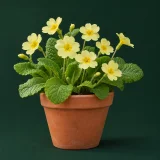
How to care for a primrose in a pot
Watering, cool light and Primula vulgaris after flowering. Keep its rosette healthy without mistaking the last flowers for the end of the plant.
Frequently asked questions
Is 8 March a public holiday in Austria?
No. It is not among the holidays in the Arbeitsruhegesetz. In 2027 it is a working Monday and shops open with their usual hours.
Is there a typical Weltfrauentag flower in Austria?
There is no traditional flower. Ranunculus, tulips and primrose are our suggestions; choose by her taste and by where she will put them.
Can I buy flowers on Sunday 7 March 2027?
Shops are generally closed on Sundays. Florists may serve customers on six Sundays or public holidays a year and decide which, so the safe options are Saturday the 6th, until 18:00, or Monday itself.
Since when has Austria marked the Frauentag?
Since 19 March 1911, when some 20,000 people marched along Vienna’s Ringstraße to demand the vote for women. 8 March became established later, above all from 1975.
Sources and what they support
- RIS · Arbeitsruhegesetz § 7 (Feiertage)
The Austrian rest-period act lists the country’s public holidays: 1 and 6 January, Easter Monday, 1 May, Ascension, Whit Monday, Corpus Christi, 15 August, 26 October, 1 November and 8, 25 and 26 December. 8 March is not on the list. Consolidated text consulted on 16/11/2026; it does not regulate shop hours.
- Bundesministerium für Wirtschaft, Energie und Tourismus · Öffnungszeiten
Shops may open Monday to Friday from 6:00 to 21:00 and on Saturdays from 6:00 to 18:00, up to 72 hours a week; they close on Sundays and public holidays unless an exception applies. This is the legal frame: each shop sets its own hours within it.
- RIS · Arbeitsruhegesetz-Verordnung (Gärtner und Blumenbinder)
Businesses in the gardeners’ and florists’ trade may serve customers on six Sundays or public holidays a year, at cemeteries during their opening hours and at hospitals during visiting hours, and until 17:00 on the Saturdays before certain festivals (New Year, Valentine’s Day, Easter, Mother’s Day, Whitsun, All Saints, Advent and Christmas). 8 March is not on that list. It is a permission, not a duty to open.
- Wien Geschichte Wiki · Internationaler Frauentag
The City of Vienna’s history wiki dates the first Austrian Frauentag to 19 March 1911, organised by Social Democratic women after the 1910 Copenhagen conference: some 20,000 women marched along the Ringstraße to the City Hall, above all for the vote. In the First Republic it was held from 1924 mostly in the last week of March; the Social Democrats kept it at the end of March or early April until the 1970s. A merger with Mother’s Day was discussed in the 1950s and rejected. The UN adopted 8 March in 1975, and Johanna Dohnal opened her state secretariat to all women on 8 March 1986. It does not cover flowers.
- Österreichisches Museum für Volkskunde · Feste.Kämpfe. 100 Jahre Frauentag (2011)
Leaflet for the Austrian Museum of Folk Life and Folk Art’s 2011 exhibition: “Den Frauen gleiches Recht!” (equal rights for women), demanded 20,000 women and men as they marched along Vienna’s Ringstraße on 19 March 1911; women’s suffrage was the central demand of the first Austrian Frauentag and came in 1918. It does not cover flowers or gifts.
- Stadt Wien · Bericht der Stadtkommunikation: Frauenwoche 2026
City of Vienna communications report: the 2026 Wiener Frauenwoche ran from 2 to 8 March, with the “Offenes Rathaus” (open City Hall) on 7 March and free activities on training, work, health, culture and women’s rights. It describes the 2026 edition and does not announce 2027.
- WKO Vorarlberg · Valentinstag 2026
Vorarlberg Chamber of Commerce note on Valentine’s Day 2026: in February, tulips, ranunculus, daffodils, primroses and hyacinths often come from Austrian production. It refers to February, not 8 March, and does not guarantee the origin of any bouquet.
- Senatskanzlei Berlin · Pressemitteilung zum Internationalen Frauentag (07.03.2023)
Berlin Senate Chancellery press release: since 2019 International Women’s Day has been a public holiday in Berlin. Cited only for the contrast with Austria; it does not cover shop hours or flowers.
- GVOBl. M-V 2022 Nr. 31 · Viertes Gesetz zur Änderung des Feiertagsgesetzes Mecklenburg-Vorpommern
Mecklenburg-Western Pomerania official gazette, 2022: the amendment to the public-holiday act adds “der Frauentag (8. März)”. Cited only for the contrast with Austria.
How we put these guides together
We review dates, care and recommendations to help you plan each gift.
Spotted something we should review? Contact Agenda Floral.