Occasions
Dia da Mulher 2027 in Portugal: which flowers to give on 8 March
Portugal · Nationwide
In Portugal Dia Internacional da Mulher is on 8 March; in 2027 it falls on a Monday. It is not a public holiday, so offices and shops run as on any Monday and you can buy and deliver the flowers on the day. There is no official flower: we suggest anemones, with a few red carnations if you want a nod to 25 April, and a card that names something specific. Mimosa, the 8 March flower in Italy, is an invasive species in Portugal.

Upcoming calendar dates
Portugal
Agenda Floral, with you
Add it to your calendar
Subscribe to receive our updates, or download the .ics file to import a copy. The copy will not receive later changes.
Use in Google Calendar or another calendar
Open Google Calendar on a computer. Beside “Other calendars”, click “+” and choose “From URL”. Paste the address below to add the subscription. You can then view that calendar on devices using your account.
Guide to adding Agenda Floral to Apple and Google Calendar
Your calendar app decides when to refresh a subscription. Importing the file again may duplicate events. Agenda Floral adds no alarms; you can check alerts in your calendar settings.
Monday 8 March 2027: a working day
8 March is not among the mandatory public holidays in the Código do Trabalho, so in 2027 it is a working Monday across the country. If the flowers are for a colleague, order them for first thing and she will have them on her desk all day. If they are for home, a late-afternoon delivery greets her when she gets back from work.
March has another date close by: Dia do Pai is on Friday the 19th. And Dia da Mãe comes on the first Sunday in May, 2 May 2027. Each has its own article and meaning, so there is no need to pile every gift onto 8 March.
An institutional date since 1975
A year after 25 April, 8 March entered the state’s agenda. The archive of today’s Comissão para a Cidadania e a Igualdade de Género (CIG) holds circular no. 1 of 1 March 1975, titled “8 de Março – Dia Internacional da Mulher”. It was the UN International Women’s Year, and the Government ratified its celebration in Portugal and asked state bodies, the Armed Forces, political parties and NGOs to cooperate.
That push led to a survey of Portuguese women’s participation in trade unions and in civic and political life, published as the Cadernos da Condição Feminina. Today CIG uses the day to review what has been achieved and what is still missing, and there are marches in the street: at the 2020 Manifestação Nacional de Mulheres in Lisbon, thousands of people walked from Restauradores to Cais do Sodré with banners and red carnations.
Flowers fit in as a personal gesture towards one particular woman, without taking the place of what the day demands. If she is going to march, give them to her at home, before or after, rather than a bouquet she has to carry.
Anemones and a red carnation
Portugal has no official Dia da Mulher flower, so choose by her taste. We suggest anemones: their dark centre stands out among the petals, and a bouquet of five or seven stems already has presence. In white or violet, the centre stays visible.
If you want a Portuguese touch, add a few red carnations. They are the flower of 25 April, which has its own article in the calendar, and in 2020 they were seen at the Lisbon march on 8 March. This is our suggestion, not a required custom: if her favourite colour is another, go with it.
What about mimosa?
In Italy mimosa is the 8 March flower. In Portugal, the species known by that name, Acacia dealbata, is listed as invasive in Decreto-Lei 92/2019. It arrived as an ornamental, forms dense stands that hold back native vegetation, spreads above all after fires and is considered one of the worst invaders of terrestrial ecosystems on the mainland.
It flowers from January to April, so in early March you will see it in yellow along valleys, riverbanks and roadsides. That is why we don’t suggest it for this day. If you want that yellow, ask for yellow freesias or ranunculus, or add a few forsythia branches.
An order and a card
You could order like this: “For Monday 8 March, a small bouquet of white anemones with three red carnations, with water at the base, delivered to the office before 10:00. I’ll send you the card text.” If the gift comes from several people, one bouquet with a card everyone signs works better.
For the card: “Thank you for taking me to my first 8 March march. I still go with you.” If you want to write it in Portuguese: “Obrigado por me teres levado à minha primeira manifestação do 8 de Março. Continuo a ir contigo”, or “Obrigada” if the writer is a woman. The card messages guide has more ideas, and the flower delivery guide helps with the address and receipt.
Which flowers to choose
Compare flowers to choose the format, colours and care that suit the occasion.

Anemone
Main flower in our selectionPortugal has no official flower for Dia da Mulher. We suggest anemones: their dark centre stands out among the petals and gives a small bouquet presence. In 2027, 8 March is a working Monday, so you can deliver them to the office or home on the day.

Carnation
The red carnation is the flower of 25 April and was carried at the 2020 Manifestação Nacional de Mulheres in Lisbon. Add a few stems if you want a Portuguese touch; it is not required.
Guides to help with your decision
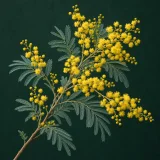
Yellow mimosa: Acacia dealbata and restrictions in Spain
In Spain, except the Canary and Balearic Islands, Acacia dealbata is listed as invasive. Learn to recognise its branches and choose another flower for a gift in that area.

Flowers on International Women’s Day: a respectful gesture
A flower gift on 8 March can suit someone who welcomes it. Ideas for considering her tastes and the meaning of the occasion.
25 April in Portugal: carnations and Freedom Day
The red carnation is a symbol of 25 April. Prepare a stem to carry or give and distinguish a personal gesture from an organised tribute.

Mother’s Day in Portugal · Dia da Mãe
The first Sunday in May in Portugal. Choose gerberas with a container and arrange an individual or shared gift.

Father’s Day in Portugal · Dia do Pai
19 March in Portugal: choose sunflowers by size and format, with delivery suited to a visit or meal.
8 March in Italy · Women’s Day
Mimosa for 8 March: a small bouquet, a card and protected transport.
How to care for a bouquet when it arrives
Bouquet care on arrival: water, stem cutting, flower food and mixed flowers. What to check if it looks limp and how to keep the flowers still doing well.

What to write in a card with flowers
Ideas for writing a flower card in your own words. Examples for birthdays, thanks, anniversaries and sensitive moments.
How to order flowers from a distance and plan delivery
Send flowers from a distance: format, date, address and handover, including a group gift. Examples and practical advice for different countries.
Frequently asked questions
Is 8 March a public holiday in Portugal?
No. It is not among the mandatory public holidays in the Código do Trabalho. In 2027 it is a working Monday.
Is there a typical Dia da Mulher flower in Portugal?
There is no official flower. Anemones and red carnations are our suggestion; the carnation is the flower of 25 April and was seen at the 2020 Lisbon march.
Can I give mimosa in Portugal?
We don’t suggest it: Acacia dealbata is listed as an invasive species in Portugal. For a yellow bouquet, choose freesias, ranunculus or forsythia.
Is it the same as Dia da Mãe?
No. Dia da Mãe is the first Sunday in May; in 2027, 2 May. 8 March is about rights and equality.
Sources and what they support
- Código do Trabalho · artigo 234.º (Feriados obrigatórios) · PGDL
Portugal’s mandatory public holidays are 1 January, Good Friday, Easter Sunday, 25 April, 1 May, Corpus Christi, 10 June, 15 August, 5 October, 1 November and 1, 8 and 25 December. 8 March is not on the list. Compilation by the Lisbon District Prosecutor’s Office; it does not regulate shop hours.
- CIG · A Comissão e o Dia Internacional das Mulheres (2016)
The Commission for Citizenship and Gender Equality cites from its archive circular no. 1 of 1 March 1975, “8 de Março – Dia Internacional da Mulher”. In the UN International Women’s Year, the Government “ratificou a sua celebração em Portugal” (ratified its celebration in Portugal) and asked state bodies, the Armed Forces, parties and NGOs to cooperate; the survey that followed led to the Cadernos da Condição Feminina. It does not cover flowers.
- CIG · Dia Internacional da Mulher | 8 de março (2026)
CIG text of 8/3/2026: the day marks the progress made on women’s rights in Portugal and reflects on remaining challenges, reviewing advances in constitutional equality, labour rights, education, health and action against violence. It does not cover flowers or gifts.
- 24notícias (Lusa) · Milhares de pessoas manifestam-se em Lisboa pela igualdade de direitos das mulheres (8/3/2020)
Agency report (Lusa) of 8/3/2020, press rather than an official source: thousands of people from across the country joined the Manifestação Nacional de Mulheres organised by the Movimento Democrático de Mulheres, from Restauradores square to Cais do Sodré, with banners and “cravos vermelhos da conquista alcançada com o 25 de Abril de 1974” (red carnations of the victory won on 25 April 1974). It describes that march in that year; it does not document a general custom of giving flowers.
- Invasoras.pt (Universidade de Coimbra) · Acacia dealbata
Fact sheet from the University of Coimbra invasive plants project: Acacia dealbata, called mimosa, is an invasive species in Portugal, listed in Decreto-Lei no. 92/2019; it was introduced as an ornamental, flowers from January to April, forms dense stands that inhibit native vegetation, invades above all after fires and is considered one of the worst invaders of terrestrial ecosystems in mainland Portugal. It does not cover the sale of cut flowers.
How we put these guides together
We review dates, care and recommendations to help you plan each gift.
Spotted something we should review? Contact Agenda Floral.