Flowers
Yellow mimosa: Acacia dealbata and restrictions in Spain
Acacia dealbata is one of the plants called mimosa, with grey-green foliage and small, fluffy yellow heads. In Spain it is listed as invasive except in the Canary and Balearic Islands. For a gift in the affected area I would choose craspedia for round heads or sunflower for a large yellow flower.
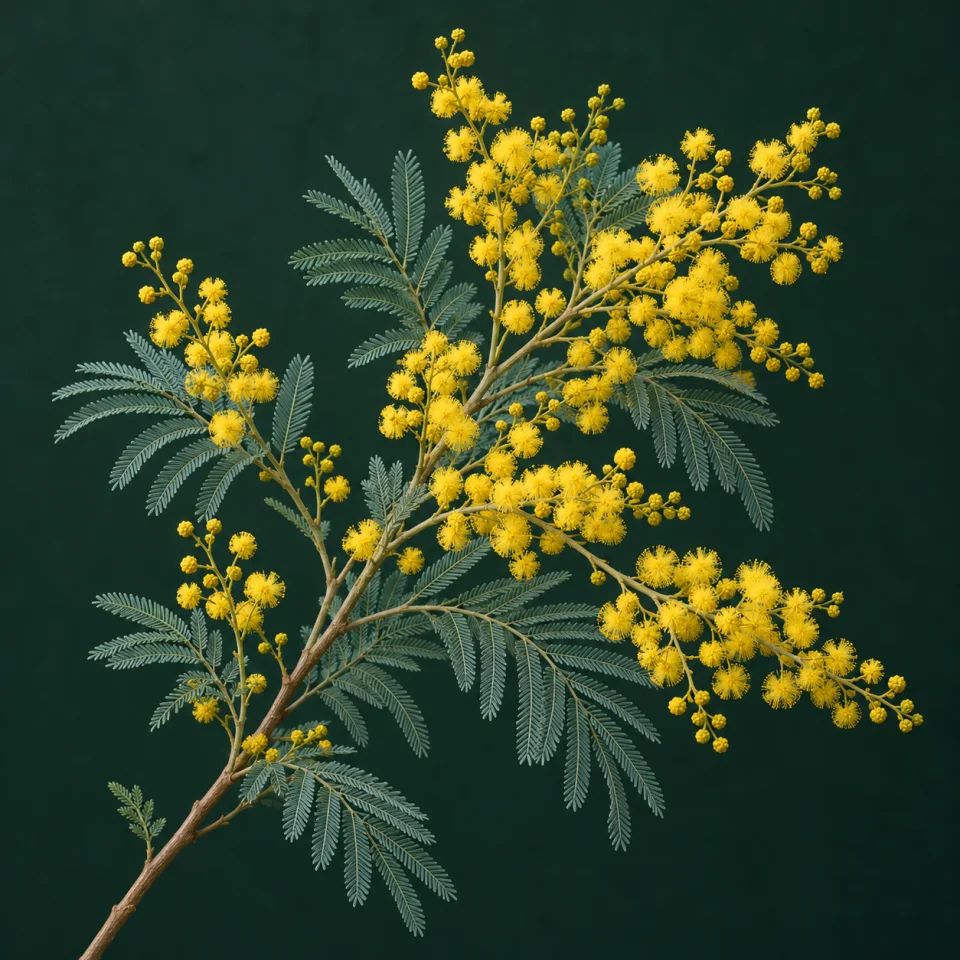
Botanical reference: Acacia dealbata Link
The territorial restriction in Spain
In Spain, except the Canary and Balearic Islands, Acacia dealbata appears in the invasive species catalogue. The prohibition on possession, transport, trafficking and trade covers live specimens, remains or propagules that could survive or reproduce. A branch being cut does not, by itself, establish its legal status.
The Canary and Balearic Islands exclusion relates to this catalogue; it does not by itself establish whether particular material may be acquired or moved. For a gift in the affected area, we suggest another flower.
Feathery leaves and heads made of many flowers
The grey-green leaves divide twice: smaller axes branch from a main axis and carry many tiny leaflets. This fine pattern accompanies clusters of round yellow heads.
Each head contains many small flowers. Their projecting stamens create the fluffy appearance; the petals are much less visible. A yellow ball is not one large flower.
The name mimosa does not identify just one plant
Mimosa pudica is a different species, with pink heads and touch-sensitive leaves. Those leaves folding when touched do not describe the yellow acacia covered here.
Other acacias are also used in floristry. A common name or colour is not enough to identify a branch. Acacia decurrens var. dealbata is a synonym of Acacia dealbata; the name Acacia decurrens without that qualification is not equivalent.
Care for branches already received
Where possession is permitted, use a clean vase and clean water for branches you have already received. Refresh the cut with a clean, sharp tool without crushing the stem, and remove leaves that would be submerged. Keep the vase away from radiators, direct sun and draughts.
If instructions or flower food accompany the branches, follow the dose and water volume on the label. Check the level so the bases do not dry out. Avoid household recipes and boiling-water opening treatments.
Another yellow flower for the look you want
I would choose craspedia if you like round flowerheads. Its stems let you repeat that shape in a simple arrangement. For a large focal flower, sunflower creates a different effect.
For a small side table, consider a few craspedia stems in a narrow container. For one prominent main flower, choose the sunflower size for the overall height and width of the arrangement. Both flower pages develop these choices.
When we suggest this flower
Compare flowers to choose the format, colours and care that suit the occasion.
Guides to help with your decision
When to give sunflowers
How to choose sunflowers for birthdays, thank-you gifts or graduation. Bouquet size, transport, pollen, care and differences from a potted plant.
When to give craspedia
Fresh or dried craspedia for a birthday or thank-you gift. How to agree on colour, size, container, transport and care for the arrangement.
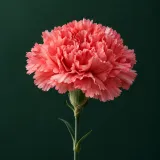
How to care for a bouquet when it arrives
Bouquet care on arrival: water, stem cutting, flower food and mixed flowers. What to check if it looks limp and how to keep the flowers still doing well.
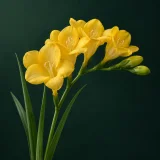
Scented or low-fragrance flowers: how to choose
How to choose fragrant or low-scent flowers around the recipient and setting. What to ask about varieties, foliage and substitutions.
Mandelieu’s Fête du Mimosa 2027: dates, parades and a gift
10–14 February 2027 in Mandelieu-La Napoule. Choose an evening or daytime parade and plan a gift around where the branches will stay.
Frequently asked questions
Is a cut branch automatically permitted?
No. Within its territorial scope, the rule covers material that could survive or reproduce. Cutting alone does not resolve the status of a particular branch.
Can its vase life be guaranteed?
Vase life varies with the branches’ condition on arrival and handling before and afterwards. Follow the care instructions without relying on a fixed number of days or every bud opening.
Sources and what they support
- BOE · Real Decreto 630/2013 · Artículo 7 y anexo
Article 7 limits the prohibition to the area in the annex and to live specimens, remains or propagules that could survive or reproduce. Does not establish that every bouquet is illegal or a general cut-flower exemption.
- MITECO · Catálogo Español de Especies Exóticas Invasoras · Flora
Lists Acacia dealbata with the scope “Except the Canary and Balearic Islands”. That territorial exclusion does not determine permissions elsewhere or the status of a particular branch.
- Kew · Plants of the World Online · Acacia dealbata
Accepts Acacia dealbata Link and lists Acacia decurrens var. dealbata as a synonym. Does not identify commercial material or equate Acacia decurrens without that rank with this species.
- RHS · Acacia dealbata
Describes finely divided grey-green foliage and fragrant yellow flowerheads. The tree profile does not establish cut-flower care, availability or territorial permissions.
- Australian Plants Society · Acacia dealbata
Specifies bluish-grey bipinnate leaves and heads of many small flowers with prominent stamens. Morphology does not establish identification from a photo or local availability.
- University of Oxford · Plants 400 · Mimosa pudica
Mimosa pudica has pink heads and touch-sensitive leaves. It is a different plant; those traits are not transferred to Acacia dealbata because they share the name mimosa.
- NSW DPI · Postharvest care of cut flowers
Supports clean water, hydration and cool handling of cut flowers. An archived general guide, not an Acacia dealbata vase-life trial or permission to transport it.
- Chrysal · Cuidados de flor cortada para consumidores
Recommends a clean vase and tool, cutting without crushing, keeping leaves out of water and dosing flower food by its label. General manufacturer advice, not a vase-life promise or home recipe for this species.
How we put these guides together
We review dates, care and recommendations to help you plan each gift.
Spotted something we should review? Contact Agenda Floral.