Guides
How to care for Tradescantia zebrina in a pot
Care difficulty3 out of 10
Pay attention to watering and light and placement.
Editorial guide, with suitable light and climate. 0: very easy; 10: very delicate. More stars mean more care.
Tradescantia zebrina needs plenty of filtered light, free-draining soil and watering after the top layer dries. It tolerates normal household conditions and grows quickly in a suitable position. To keep it full, trim tips and replace some stems with healthy cuttings. There is no need to flood the pot or buy a much larger one when leaves disappear at the base. Check light and the condition of the mix first.
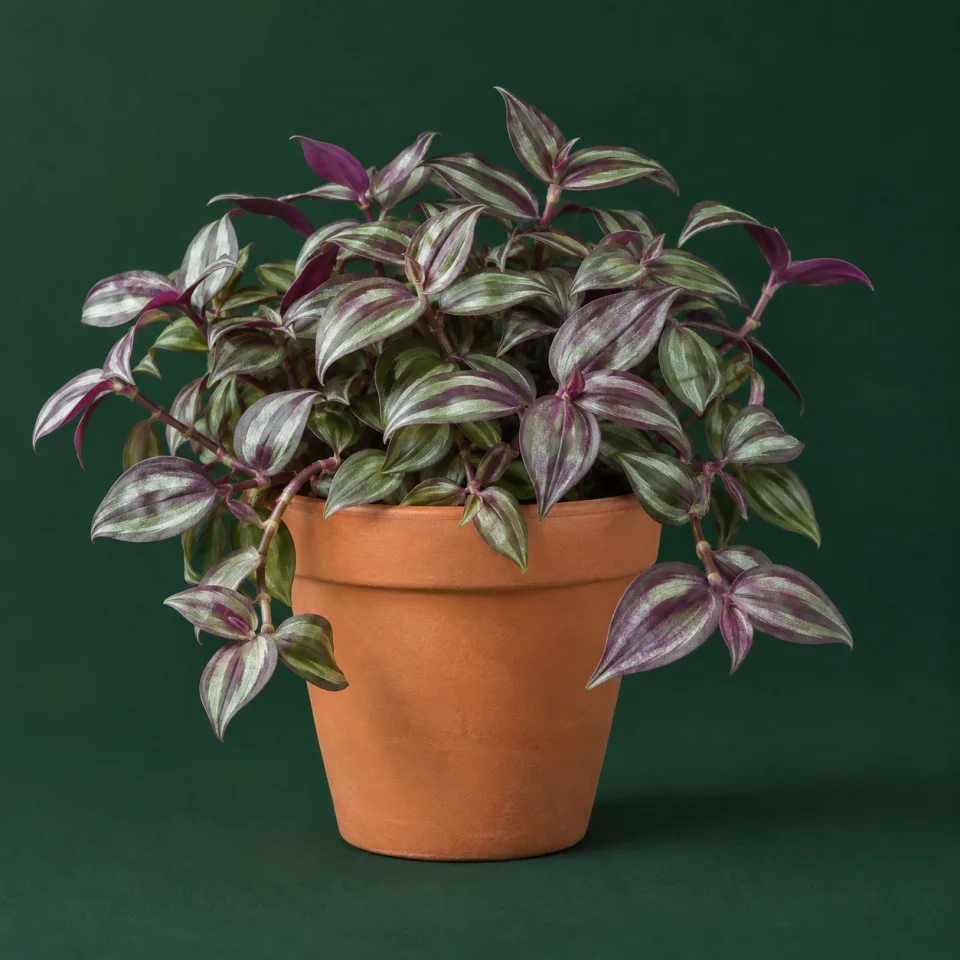
Botanical reference: Tradescantia zebrina
Recognise zebrina and leave room for its stems
Its green and purple leaves have two silver bands on top and purple undersides. They are oval with pointed tips. This guide covers Tradescantia zebrina; other tradescantias or zebra plants are different. Keep the label rather than identifying a cultivar from colour alone. Set it on a stable shelf or in a securely hung container with room for trailing stems. Hold the pot when moving it: stems break easily at the nodes.
Give the base enough light to stay leafy
Choose a bright window with strong sun filtered. In low light, stems stretch, lose lower leaves and may lose colour intensity. Neither extra feed nor a sudden move into harsh sun solves this. Shift it gradually towards a brighter position. Long trailing growth does not prove it has enough light; the top of a bookcase can still be dark. Choose a spot you can reach to check the plant without pulling on its stems.
Water the soil and let excess run out
Feel the top layer and compare the pot’s weight. Once the top has dried and the pot is lighter, slowly moisten the root ball and let it drain. Empty the saucer or outer pot. If still damp and heavy, wait, but do not leave it parched for long. Less activity usually means less water use. Gently move stems aside to water the mix rather than soaking foliage, since trapped moisture and crowded leaves can encourage spots and rot.
Use drainage rather than routinely upsizing
Use an airy houseplant mix and a pot with clear drainage holes. An ornamental outer pot works if the inner one can be lifted out and emptied. Move only to the next size when roots fill the space, or refresh the medium if it has deteriorated. Keep the planting depth and handle it without pulling stems. If the problem is simply long, bare branches, a huge pot will not solve the cause; trimming and renewing the crown may make more sense.
Normal room conditions with protection from cold
Ordinary room temperatures and average household humidity suit it. Avoid frost, cold draughts and direct blasts from heating or air conditioning. It does not need a misting routine to thrive or to correct poorly adjusted watering. This guide suggests keeping it in a container indoors. Gather fallen pieces rather than throwing them into a garden or the countryside: nodes can root on contact with damp soil.
Feed lightly and trim to maintain its shape
During growth, give a balanced houseplant fertiliser according to the label, allowing for nutrients already in the mix. Reduce or pause with less activity. Trim healthy tips with a clean tool to encourage branching, and shorten stems that become too long. This is maintenance, not a cure for rotten roots. Wear gloves because sap can irritate skin, and remove dry debris. Even a full plant needs space between stems so moisture does not remain trapped continually.
Renew it with stem sections containing nodes
Choose a healthy tip with several nodes, where leaves join the stem, and remove lower leaves from the part going into soil or water. Root it in moist, free-draining mix or clean water with light but no harsh sun. In water, keep leaves above the surface and move it into suitable mix once roots develop. You can also rest a node on the pot’s soil while it remains attached. Avoid soft or rotting stems and do not expect a fixed rooting time.
Distinguish routine renewal from a problem
Bare older stems may need trimming and cuttings, but check the light first. Soft stems and constantly wet soil suggest rot; do not add water to perk them up. Look for aphids, scale, mealybugs, mites or fine webs around leaves and joints. Separate an infested plant and choose a treatment approved for the identified problem. If spots appear, also check wet foliage and overcrowding. Avoid changing several things at once or mixing homemade remedies in the hope that something works.
Guides to help with your decision
How to care for a pothos without overwatering it
Light, watering, pots, pruning and repotting for golden pothos, with practical problem checks and pet precautions.
How to care for a spider plant and understand brown tips
Light, watering, roots, plantlets and dry leaf tips: what to check when caring for a spider plant at home without overdoing water or feed.
How to care for a baby rubber plant in a pot
Peperomia obtusifolia light, watering and pot care: judge partial drying, choose a container and check problems without drowning the roots.
Frequently asked questions
Can dogs, cats or children reach it safely?
Sap can irritate skin, and ingestion may irritate the mouth and stomach in people and pets. Prevent chewing and contact with pruning waste; placing the pot high is not enough if stems trail within reach. Choose another plant if you cannot prevent chewing. After ingestion or symptoms, seek appropriate medical or veterinary advice.
How should I prepare it for time away?
Check the soil before leaving and water only if needed, letting it drain. Keep its bright, sheltered position without water stored in the outer pot. Show a helper how to check moisture and weight. For example, a pot that is still heavy should wait even on their visiting day. Avoid trying a new watering system as you leave and do not assume a fixed time without care.
Sources and what they support
- RHS · Tradescantia zebrina
Two silver bands and purple undersides, filtered indoor light, moisture with drainage, moderate water/reduced at rest, balanced feed, pinching and tip cuttings in water or mix. Allergenic sap; no universal months, UK hardiness, hard pruning or outdoor sun rules.
- NC State Extension · Tradescantia zebrina
Species entry: filtered light, household humidity, lower-leaf/colour loss in low light, rooting nodes, pests/rot with excess and spots with wet/crowded foliage. Irritating sap and oral/stomach irritation after ingestion in people/pets. No invented toxic mechanism or safe dose.
- Wisconsin Extension · Tradescantia zebrina, Zebra Plant
Identity and bands, stems fragile at nodes, low light, trimming and container renewal with healthy tips, cuttings in water/soil and layering by contact. No cultivar certified from colour, required hormones, guaranteed timings or local outdoor planting applied to every garden.
- Kew · Plants of the World Online · Tradescantia zebrina
Tradescantia zebrina is an accepted species. Supports identity, not edibility, treatments, planting permissions or safety of other Tradescantia with similar common names.
How we put these guides together
We review dates, care and recommendations to help you plan each gift.
Spotted something we should review? Contact Agenda Floral.