Guides
How to care for a satin pothos indoors
Care difficulty4 out of 10
Pay attention to watering and growing conditions.
Editorial guide, with suitable light and climate. 0: very easy; 10: very delicate. More stars mean more care.
Scindapsus pictus needs plenty of indirect light and an airy mix that loses moisture near the top before you water again. Wet the root ball when needed and empty away the excess; do not keep the mix wet out of habit. You can let its stems trail or guide them up a support. Curling leaves call for checking soil and surroundings, rather than automatic watering.
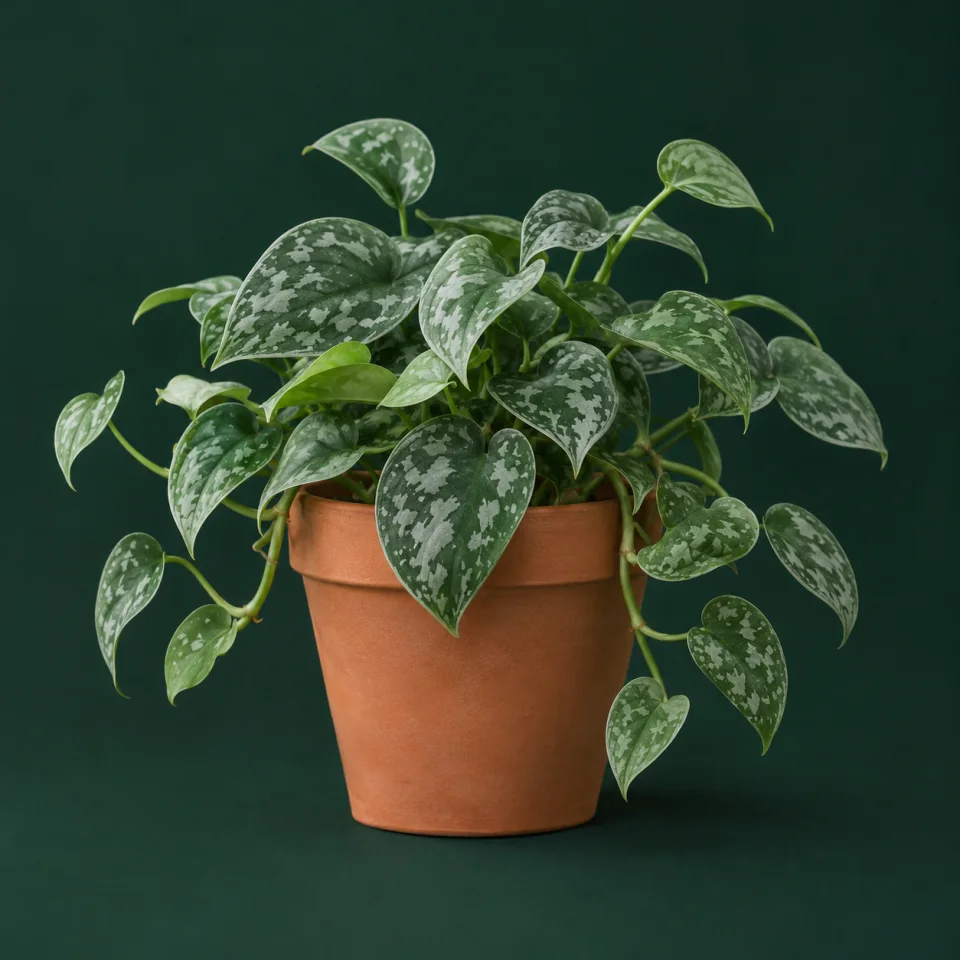
Botanical reference: Scindapsus pictus
Recognise satin pothos and give it good light
Its juvenile leaves are slightly asymmetric hearts, dark green with natural silver patches. Although sold as satin or silver pothos, this is Scindapsus pictus, distinct from common pothos, Epipremnum aureum, and from Scindapsus treubii. The markings alone do not confirm a cultivar. Choose a bright window with protection from strong sun, which can scorch the leaves. A dark shelf is not a good substitute: it needs useful light to grow well and keep a leafy shape rather than producing long, sparsely covered stems.
Check the root ball before watering
Feel a few centimetres into the upper mix and notice whether the pot has become lighter. When that layer is dry, check inside too. If it is still sodden, wait before adding water; otherwise, water slowly to moisten the roots. Let it drain and empty the outer pot before returning it to its place. Do not aim to leave the whole root ball parched for long periods or add daily little sips. Low light and slow growth lengthen the wait. A large pot can still be wet underneath when its surface looks ready.
Use an airy mix and repot when necessary
Choose a pot with holes and an aroid mix, or a houseplant mix with enough structure for air to enter and excess water to escape. Dense garden soil makes this harder to manage. Repot when roots have genuinely filled the container and the plant is growing, moving up only a little in size. This need not happen every year. Keep the stem at its previous depth and handle roots gently. A decorative outer pot works if you can remove the inner one and check that no water remains in the bottom.
Steady warmth, humidity and modest feeding
Choose steady warmth without cold draughts or direct blasts from heating or air-conditioning. It can adapt to a normal home, but very dry air can contribute to damaged tips and stressed foliage. Find a less drying position with some humidity and gentle ventilation. Occasional misting does not replace suitable conditions. During growth, use a balanced houseplant feed according to the label if needed, without increasing doses to hurry the stems along. Reduce or pause when growth slows, and do not feed damaged roots or freshly cut, unrooted stems.
Let it trail or help it climb
Small roots along its stems allow it to grip and climb; they do not mean healthy roots in the pot are unnecessary. Let it trail from a secure shelf, or train it onto a support with loose ties that do not pinch the stems. Roots can leave marks if allowed to attach directly to a wall, so a separate support is easier to manage. Shorten a healthy tip if you want to contain the size or encourage branching, using a clean tool. Heavy scheduled pruning or cutting every vine at once is unnecessary.
Take a cutting with a node
Choose a healthy leafy stem and find a node: the point where a leaf joins and where a little root may be visible. Cut a section that retains that node. A single leaf and its stalk are not equivalent to a complete new plant. Set the node in airy, lightly moist rooting mix, keeping the leaves clear. Provide warmth and gentle light without waterlogging. It can also root in clean water, with the node submerged and leaves above. Refresh dirty water and move it to a small pot once roots are developed, without expecting a fixed deadline.
Investigate curled, yellow or marked leaves
Feel the mix before changing your care. If it is dry and the stem remains firm, water and drain; if wet with a soft base or bad smell, inspect drainage and roots before adding water. Heat and very dry air can also affect curled leaves. Familiar silver patches belong to the plant; a new spreading lesion needs a different check. Look under leaves and around nodes for mealybugs, mites or thrips, separating an affected pot. Remove dust with a soft damp cloth without scrubbing or using leaf-shine products.
Going away and keeping trailing stems safe
Before leaving, observe how long it takes to dry in its usual place. Water only if needed, drain it and keep filtered light, without a reservoir beneath the roots. For a longer absence, ask someone to check moisture and pot weight rather than follow a fixed date. This plant is toxic to dogs and cats. A high pot does not solve the risk if vines still reach them. Keep fallen leaves and cuttings away from animals and children too. Wear gloves when cutting and avoid touching your eyes with sap on your hands. Suspected pet ingestion calls for a vet.
Guides to help with your decision
How to care for a pothos without overwatering it
Light, watering, pots, pruning and repotting for golden pothos, with practical problem checks and pet precautions.
How to care for a heartleaf philodendron in a pot
Light, water, support, pruning and roots of Philodendron hederaceum: care for trailing stems without confusing it with pothos.
How to care for Hoya carnosa in a pot
Light, watering and an airy potting mix for the wax plant. Train its stems and keep the flower spurs that can bloom again.
Frequently asked questions
Why are new leaves smaller and the stems longer?
Check light first: a stem reaching for light may become more widely spaced. Gradually bring the plant closer to a window with indirect light and check roots and watering too. Extra fertiliser cannot replace a bright position or guarantee large leaves.
Does a cutting need a leaf or a piece of stem?
It needs a stem section with a viable node to produce new shoots. Keep a healthy leaf where possible, but do not bury or submerge its blade. A detached leaf without a node does not replace that growing point.
Sources and what they support
- Kew · Scindapsus pictus Hassk.
Accepted Araceae species with a tropical climbing habit. Not Epipremnum aureum or Scindapsus treubii; markings do not certify a cultivar or trade name.
- RHS · Scindapsus pictus, silver vine
Filtered light protected from hot sun, draining mix, moderate water/feed during growth and less water in slow growth; trailing/climbing stems and cuttings. Skin/eye irritant and harmful if eaten. Months, hardiness and the generic full-sun field are not universalised.
- NC State Extension · Scindapsus pictus
Green leaves with silver patches, climbing rootlets, optional support, tip pruning and stem cuttings. Indirect light, warmth, drainage; excess-water rot, curled/yellow leaves and pests are signs to investigate, not single-cause diagnoses.
- UConn Home Garden Education Office · Scindapsus
Article distinguishing S.pictus/S.treubii: upper-layer drying, airy mix, trailing/support choices, household humidity without extreme dryness and node cuttings. No borrowed experience, demand, availability, photographed cultivar or rooting deadlines.
- NParks GardeningSG · Satin Pothos
Specific advice on indirect light, moderate care, cleaning, supported stems and root marks on surfaces; links to stem cuttings. Fast growth, yearly feeding and repotting are Singapore context, not a universal indoor timetable.
- ASPCA · Satin Pothos
Exact Scindapsus pictus profile: toxic to dogs/cats through insoluble oxalates. No doses, unnecessary symptoms or other aroids’ safety transferred. Suspected ingestion calls for veterinary contact without home remedies.
How we put these guides together
We review dates, care and recommendations to help you plan each gift.
Spotted something we should review? Contact Agenda Floral.