Guides
How to care for Hoya carnosa in a pot
Care difficulty5 out of 10
Pay attention to watering and growing conditions.
Editorial guide, with suitable light and climate. 0: very easy; 10: very delicate. More stars mean more care.
Hoya carnosa needs plenty of filtered light, a very airy mix and watering after checking that the medium has begun to dry. Fleshy leaves store water, but alternating waterlogging with prolonged drought is unhelpful. Provide a support or trailing space and retain the short stalks that carried flowers: they can bloom again. Once buds form, keep its position steady and avoid unnecessary repotting.
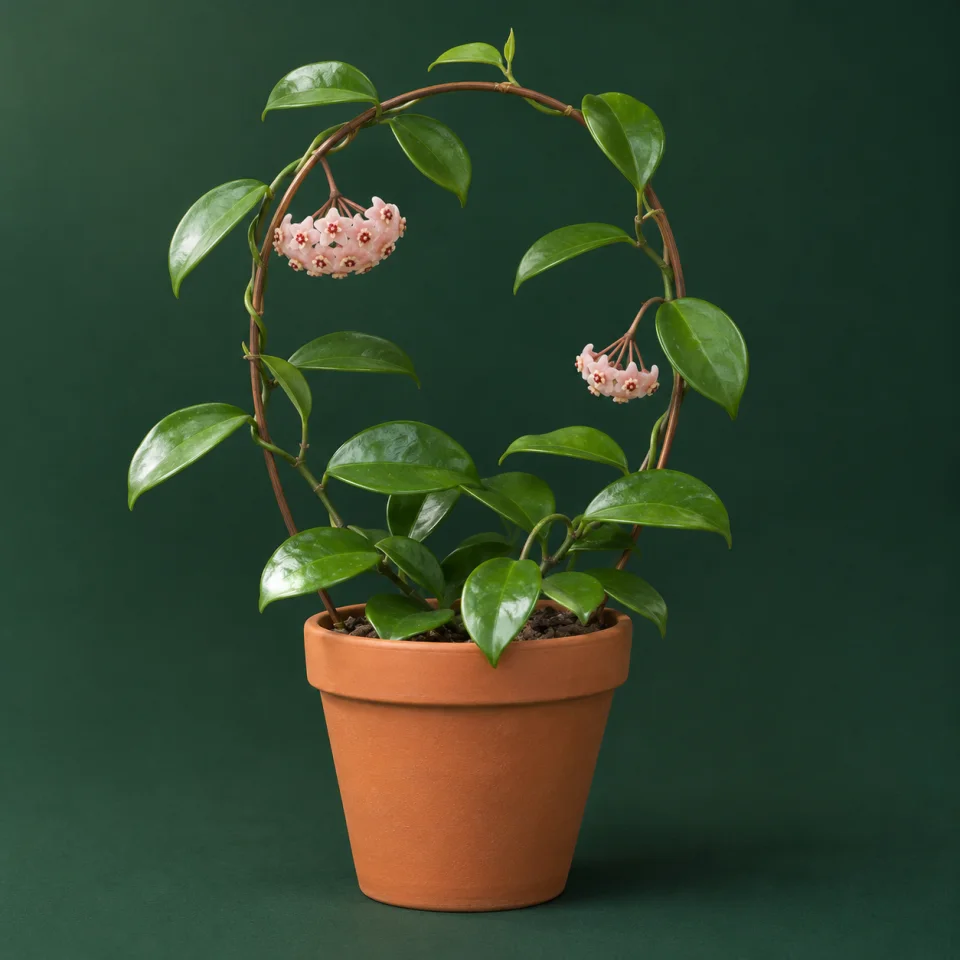
Botanical reference: Hoya carnosa
Recognise the wax plant in your home
This guide covers Hoya carnosa, a climber with simple, oval, fleshy leaves in opposite pairs. It can produce rounded clusters of small waxy white or pale pink stars with darker centres, often fragrant at night. It is different from heart-leaved Hoya kerrii. Keep the label; appearance alone cannot certify a cultivar. Allow stems room to grow without blocking a walkway, and choose their position while you can still arrange the plant without disturbing buds.
Bright light without moving a plant in bud
Place it near a bright window, filtering intense sun that heats leaves through glass. Low light may prevent flowering, but a sudden shift into strong sun can scorch it. Make a needed move gradually before buds form. Once they appear, avoid moving it to decorate another room. Changes in light and extremes of watering can cause bud loss. The plant’s age does not guarantee flowers at a particular time. A steady suitable spot matters more than trying different windows every few days.
Check the mix before adding water
Feel the top layer and assess moisture a little deeper alongside the pot’s weight. Let the mix begin to dry between waterings without leaving the entire root ball parched. When needed, moisten it slowly with room-temperature water, let it drain and empty the outer pot. If still wet and heavy, wait. Reduced activity means less water use. A wrinkled leaf is not enough to decide: roots damaged by excess water may also leave a plant dehydrated.
Air around the roots and a modestly larger pot
Use a loose, fast-draining mix with coarse components such as suitable horticultural bark and potting medium that retains some moisture. It needs clear drainage holes rather than permanent water underneath. Repot when roots fill the container, moving only to the next size. It tolerates a snug pot and does not need a huge one to flower. Choose active growth without buds or blooms, keep the previous planting depth and handle roots gently.
Warm conditions away from direct blasts of air
Keep a warm room away from cold draughts, frost, radiators and air conditioning blasts. Moderate humidity suits it; if the air is very dry, review its position and how to improve conditions without soaking the soil. Misting cannot fix damaged roots. Requirements of more delicate hoyas should not automatically be applied to H. carnosa. Do not force cold or drought in an attempt to obtain flowers. Protect a suitable indoor position rather than using stress as a flowering technique.
Light feeding during growth
Apply a suitable fertiliser lightly according to its label, allowing for nutrients already in the mix. Do not combine products to speed up flowering. With little growth, reduce or pause feeding, and respect any no-feed period specified after repotting or in a pre-fertilised mix. If the plant declines in wet soil, review roots and drainage before feeding. Excess salts can also hinder water uptake, so more fertiliser will not fix a stressed plant.
Guide stems and retain healthy flower spurs
A hoop or small stable frame lets you train stems with loose ties. It can also trail if the container is secure. Trim only damaged or excessive shoots with a clean tool, avoiding hard routine pruning. After flowers fall, a short peduncle or spur remains where the cluster was carried. Keep it if healthy because it may flower from there again. Wear gloves when cutting, since sap can irritate skin. Do not mistake that persistent flower stalk for spent waste.
Check leaves, joints and roots before treating
Leaf or bud loss may follow excess water, dryness, cold or changed light. Check the context first. Darkening leaves, deteriorating stems and wet mix suggest root problems: seek a diagnosis rather than adding water from habit. Inspect joints and leaf undersides for mealybugs, scale or mites. Gnats around constantly wet soil are another reason to review watering. Separate a plant with pests and seek a treatment approved for that specific problem instead of mixing home remedies.
Guides to help with your decision
How to care for a pothos without overwatering it
Light, watering, pots, pruning and repotting for golden pothos, with practical problem checks and pet precautions.
How to care for a baby rubber plant in a pot
Peperomia obtusifolia light, watering and pot care: judge partial drying, choose a container and check problems without drowning the roots.
How to care for a satin pothos indoors
Light, watering and root care for Scindapsus pictus, with trailing or climbing options and a clear explanation of cuttings that include a node.
Frequently asked questions
Is it safe around dogs or cats?
Hoya carnosa is listed as non-toxic to dogs and cats. Confirm the species because wax plant is a widely used name. This classification does not make leaves food or make fertilisers and treatments safe. Prevent chewing and collect pruning waste; sap can irritate skin during handling. If an animal eats material and develops symptoms, contact a vet.
How should I arrange care while away?
Check moisture before leaving and water only if needed, letting the pot drain. Keep its bright, sheltered position, especially in bud. Do not leave it over a reservoir of water to make up for your absence. Show a helper how to check the mix and weight: a still-damp pot should wait even on visiting day. There is no universal time it can go without water.
Sources and what they support
- RHS · Hoya carnosa
Climbing species with fleshy leaves and waxy flowers, filtered indoor light, moderate humidity, support, cuttings/layering and mealybugs. Sun, heights and UK hardiness are not universal pot-care rules.
- RHS · How to grow hoya
Airy/draining mix, slightly larger pot, water without extremes, light feed, stability in bud, supports, light pruning and retained flower spurs; irritating sap. Genus guide checked against H. carnosa/ASPCA: no generic pet toxicity, fixed months, incorrect °C/°F equivalence, imposed drought or guaranteed flowers.
- NC State Extension · Hoya carnosa
Identity, opposite leaves, loose mix, drying between waterings compared with RHS without long drought, leaf loss at extremes, repotting without buds/flowers, reused flower spurs and pests. Its suggested age is not a flowering promise or its outdoor threshold universal.
- ASPCA · Honey Plant (Hoya carnosa)
Hoya carnosa identified as non-toxic to dogs and cats. Species classification, not food, guaranteed absence of discomfort or safe fertilisers/treatments; not other wax plants by common name.
- Kew · Plants of the World Online · Hoya carnosa
Hoya carnosa is an accepted species. Supports botanical identity, not medicinal use or interchangeable care/safety with H. kerrii or other species.
- NParks · Hoya carnosa
Opposite fleshy oval leaves, pale flower corona/red centre, persistent flower spurs and slightly snug roots. Its horticultural toxicity warning is distinguished from ASPCA’s specific animal classification; no Singapore climate, permanently wet mix or ingestion-risk claim becomes a guarantee.
How we put these guides together
We review dates, care and recommendations to help you plan each gift.
Spotted something we should review? Contact Agenda Floral.