Flowers
Mistletoe: buying it, hanging it and keeping it away from children and pets
For December decorations, buy a sprig of mistletoe with well-formed white berries and hang it high, out of reach of children and pets, because the leaves and berries are toxic if eaten. In a cool place it keeps for two to three weeks. Kissing underneath is a Christmas custom of English origin, and in France and Italy it is also linked to New Year.
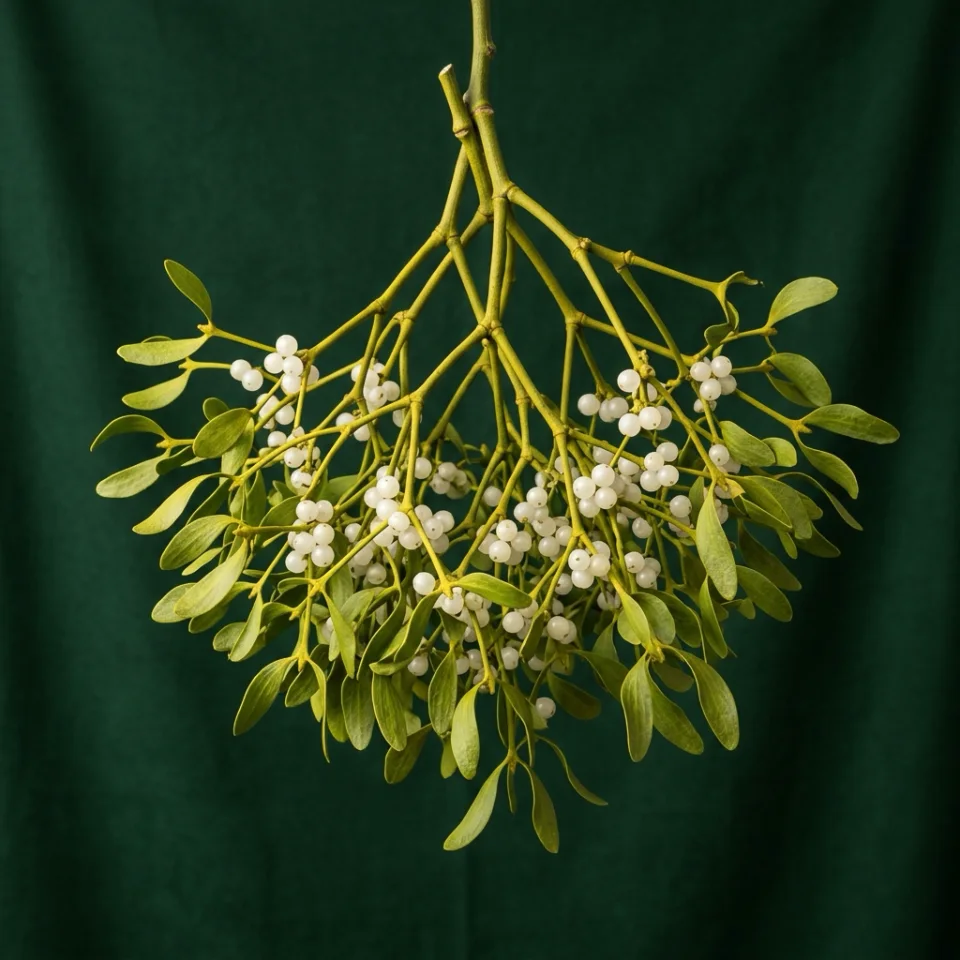
Botanical reference: Viscum album L.
A plant that lives on trees
Viscum album, European mistletoe, grows on the branches of other trees. It is semi-parasitic: it takes water and nutrients from its host but has green leaves and makes its own food. In the UK its most common host is apple, and it also grows on lime, hawthorn and poplar.
The berries are white and translucent and appear from winter to spring. Both male and female plants are needed for berries, so not every sprig has them. The image on this page shows a sprig with forked stems, paired leathery leaves and white berries.
American mistletoe, Phoradendron, is a different plant, even though in some countries it is sold under the same name at Christmas. This page covers Viscum album.
Choosing a sprig and how long it keeps
If you want berries, choose a sprig with well-formed ones and ask for it to be wrapped so they do not fall off on the way. Berries on decorative sprigs are often unripe: they are for display, not for sowing.
Once cut, mistletoe keeps for two to three weeks somewhere cool. If you buy it in early December, keep it somewhere cold, such as a shed or a covered balcony, until you hang it, or buy it closer to the day. For New Year’s Eve, a sprig bought after Christmas is better.
Where to hang it: high and out of reach
The leaves and berries are toxic if eaten, the leaves more than the berries. In children, a few berries usually cause no symptoms or only stomach upset, but many can affect the heart and cause drowsiness. They are also toxic to dogs, cats and other pets.
Hang it high, for example from a door frame or a ceiling light, and do not use it in low table centres or in wreaths at hand height. Check the floor every day: fallen berries are easy for a child or a dog to pick up. Wear gloves when handling it.
If a child has put leaves or berries in their mouth, wipe their mouth with a damp cloth, give them nothing to drink and call a poison information service. If it is an animal, call your vet. Keep the label or a photo of the plant to hand.
Kissing under the mistletoe at Christmas and New Year
In England, the first reference to kissing under the mistletoe is a song from 1784, and the custom is part of a British Christmas. Mistletoe was used earlier in pre-Christian winter festivities; other origins attributed to it, Celtic or Norse, are not documented with the same certainty.
In France, kissing under the mistletoe at Christmas or New Year is considered lucky, and the old phrase “Au gui l’an neuf”, which children chanted on their New Year rounds, already linked mistletoe to the new year. In Italy, the kiss under the vischio is part of Christmas and of the last night of the year. These are customs, not rules: you can hang it simply as a decoration.
Cutting it from a tree
To cut mistletoe from someone else’s tree you need the owner’s permission. In Germany, federal law allows small quantities of wild plants for personal use where access is allowed, except under stricter protected-area rules; gathering it to sell requires approval from the nature conservation authority.
If you have mistletoe on a fruit tree in your garden, you can cut it back quite hard for decorations without harming the plant. Small colonies do the tree little harm, but large ones can weaken it.
When we suggest this flower
Compare flowers to choose the format, colours and care that suit the occasion.
New Year’s Eve · Saint-Sylvestre
France · Nationwide
Main flower in our selectionIn France, mistletoe marks the arrival of the New Year: people kiss beneath it and wish each other a happy new year. Give a sprig with white berries, ready to hang. Its berries and leaves are toxic if eaten, so hang it high, out of reach of children and pets.
New Year’s Eve in Italy · 31 December
Italy · Nationwide
Main flower in our selectionIn Italy it is a tradition to hang a sprig of mistletoe at home, or give one, as a good wish for Christmas and New Year, and some people wait for midnight to kiss beneath it. Choose green leaves and firm white berries, and hang it high: the whole plant is toxic if eaten, for dogs and cats too.
Guides to help with your decision
Holly: choosing berried sprigs, buying it cultivated and keeping it away from children and pets
What Ilex aquifolium is, why only some sprigs have berries, where wild holly is protected, how long it lasts indoors and why its red berries are toxic.
Christmas in the UK: flowers for Christmas dinner
Christmas stays on 25 December even when the substitute bank holiday moves. Choose flowers for Christmas dinner and arrange an earlier delivery.
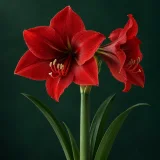
Christmas in France: cut amaryllis, a table arrangement or a bulb
For Noël, compare cut amaryllis, a low arrangement and a potted bulb. Choose the stage of the flowers and prepare a gift that suits the table or the home.
Christmas in Italy: a poinsettia or flowers for the table
Natale 2026 falls on Friday the 25th and Santo Stefano on Saturday the 26th, both public holidays in Italy. Choose a poinsettia for the home or a table centrepiece and plan delivery for dinner on the 24th or lunch on the 25th.

Which flowers to give in autumn and winter
Bouquets and plants for autumn, winter, Erntedank and Advent visits in Germany. Choose the format and plan the handover for the celebration.

Which flowers to give to someone with cats or dogs
Flowers for a home with cats or dogs: options to consider, checking the whole bouquet and precautions with lilies, holly and mistletoe at Christmas.
Frequently asked questions
Are mistletoe berries poisonous?
Yes, the leaves and berries are toxic if eaten, the leaves more than the berries. Hang it out of reach of children and pets and pick up any berries that fall.
Can I sow the berries from my sprig?
It is difficult: decorative berries are often unripe. Mistletoe also needs a host tree, grows very slowly at first and can take up to seven years to fruit.
Sources and what they support
- Kew · Plants of the World Online · Viscum album
Viscum album L. is the accepted species of European mistletoe. Does not identify the subspecies or host tree of a bought sprig, or cover American mistletoe (Phoradendron).
- RHS · How to grow mistletoe
Semi-parasitic plant that takes water and nutrients from its host and makes its own food; the most common UK host is apple, also lime, hawthorn and poplar. Translucent white berries from winter to spring, only with male and female plants; decoration berries are often unripe. Keeps two to three weeks somewhere cool. Gloves and out of reach of children and pets; landowner permission to gather. Large colonies weaken host trees. UK garden guide.
- Anses · Plantes décoratives : leur ingestion peut être toxique pour les hommes comme pour les animaux (15/12/2020)
Mistletoe leaves are more toxic than its white berries. In children, most have no symptoms or only digestive upset after a few berries; many berries can cause heart problems and drowsiness. Leaves and berries are toxic, even fatal, to pets and grazing animals. If a child has put some in their mouth: wipe the mouth with a damp cloth, give nothing to drink and call a poison centre; for an animal, a veterinary poison centre. French poison centre data.
- Universität Zürich · CliniTox: Viscum album
Veterinary database: Viscum album classed as mildly toxic, with gastrointestinal irritation. Data mainly from dogs and horses; no safe dose for cats and no transfer of injection effects to ingestion.
- Natural History Museum · Christmas plants and flowers (James Ashworth)
Viscum album is the species most associated with Christmas; the first reference to kissing under mistletoe in England dates from 1784, and it was used earlier in pagan winter festivities. Most mistletoes are hemiparasites and their white berries attract birds; it is toxic to some degree. Does not date the custom in other countries.
- Il Post · Perché a Natale e Capodanno ci si bacia sotto il vischio (30/12/2022)
Kissing under mistletoe at Christmas or New Year is considered lucky in many countries, including France, the UK and the US; the most accepted account places the modern custom in late 18th-century England. The white berries are poisonous to people. General newspaper; does not describe each country’s practice in detail.
- Focus · Tradizioni di Natale: baci sotto il vischio (23/12/2019)
The kiss under the vischio is a set moment of Christmas and of the last day of the year in Italy; the berries are poisonous although birds eat them. Popular science magazine; its mythological origins are not presented as established history.
- Académie d’Agriculture de France · Au gui l’an neuf
Links mistletoe to a medieval New Year custom in which children begged for alms with the phrase “Au gui l’an neuf”. Does not describe kissing under mistletoe or any current obligation.
- Gesetze im Internet · § 39 BNatSchG
§ 39(3): small quantities of wild plants for personal use where access is not prohibited; § 39(4): commercial gathering of wild plants needs approval from the nature conservation authority, without prejudice to owners’ rights; § 39(7): protected-area rules remain unaffected. German federal text.
- Visuotinė lietuvių enciklopedija · Amalas
One species grows in Lithuania, paprastasis amalas (Viscum album): a perennial semi-parasitic shrub on broadleaf trees, flowering in March and April; poisonous and medicinal. Used for naming and general toxicity, not doses.
How we put these guides together
We review dates, care and recommendations to help you plan each gift.
Spotted something we should review? Contact Agenda Floral.