Flowers
When to give bird of paradise flowers
Bird of paradise can suit a birthday or anniversary if the recipient enjoys orange and blue flowers and distinct shapes. Ask for Strelitzia reginae and choose between stems prepared for an arrangement and a plant to care for. Check space, delivery and whether animals can reach it before ordering.
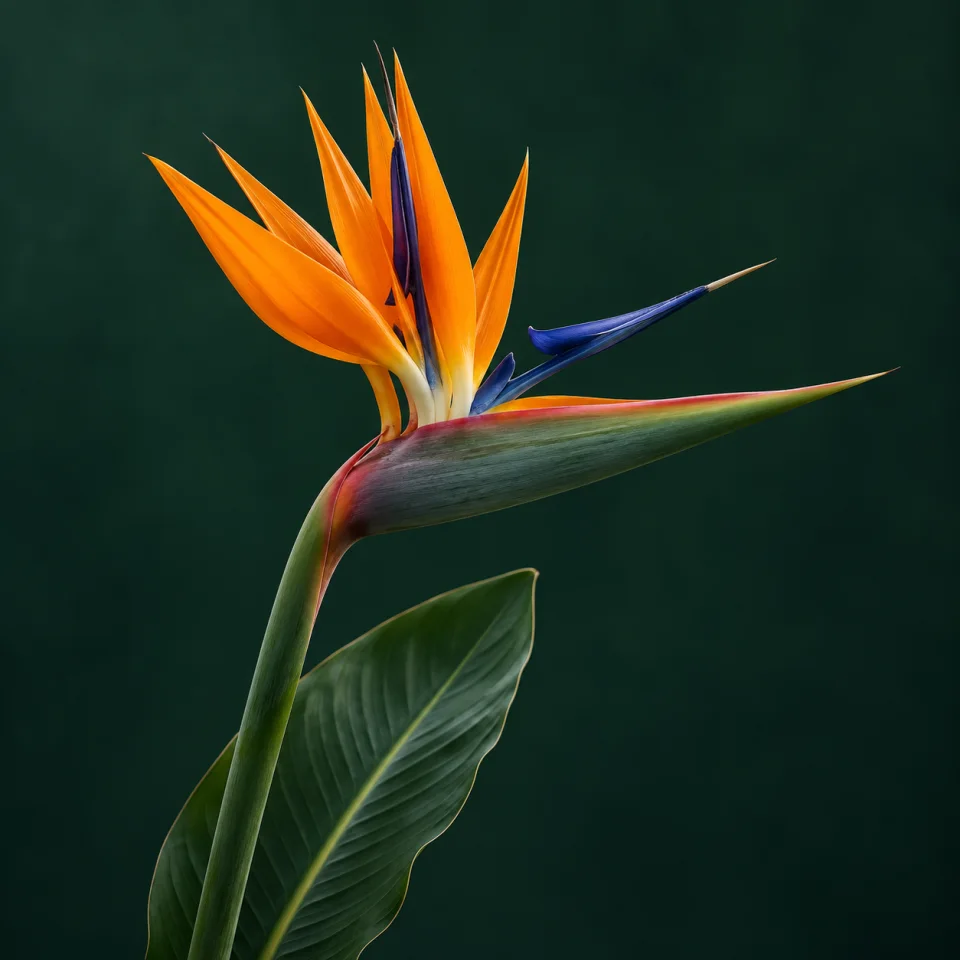
Botanical reference: Strelitzia reginae
Ask for the species and format you want
Strelitzia reginae has orange and blue flowers with a shape resembling a bird’s head. It can be a birthday or anniversary choice if the recipient enjoys arrangements with distinct outlines. A note about what you are celebrating gives the gift meaning without assigning a universal meaning to the flower.
If you want those blooms, ask for cut stems or a Strelitzia reginae that is already flowering. Strelitzia nicolai is a different, larger species with white and blue flowers. The name “bird of paradise” alone does not clarify which you will receive. Check the label and actual specimen when ordering a pot.
Plan the arrangement for its position
Explain which surface it will occupy and where it will be viewed from. For a dinner table, ask for a low arrangement that lets people see one another. In a hallway against a wall, a taller composition facing the entrance may work. These are design suggestions to adapt to the setting.
A specific order could be: “I’m looking for a Strelitzia reginae arrangement for an anniversary. It will stand in a hallway on a console table 30 cm deep. I want the flower visible from the door and a stable container. Please confirm the finished dimensions and how to carry it.” The 30 cm describes this example, not a recommended measurement for every arrangement.
Ask whether the container is included and whether the arrangement will arrive ready to display. If the recipient will need to carry it on public transport or keep it somewhere during dinner, agree a manageable format. The flower can stand out without a composition that will not fit their home.
Protect the stems during delivery
The flowers are fragile and need protection during handling. Ask for packaging that keeps pressure off the flower head and a way to secure the container during the journey. Do not place bags or other packages on top of the arrangement. When buying or unpacking the stems, check that the flower heads are dry, without crushed parts or excessive nectar.
Request instructions for water and care of the prepared stems. Do not routinely put them in a household fridge because this species can suffer chilling damage. Its professional storage conditions are not a home recipe. If you buy ahead of delivery, agree with the florist where to keep them.
A pot needs a suitable place of its own
Give the plant if the recipient wants to care for it and has a bright space for it. The leaves spread out and flowering can take years. Check the specimen’s height and width and ask about its growth before choosing it for a small corner. If open flowers are part of the gift, confirm that stage close to delivery.
Place it beside a very bright window, with room for the leaves to spread. A corner far from the window may look attractive but provide too little light. If strong afternoon sun falls directly on the leaves, filter it with a light curtain.
To move it outdoors, choose a warm spot sheltered from wind. Acclimatise it gradually over several days, starting with protection from the strongest sun. A sudden move from indoors can scorch the leaves; strong wind can also tear them or topple the pot.
If it spends the warm period outside, prepare a bright indoor spot before cold nights arrive. For this type of pot cultivation, avoid temperatures below 10–12 °C and move it inside before night-time lows approach 12 °C. This is a protection guideline, not a hardiness guarantee for every plant.
Check the moisture in the potting mix before watering. The top 2–3 cm becoming dry can be your cue: then water the whole mix and let the excess drain through the holes. Empty the saucer or outer pot. Overwatering and poor drainage can cause root rot.
When light levels fall and growth slows, reduce watering and let the mix dry more between waterings, without leaving the root ball completely parched. Adjust the water to the plant and its position instead of repeating a weekly routine or a calendar from another hemisphere.
For example, if it moves from a warm terrace to a cooler room, check the moisture before continuing the watering it needed outside. Find a window with good light and space for its leaves. Moving it does not ensure flowers: a young plant may still take years to bloom.
Check whether animals can reach it
Strelitzia reginae is toxic to dogs, cats and horses. If an animal can chew the plant or flowers, choose another gift. Contact a vet as soon as possible after suspected ingestion and keep the species name to help identify it.
The warning applies to this particular plant. Other plants called bird of paradise, such as Caesalpinia or Poinciana gilliesii, are different. Do not use the common name to assume that every gift bearing it has the same risk or a safe dose.
When we suggest this flower
Compare flowers to choose the format, colours and care that suit the occasion.
Father’s Day
Spain · Nationwide
It may suit him if he enjoys flowers with defined, angular shapes.
Our Lady of El Pino · Gran Canaria
Gran Canaria · Island
Main flower in our selectionIt may suit you if you like its defined shapes. Its use at a welcome event in 2019 does not make it a required flower of the feast.
How to transport a bouquet by car or plane
To transport flowers, protect the petals without squeezing them and hold the bouquet around the wrapped stems. If it comes in a vase, keep it upright in a sturdy box with support around the base. Agree with the florist how to supply water and protect it for the whole journey. Collect it after your errands and plan where to put it on arrival. If you are flying, check separately how the bouquet counts towards your baggage allowance, the conditions for carrying water and the destination’s entry requirements.
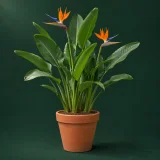
How to care for a bird of paradise in a pot indoors
A bird of paradise needs a position beside a very bright window and room to spread its leaves. Check for the top layer beginning to dry, then water the root ball thoroughly and let it drain. Slower growth means less water use. A stable, appropriately sized pot helps more than squeezing roots in pursuit of flowers. If your only space is a dark corner, choose another plant. Indoors it can be grown for its foliage even without flowers.
Guides to help with your decision
Which flowers to give for a birthday
Compare dahlias, gerberas, anemones and tulips for a birthday. Choose size and format, then plan the budget, card and delivery at home or work.

Which flowers to give for an anniversary
Which flowers to give for an anniversary and how to order around a memory. Compare roses, ranunculus, callas and proteas and agree on substitutions.
How to care for a bouquet when it arrives
Bouquet care on arrival: water, stem cutting, flower food and mixed flowers. What to check if it looks limp and how to keep the flowers still doing well.
Should you give a bouquet or a potted plant?
Choose between a bouquet and a plant according to space and care. Compare houseplants with a rose bush for Sainte-Catherine in France on 25 November.

Which flowers to give to someone with cats or dogs
Flowers for a home with cats or dogs: options to consider, checking the whole bouquet and precautions with lilies, holly and mistletoe at Christmas.
Frequently asked questions
Can it be a romantic gift?
Yes, if your partner likes it. Choose it for its shape or colours and add a note about your anniversary. That choice expresses your intention without assigning a message everyone must interpret in the same way.
Can a young plant guarantee flowers for a birthday?
No. Flowering can take years. If you want to hand over open blooms, check a specimen that already has them or ask about cut stems. Large leaves do not guarantee flowers for that date.
How many days does a cut stem last?
There is no duration you can rely on for every delivery. Ask about stem condition and handling before buying. Professional storage observations do not guarantee the result in a vase at home.
Should I open a flower by hand if it has not emerged?
Do not force it to prepare the gift. If you want an open flower, agree with the florist that they will select or prepare stems for that appearance. Handling the flower head during the journey can spoil what you wanted to display.
Sources and what they support
- NC State Extension · Strelitzia reginae
Describes orange and blue flowers and the risk of root rot from overwatering or poor drainage. Does not guarantee open blooms or gift longevity.
- NC State Extension · Strelitzia nicolai
Identifies a different species with white and blue flowers and a larger habit. Its care is not transferred here to Strelitzia reginae.
- RHS · Cultivo de Strelitzia
Explains bright light, space, gradual acclimatisation and wind protection; advises avoiding below 10–12 °C and bringing indoors before nights approach 12 °C. Protected cultivation, not universal hardiness or a transferable British calendar; no flowering guarantee.
- UC Davis · Poscosecha de Strelitzia reginae
Describes visible quality when buying, protection of fragile flowers and chilling sensitivity in cut stems. This is a professional fact sheet from 2004, not a home recipe or a guarantee of vase life.
- ASPCA · Strelitzia reginae
Classifies the species as toxic to dogs, cats and horses. Distinguishes other plants with the same common name and recommends veterinary consultation after possible ingestion.
- New York Botanical Garden · Strelitzia reginae
Specific houseplant guide: filter strong sun, transition gradually, water when the upper layer dries and empty runoff; less water as growth slows without drying out roots. New York context: months, mandatory rest and its moving thresholds are not copied as rules for all climates.
How we put these guides together
We review dates, care and recommendations to help you plan each gift.
Spotted something we should review? Contact Agenda Floral.