Guides
How to care for moss rose in a pot
Care difficulty3 out of 10
Pay attention to watering and changes and signs of stress.
Editorial guide, with suitable light and climate. 0: very easy; 10: very delicate. More stars mean more care.
Moss rose suits a sunny patio where other containers struggle with heat. It needs a freely draining mix and watering as that mix begins to dry, without keeping the roots wet. Fleshy leaves store water, but a small pot lacks the reserves available in the ground. It is often grown as a warm-season annual. Flowers closing as the light fades do not mean the plant is dying.
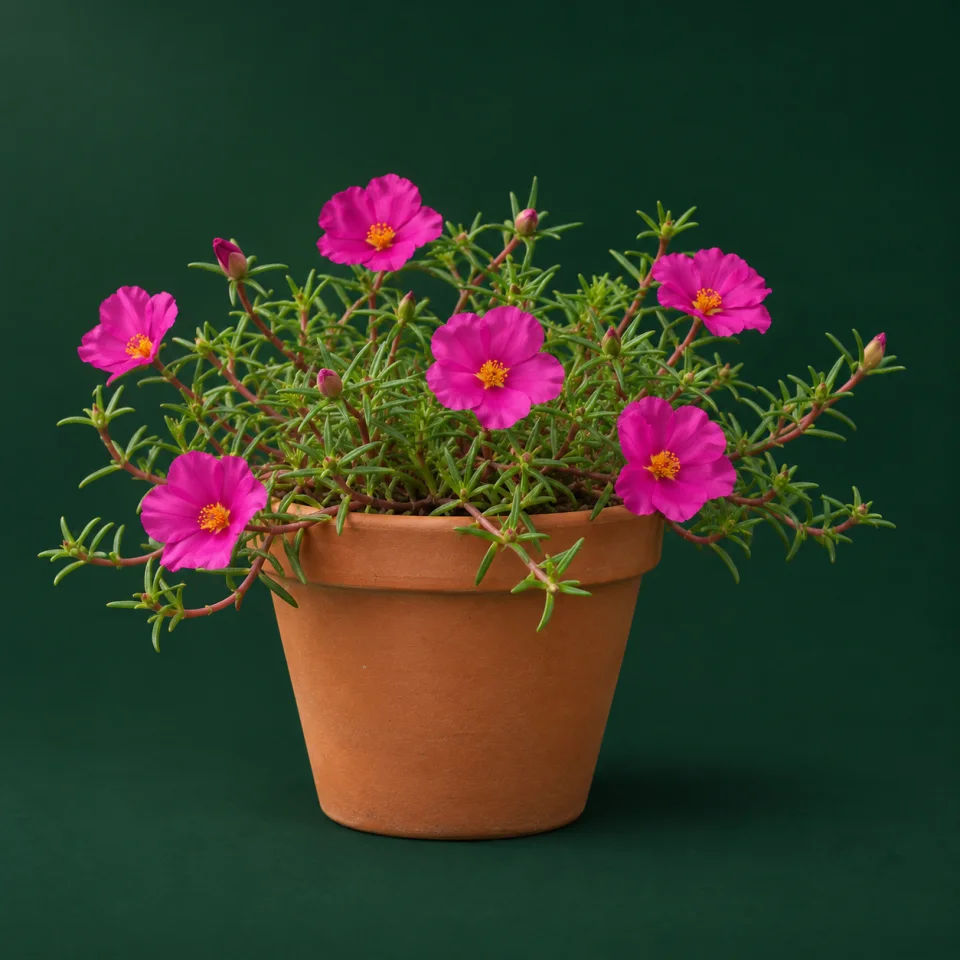
Botanical reference: Portulaca grandiflora
A low plant for the edge of a container
Portulaca grandiflora makes a spreading mat with reddish stems and narrow, fleshy, almost cylindrical leaves. It can trail over a pot or hanging basket without needing support. Despite its common name, it is neither a rose nor a moss. P. oleracea, P. umbraticola and hybrid selections sold as portulaca should not all be treated as identical either. Keep the label so you know the growth habit and characteristics of the plant you have chosen.
Sun for growth and open flowers
Choose a place with direct sunshine for much of the day. A bright indoor window does not necessarily provide the same conditions as a sunny outdoor spot. Introduce a plant raised under cover to sun gradually. Many flowers close at night or in cloudy weather, while some selections stay open longer. Before assuming it needs water or fertiliser, watch it when sunshine reaches it. On a shelf or in a window box, check that a taller neighbouring plant is not shading it.
Plant with the root ball intact and drainage clear
Use a pot with open drainage holes and a light container mix that does not compact after watering. A special acidic mix or enormous pot is unnecessary. Leave room for it to spread without crowding young plants together. Lift it by the root ball rather than pulling fragile stems or breaking the roots apart. Keep the previous planting depth and water to settle the mix. Empty the saucer or outer pot afterwards; water trapped beneath the plant can lead to root and crown rot.
Check before watering rather than following a habit
Allow the upper layer of mix to dry a little and check further down before watering again. If it is still moist inside, wait. When needed, moisten the root ball and let excess water drain. Avoid keeping it constantly wet or repeatedly letting it reach the stage of shrivelled leaves and wilting. In hot or windy weather, check a small pot or hanging basket daily, even if it does not need water every day. For time away, arrange a moisture-checking helper or a watering system tested in advance. Drought tolerance does not guarantee several unattended days.
Light feeding and no calendar-based repotting
Fresh potting mix containing fertiliser may supply part of the season’s needs. Read its label before adding more. If extra feed is needed during growth, use a product for flowering container plants at its labelled rate, on moist mix. Excess fertiliser will not make up for missing sun. Annual repotting is unnecessary as a way of trying to keep the same plant indefinitely. If it outgrows its pot while still growing, move it with the root ball intact into a slightly larger container.
Spent flowers and gentle trimming
Remove spent flowers if you want to limit seed production and keep the plant tidy. You do not have to remove every closed flower as though it were dead. If stems become long and the plant straggly, a modest trim can encourage branching; avoid removing all healthy growth at once. Handle it gently because stems break easily. In a shared pot, choose neighbours that also appreciate sun and drainage, without vigorous plants that will cover it.
Accept the season and plan the next display
Moss rose is frost-tender and often grown as an annual, although its lifespan depends on conditions. Sow or plant outside once frost risk has passed and conditions are warm, according to local conditions. Replacing a plant that has finished its cycle or declined with cold is reasonable. For sowing, scatter the tiny seeds over a fine medium and barely cover as directed on the packet, maintaining light moisture without waterlogging. Germination has no guaranteed deadline. Some selections are propagated by cuttings, and saved seed does not always repeat their colours.
Problems and keeping the plant ornamental
Check shoots for aphids and look for slugs if leaves are chewed; mealybugs may also occur. If stems turn soft at soil level while the mix is soaked, check drainage instead of adding water. Overly wet seed trays can lose seedlings to rot. Identify the cause before using a treatment. Keep this as an ornamental container: do not taste leaves, flowers or seeds or offer them to animals. The name purslane does not establish food-crop status. Keep it out of reach of children and pets that chew plants; if an animal eats it, consult a vet with the plant label.
Guides to help with your decision
How to care for petunias in pots and window boxes
Sun, watering, feeding and spent flowers for garden petunias, with variety differences and end-of-season care.
How to care for pot marigold through its growing season
Sun, moderate water, spent flowers, seeds and heat: Calendula officinalis care in containers, distinct from Tagetes marigolds.
How to care for a gazania in a pot
Sun, drying between waterings, closed flowers and cold: practical Gazania rigens care for a free-draining terrace pot.
Frequently asked questions
Should I water more if the flowers stay closed?
Check the light and the potting mix first. Closing in cloudy weather, towards evening or at night can be normal and varies between selections. If the mix is still damp, more water will not open the flowers and may worsen drainage. See how the plant responds during sunny hours.
Is it suitable if I am away for several days?
It may need less water than other seasonal flowers, but it is not a self-sufficient container. A small basket in sun and wind dries differently from a larger pot. Test its drying pattern before leaving and arrange watering checks rather than basing your absence only on its being a succulent.
Sources and what they support
- RHS · Portulaca grandiflora
Spreading annual with reddish stems, narrow fleshy leaves and single/double flowers opening in sun; container use, drainage, broad pH and planting after frost risk with minimal root disturbance. Deadheading to limit seed, aphids and damping-off. No UK months, pot-hardiness threshold or perpetual lifespan.
- University of Wisconsin Extension · Moss Rose
Nearly cylindrical leaves, fragile stems, sunny drained cultivation; adequate moisture without equating drought tolerance with neglect. Flower closure in low light varies by selection/hybrid, gentle trimming, barely covered seeds and some selections grown from cuttings. Cultivar coverage and food-use remarks do not certify this ornamental pot.
- NC State Extension · Portulaca grandiflora
Low annual mat, sun, pots/baskets, careful transplanting, aphids/slugs and crown rot with poor drainage. Selection traits are not universal. Food-use remarks are not turned into eating advice or veterinary safety claims.
- Kew · Portulaca grandiflora Hook.
Accepted species, succulent annual or subshrub, ornamental use and subcylindrical leaves. Lifecycle variation does not guarantee cold survival or lifespan in each pot; no cultivar or food certification.
- Texas Tech University · Moss Rose
Container/basket use, spreading habit, sun, heat, low water needs with drainage and rot risk. Seed and cuttings; seedlings may not come true to form. Regional dates and watering independence are not transferred.
- RHS · Container maintenance
General container principles: moisture checks in heat/wind, drainage, avoiding overpotting, accounting for feed in the mix and labelled application to moist compost. Adapted to a succulent annual without fixed watering, doses or yearly repotting.
- UF/IFAS Extension · Moss rose – the other portulaca
Ornamental identity, narrow fleshy leaves, seasonal cultivation and possible mealybugs. Reports P. grandiflora toxicity but refers to ASPCA for P. oleracea; not treated as species-specific toxicological confirmation. This pot is not offered as food or animal feed, without declaring toxicity or harmlessness settled.
How we put these guides together
We review dates, care and recommendations to help you plan each gift.
Spotted something we should review? Contact Agenda Floral.