Occasions
Women’s Rights Day in France: should you give flowers on 8 March?
France · Nationwide
International Women’s Rights Day falls on Monday 8 March 2027. In France it is not a public holiday and not a celebration: since 1982 its official name has been about rights. It has no official flower, and flowers are not part of its customs. If you want to give some to a particular woman, make it a personal gesture, with a card that names what she has done. We suggest anemones or ranunculus, grown in the Var until March.
Upcoming calendar dates
France
Agenda Floral, with you
Add it to your calendar
Subscribe to receive our updates, or download the .ics file to import a copy. The copy will not receive later changes.
Use in Google Calendar or another calendar
Open Google Calendar on a computer. Beside “Other calendars”, click “+” and choose “From URL”. Paste the address below to add the subscription. You can then view that calendar on devices using your account.
Guide to adding Agenda Floral to Apple and Google Calendar
Your calendar app decides when to refresh a subscription. Importing the file again may duplicate events. Agenda Floral adds no alarms; you can check alerts in your calendar settings.
A day about rights, not a celebration
8 March grew out of women’s mobilisations in the early twentieth century in Europe and North America. The United Nations made it official in 1977, following International Women’s Year in 1975. France recognised the date in 1982 as the Journée internationale des droits des femmes, at the initiative of Yvette Roudy, then minister delegate for women’s rights.
The word “rights” matters. You will still hear “journée de la femme”, or even “fête des femmes”, but the name used in France is about equality and rights, in the plural. If you write a card in French that day, use the real name: it is already a way of respecting what the day stands for.
In 2027, 8 March falls on a Monday. It is not one of the eleven legal holidays in the general case, nor one of the holidays specific to Alsace-Moselle or the overseas territories: it is an ordinary working day.
Sunday 7 and Monday 8: two dates to keep apart
The day before, Sunday 7 March 2027, is Grandmothers’ Day, set on the first Sunday in March. It began in 1987 as a commercial initiative and has no legal status. It is a family celebration where a bouquet fits naturally: our guide to Grandmothers’ Day in France helps you choose one.
The next day the tone changes. Avoid merging the two into a single bouquet “for all the women in the family”. On Sunday your grandmother receives flowers for who she is to you; Monday is about equality. If you want to mark both, keep the flowers for the 7th and, on the 8th, write her a few lines.
When flowers make sense
A bouquet fits when it is meant for a particular woman and goes with something concrete: an exam she passed, an association she keeps going, a negotiation she led for her team. The flowers then highlight what she has done, not simply the fact that she is a woman.
At work, we advise against a rose handed to every female colleague at the office door. That is our view, not a rule: the gesture turns a day about rights into a “women’s celebration”. If the team wants to mark the date, a signed note for one specific colleague, or your presence at whatever the company organises on workplace equality, says more.
If she does not like cut flowers, do not force it. A book by a woman writer she admires or an evening spent together will carry the same message.
Anemones or ranunculus from the Var
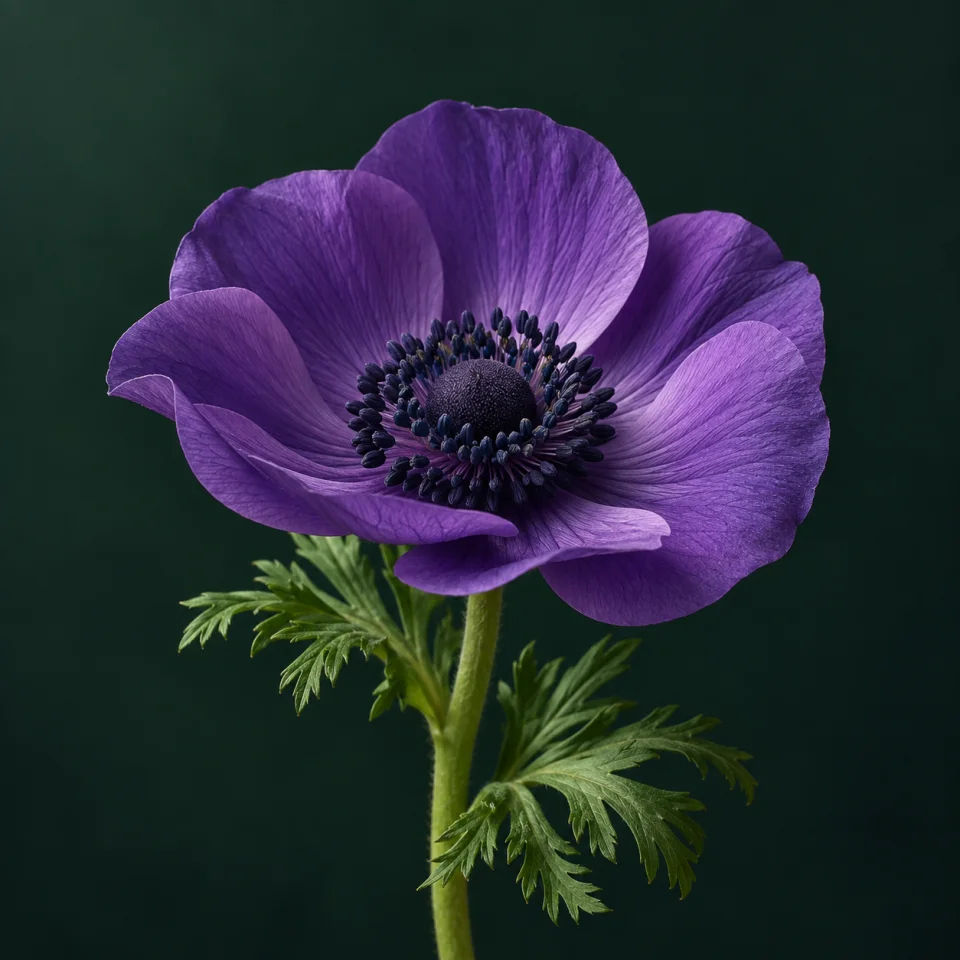
We suggest anemones: early March is the end of their season in the Var, where growers in La Crau produce them from October to March. Their dark centre stands out against the petals, and a few stems are enough for a bouquet. They are not a symbol of 8 March, simply a flower grown in France at that time of year.
If you prefer rounder shapes, ranunculus come from the same area in the same season. The guide to seasonal flowers in France explains how to ask for a specific origin, and the anemone and ranunculus guides cover their care. Both are irritating if chewed: keep the vase out of reach of a curious cat or dog.
Ordering, delivery and the card
Monday the 8th is a working day, so office delivery is possible, but a bouquet arriving at reception in front of everyone can feel awkward. For a friend, your sister or your partner, we prefer handing it over in person, in the evening, without an audience.
One possible order: “Seven blue and white anemones, short stems, in a small glass vase. They are for a colleague who saw our department’s equal-pay case through. I will collect them on Monday 8 March at 8.30 am.”
For the card: “Thank you for seeing the equal-pay case through to the end. Thanks to you, the whole team is better off.” A sentence about what she has done works better than a compliment on her looks; the card messages guide has more ideas.
Which flowers to choose
Compare flowers to choose the format, colours and care that suit the occasion.

Anemone
Main flower in our selectionIn France, 8 March is International Women’s Rights Day: it is neither a public holiday nor a celebration, and flowers are not part of its customs. If you want to give them to a particular woman, we suggest anemones, grown in the Var until March, with a card naming what she has achieved.

Ranunculus
If you prefer rounded flowers, ranunculus come from the same part of the Var in the same season. A small bouquet is enough: there is no official flower for 8 March and the gesture is a personal one.
Guides to help with your decision

Flowers on International Women’s Day: a respectful gesture
A flower gift on 8 March can suit someone who welcomes it. Ideas for considering her tastes and the meaning of the occasion.

Flowers for 8 March in Germany: when giving them makes sense
8 March is a public holiday in Berlin and Mecklenburg-Western Pomerania. When to buy and deliver flowers in 2027 and what to write on the card.
Grandmothers’ Day in France: flowers to bring or send
The first Sunday in March in France. Choose gerberas or ranunculus, prepare a bouquet with a container and add a personal card.
8 March in Belgium: flowers for International Women’s Day?
Monday 8 March 2027, Journée des droits des femmes or Internationale Vrouwendag, is a working day in Belgium. Which flowers, when to buy them and what to write.

What to write in a card with flowers
Ideas for writing a flower card in your own words. Examples for birthdays, thanks, anniversaries and sensitive moments.
Which flowers to give to someone with cats or dogs
Flowers for a home with cats or dogs: options to consider, checking the whole bouquet and precautions with lilies, holly and mistletoe at Christmas.
Seasonal flowers in France: what to ask for in your bouquet
Anemones and ranunculus from the Var, peonies from Tronçais and dahlias from Brittany. Ideas for choosing a bouquet in France by date, origin and colour.
Frequently asked questions
Is 8 March a public holiday in France?
No. It is not a legal holiday in mainland France, in Alsace-Moselle or overseas. In 2027, Monday 8 March is an ordinary working day.
What is the day called in France?
Journée internationale des droits des femmes, the name recognised since 1982. Expressions such as “journée de la femme” or “fête des femmes” shift its meaning, which is about equality and rights.
Do people in France give flowers on 8 March?
It is not a French custom for this day and nothing requires it. A bouquet can be a personal gesture to a particular woman, with a card that recognises what she has done.
How is it different from Grandmothers’ Day?
Grandmothers’ Day is a family celebration on the first Sunday in March, 7 March in 2027. 8 March is about women’s rights. If you are giving your grandmother flowers, do it on the 7th.
Sources and what they support
- Service Public · Jours fériés et ponts dans le secteur privé
Official page listing the legal holidays for 2026 and 2027 (checked 1/1/2026): eleven in the general case, plus Good Friday and 26 December in Alsace-Moselle and the commemoration of the abolition of slavery overseas. 8 March does not appear. Does not cover shop hours.
- Ministère de l’Intérieur et des Outre-mer · Frise chronologique des droits des femmes (préfecture du Rhône)
Official timeline: in 1982 France recognised 8 March as International Women’s Rights Day, at the initiative of Yvette Roudy, minister delegate for women’s rights. It also dates women’s right to vote to 1944. It says nothing about flowers or gifts.
- Nations unies · Journée internationale des femmes : origines
The UN made the day official in 1977, after International Women’s Year in 1975; the day grew out of social movements at the turn of the twentieth century in North America and Europe. Does not cover France or flowers.
- Assemblée nationale · Question écrite n° 181 et réponse du 25 février 2025
The question notes that Grandmothers’ Day was instituted in 1987, on the first Sunday in March, at the initiative of a commercial company; the ministerial answer gives it no legal status. Does not cover 8 March.
- Producteur de fleurs coupées de La Crau (Var) · Calendrier des fleurs
Grower in La Crau (Var): anemones and ranunculus from October to March. One farm’s calendar; it does not guarantee stock at a given florist or on a given date.
- NC State Extension · Anemone coronaria
Species profile: dark centre, use as a cut flower and a warning that it irritates on contact and if eaten. Does not establish stock in France.
How we put these guides together
We review dates, care and recommendations to help you plan each gift.
Spotted something we should review? Contact Agenda Floral.