Flowers · Spain
When to give waxflowers
Agenda Floral · Editorial selection · Reviewed
Waxflower can accompany an anniversary bouquet, a thank-you or a wedding design using small flowers. Here we mean Chamelaucium uncinatum, which is used as a cut flower. We suggest it when you want fine texture around a main bloom, or a simple bunch that does not depend on large flower heads for its effect.
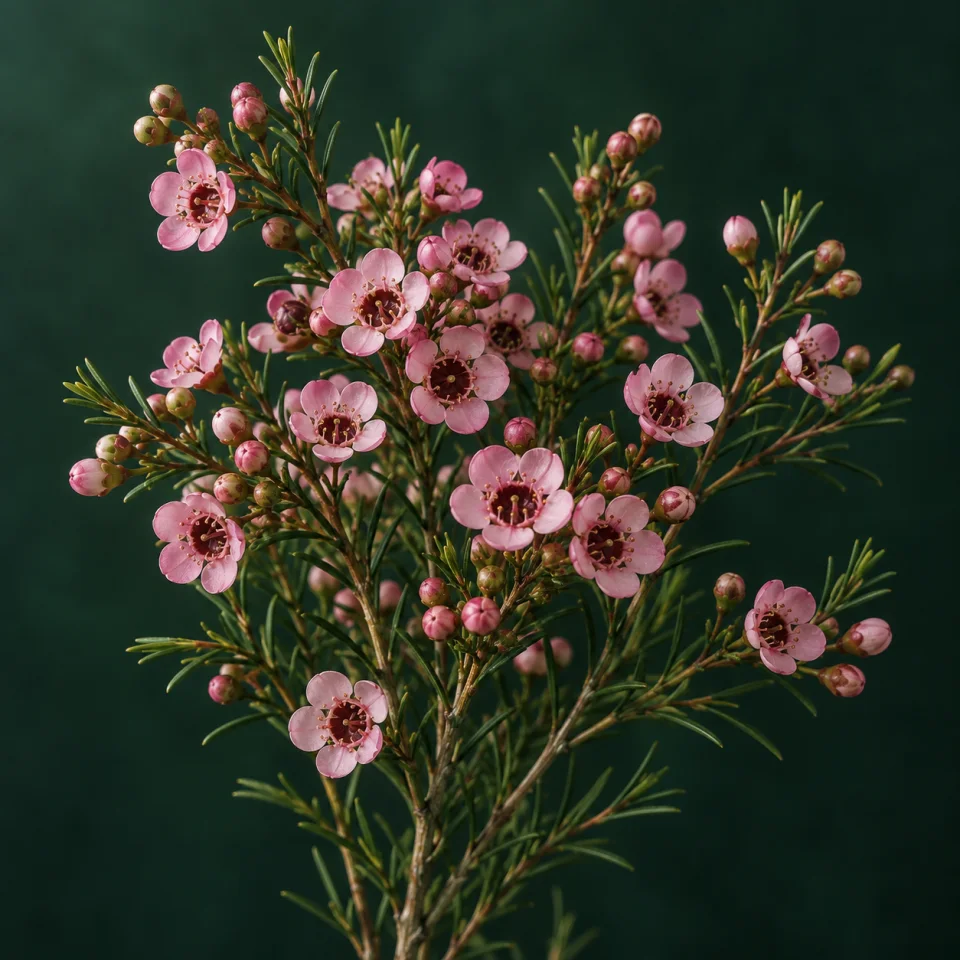
Botanical reference: Chamelaucium uncinatum
Supporting flowers have their own form
Small, waxy-looking blooms cluster along branches and introduce detail between larger flowers. We suggest pairing them with roses, ranunculus or lisianthus while leaving each species recognisable. For a modest gift, ask for a Chamelaucium bunch and compare available colours. The amount should serve the design rather than the assumption that every bouquet needs a great deal of filler.
Clarify the common name
Waxflower is also used for other plants. Use Chamelaucium uncinatum if you want the flowers described here and specify cut branches. A potted plant is another format that requires choosing a position and appropriate care. To reproduce a wedding palette, confirm the variety, shade and acceptable substitutions. The image is an illustrative reference rather than a guarantee of stock, so ask what your florist can actually supply on the date.
When we suggest it in Spain
Flower pairings are suggestions from Agenda Floral. Documented customs are explained separately; no occasion requires one particular flower.
Frequently asked questions
Is waxflower the same plant as a Hoya?
No. Some Hoyas are also called waxflowers. This guide covers Chamelaucium uncinatum; the botanical name helps prevent an order for a different plant.
Sources and what they support
- RHS · Chamelaucium uncinatum
Chamelaucium uncinatum bears small, waxy-looking flowers in clusters and is used as a cut flower.
How we put these guides together
We check dates and customs against institutional sources, and botanical information against horticultural sources. Gift suggestions consider a flower’s appearance and the recipient’s taste. Commercial references document an offer, not popularity or a tradition. This initial catalogue is a growing editorial selection, not a list of every species.
Spotted something we should review? Contact Agenda Floral.