Flowers
Giving Oxalis triangularis: watering and dormancy
For an Oxalis triangularis gift, I would choose a pot with developed leaves: its foliage can look attractive without open flowers. Prepare a bright position protected from strong sun and a pot that drains. Night folding is normal; gradual leaf loss can have other causes, including dormancy.
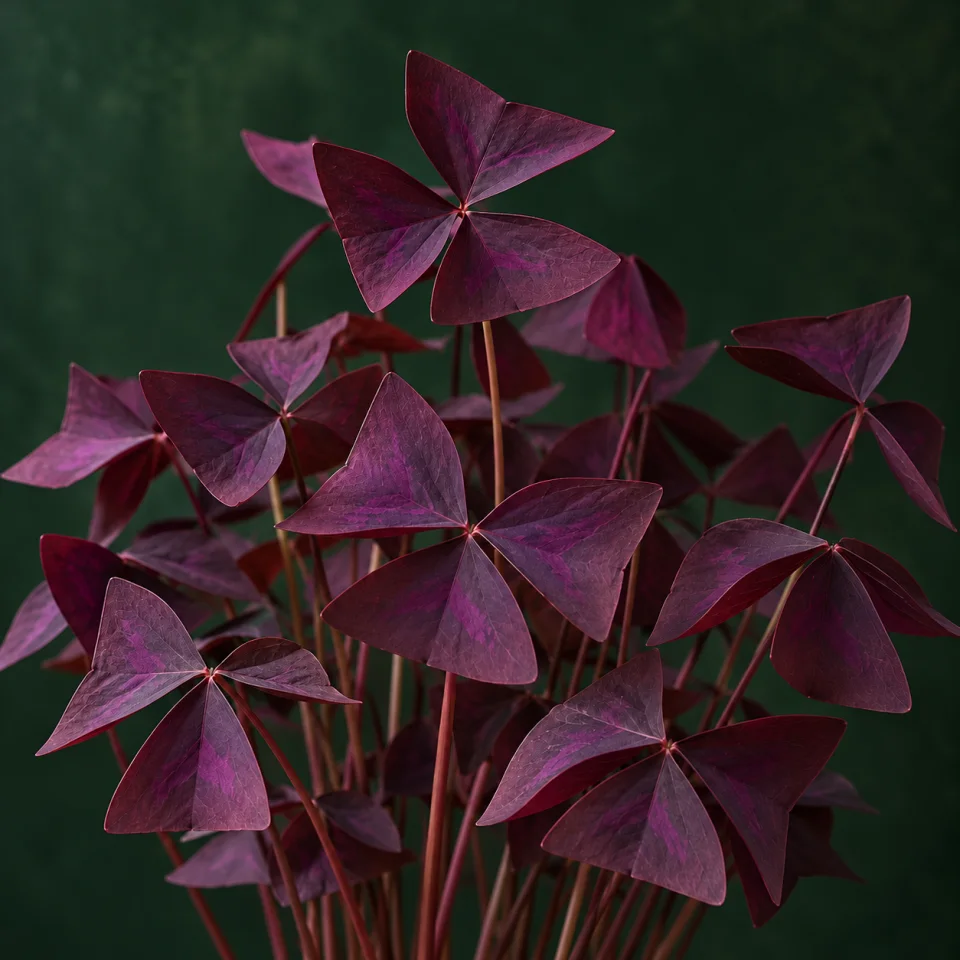
Botanical reference: Oxalis triangularis
A pot that looks attractive at the handover
Our image shows a purple-leaved option. The species also has green-leaved forms and other markings; colour does not identify a particular cultivar. Choose by the actual plant and its label rather than the photograph alone.
You could ask for “an Oxalis triangularis with developed foliage, to give this week. I want to retain its draining pot and add a pot cover that is easy to empty.” If buying rhizomes to grow, the gift is watching them develop, rather than receiving a leafy plant from day one.
Some labels use Oxalis regnellii, a synonymous name. The common name shamrock is also used for plants in the genus Trifolium. They are different plants: consult the clover guide if you want a sprig for St Patrick’s Day.
Light and watering during growth
Place it near a bright window, protected from strong afternoon sun and radiator heat. During active growth, let the compost surface dry between waterings. Water and let it drain, then empty the saucer or pot cover.
Leaves and flowers may fold at night or in dim light. That movement alone does not mean it needs water. Check moisture before watering rather than responding to every closed leaf with another glass of water.
Drooping leaves: check before assuming dormancy
Foliage gradually losing colour and drying may indicate dormancy. Heat, dryness or excess water can also cause deterioration. Check the position and compost: if it stays waterlogged, inspect the drainage and do not keep watering to try to lift the leaves.
Leaves closing for a night and a pot gradually losing all its foliage are different situations. If you inspect the root ball because drainage problems persist, check whether roots are firm or soft; do not assume every drooping plant is resting.
What to do during dormancy
As the plant enters dormancy and foliage dries, gradually reduce watering. Remove leaves once completely dry and keep the pot in a cool, dark place, with dry compost during the rest period.
Watch for new shoots. When they appear, return it to a bright position and gradually resume watering. Dormancy varies with conditions and may not happen every year. For a gift on a particular date, I would choose an actively growing plant rather than rely on regrowth that day.
Guides to help with your decision

Shamrock: which clover to ask for on St Patrick’s Day
Trifolium dubium is one of the clovers used as shamrock. Choose foliage for a St Patrick’s Day sprig or a rooted plant with a botanical label.
Lucky clover: choosing and keeping Oxalis tetraphylla
Choose a pot of Glücksklee for its four leaflets. Tell night folding from dormancy and prepare its light, watering and care after the gift.
Glücksklee for New Year’s Eve: choosing and giving a potted gift
Glücksklee accompanies New Year wishes in Germany. Choose a pot for dinner on 31 December and plan where it will stand after the celebration.
Should you give a bouquet or a potted plant?
Choose between a bouquet and a plant according to space and care. Compare houseplants with a rose bush for Sainte-Catherine in France on 25 November.

Which flowers to give to someone with cats or dogs
Flowers for a home with cats or dogs: options to consider, checking the whole bouquet and precautions with lilies, holly and mistletoe at Christmas.
Frequently asked questions
Is it a good choice for a home with cats or dogs?
Oxalis is toxic to cats and dogs if ingested. If animals can reach and chew the plant, choose another option. Contact a veterinarian if ingestion is suspected.
What could I write on the card?
A note can explain its appeal and care: “For you to enjoy its purple leaves. If they close at dusk, take another look in daylight.” Include the label and watering and dormancy instructions.
Sources and what they support
- New York Botanical Garden · False Shamrock Houseplant
Light, watering and drainage, night folding, variable dormancy and possible overwatering problems. Drooping leaves alone do not diagnose dormancy, nor is there a guaranteed month or return.
- NC State Extension · Oxalis triangularis
Rhizomatous ornamental species, three triangular leaflets in different colours, white/pink flowers and surface drying between waterings. US growing zones/months are not transferred and colour does not identify a cultivar.
- Kew · Plants of the World Online · Oxalis regnellii
Oxalis regnellii is a synonym of Oxalis triangularis. Does not justify another entry or identify a pot’s subspecies/cultivar.
- ASPCA · Shamrock Plant · Oxalis spp.
Oxalis spp. is classified as toxic to cats and dogs if ingested; veterinary advice for suspected ingestion. No safe dose, no implication of severe harm from every bite and no classification of Trifolium.
How we put these guides together
We review dates, care and recommendations to help you plan each gift.
Spotted something we should review? Contact Agenda Floral.