Flowers
When to give agapanthus
You could give agapanthus for an anniversary or thank-you if the recipient enjoys blue flowers. Choose a low centrepiece for a table or a taller arrangement for a spacious hallway. Before ordering confirm the species or cultivar, shade and size including the container. Also agree on its handover appearance and how to carry it without squeezing the heads.
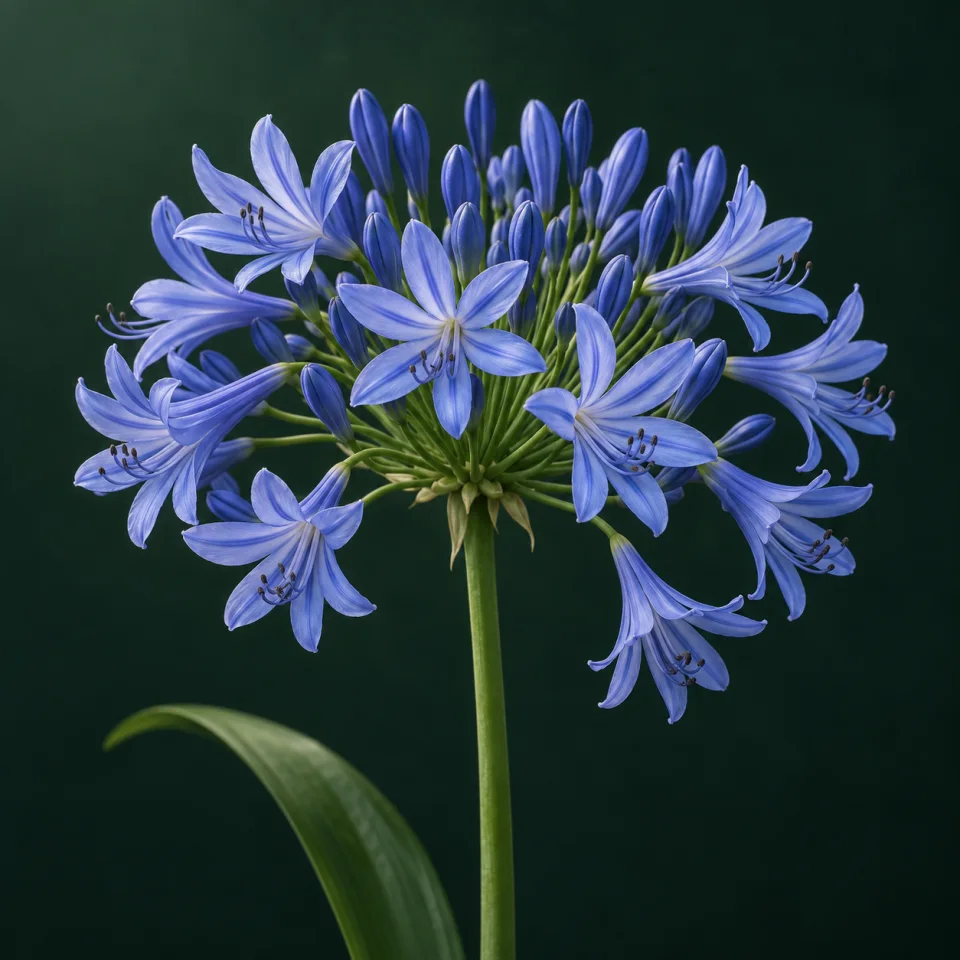
Botanical reference: Agapanthus africanus
Confirm which agapanthus is being offered
This guide’s botanical reference is Agapanthus africanus. This name has also been applied to other cultivated agapanthus. A. praecox and its cultivars are used as cut flowers. When offered agapanthus ask for the species or cultivar and to see the stems for your order. A common name alone is not a sound basis for choosing a plant’s care.
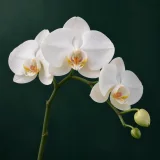
The image shows a head of open blue flowers and buds on a green stem. It suggests an arrangement’s appearance but does not identify a cultivar. Agapanthus can have different shades and sizes. For a particular wedding blue agree on the actual colour and an alternative you like in case it cannot be prepared.
Choose a low centrepiece or a tall arrangement
For an anniversary or thank-you you could request a few heads with space around them if the recipient enjoys blue flowers. A calla could add a curve to the arrangement. On a dining table ask for clear sightlines between seated guests. In a hallway you can keep more height if it fits and the container holds the stems securely.
An order could sound like this: “I would like a blue centrepiece as a thank-you after a dinner. Their table is small and I would like it to come with a vase. Could we use agapanthus without blocking the view and confirm the finished size before collection?” Explaining where it will go helps with height and width. The bouquet does not need to match the plant’s garden dimensions.
Plan handover and care for the bouquet
For flowers that look good that day discuss their opening stage with whoever prepares them. Do not assume every bud will open before dinner. Agree on wrapping that holds the stems without squeezing the heads and a stable container for a finished arrangement. Keep bags from resting on the flowers. If you cannot protect it on the journey request delivery to the destination or a smaller format.
For cut stems use a clean vase with water and remove leaves that would be submerged. Put cut flowers in water promptly and keep them somewhere cool away from heat. Check the level and refresh the water regularly. Keep the arrangement’s instructions and follow the label if flower food is included. Wear gloves when you need to handle the plant.
Choosing a pot and a place for winter
Before choosing a potted plant, confirm the species and cultivar. True A. africanus is difficult to grow and has different needs from A. praecox. For a gift, choose an identified plant with guidance for its growing location. A blue flower alone is not enough to choose its care.
Check whether the cultivar keeps its leaves or loses them in winter. Deciduous agapanthus tend to be hardier than evergreen types, but that does not guarantee that any pot can stay exposed outdoors. The cultivar’s hardiness and local frosts should guide the choice.
For winter, prepare a cool, bright, frost-free place sheltered from heavy rain. A cool greenhouse or glazed porch offering those conditions can work. More tender evergreen types need that shelter when it gets cold outdoors. If they still have leaves, do not choose a dark storeroom just because it is covered.
Pots of hardier types also benefit from shelter. Moving them beside a sheltered wall and insulating the container helps protect roots, but it is not equivalent to a frost-free space during severe cold. Use the local forecast and cultivar guidance to decide whether to move them under cover.
Avoid rain leaving the mix waterlogged in winter and keep the drainage outlet clear. Natural leaf loss in a deciduous type is different from maintaining evergreen foliage. Do not cut all green leaves to give both the same appearance or copy another agapanthus’s watering without identifying it.
For example, when giving a plant for a sunny terrace, work out where it will spend frosty periods and who can move the pot. If there is a cool, bright glazed porch, a cultivar needing shelter may be an option. Otherwise, choose one with hardiness suited to that location before choosing by colour. For flowers on delivery day, check the actual plant’s condition.
Once a flower stalk has finished flowering, you can cut it off at the base if you do not want to keep the seedhead. Keep healthy leaves that are still green. With deciduous types, remove yellowing leaves as they die back naturally.
Guides to help with your decision
Which flowers to give as a thank-you
Which flowers to give to thank a friend, colleague or professional. Ideas for the card, a group gift and an agreed handover.
How to choose flowers for a wedding
Choose wedding flowers by their role: a guest’s gift, a handheld bouquet or venue decoration. Agree budget, substitutions, delivery and collection.
How to care for a bouquet when it arrives
Bouquet care on arrival: water, stem cutting, flower food and mixed flowers. What to check if it looks limp and how to keep the flowers still doing well.
Should you give a bouquet or a potted plant?
Choose between a bouquet and a plant according to space and care. Compare houseplants with a rose bush for Sainte-Catherine in France on 25 November.

How to transport a bouquet by car or plane
How to carry a bouquet, a potted plant or dried flowers without crushing them. Packing, water and checks for flights and bringing plants into your destination.
Frequently asked questions
Are all agapanthus Agapanthus africanus?
No. The name has been misused in cultivation. Confirm the species or cultivar being offered. A blue image or a common-name label cannot identify it on its own.
Do I need to give a living plant to enjoy agapanthus?
You can order cut stems if they are offered and agree on how they will arrive prepared. A living plant is another option for someone who wants to grow it. Confirm its needs and the available space before choosing a pot.
Will every bud open for the celebration?
This cannot be guaranteed. Ask to see the arrangement’s handover appearance and agree on enough open flowers for the effect you want that day. Buds in an image do not tell you when the offered stems will open.
Are they a good choice if a cat chews plants?
Plants grown as A. africanus are harmful if eaten. If the cat can reach the gift consider another arrangement and check all its flowers and leaves. Do not use agapanthus to decorate food.
Sources and what they support
- SANBI · Agapanthus africanus (archivo botánico)
Richard Jamieson’s 2004 article: mainly blue flowers and difficult cultivation of A. africanus. Describes South African habitat and cultivation without establishing a commercial cultivar or supply season.
- SANBI · Agapanthus praecox (archivo botánico)
Alice Notten’s 2004 article: warns of A. africanus being misnamed in cultivation and describes A. praecox and cultivars for cutting. Its care is not transferred to A. africanus or its historical classification presented as a current review.
- RHS · Plantas cultivadas como Agapanthus africanus
The profile refers to plants grown under this name and warns of harm if eaten by people and pets and advises gloves for handling. It does not by itself establish the identity of a labelled plant.
- RHS · Selección y cultivo de agapantos
Distinguishes removing spent flower stalks, optionally keeping seedheads and removing yellowed leaves from deciduous types. Garden cultivation: distinguishes deciduous/evergreen types, hardiness and cool, bright, frost-free shelter for pots. Rain shelter, container insulation and foliage differences. Do not universalise months, thresholds, watering or true A. africanus care.
- RHS · Cuidados generales de flor cortada
Water promptly after cutting, a clean container, leaves out of the water and a cool position away from heat. General guidance without a special treatment or guaranteed lifespan for an agapanthus bouquet.
- Stellenbosch University Botanical Garden · Agapanthus africanus
The garden distinguishes true A. africanus, difficult to keep in cultivation, from frequently misnamed A. praecox. Does not identify the reader’s plant or establish shared winter care for both species.
How we put these guides together
We review dates, care and recommendations to help you plan each gift.
Spotted something we should review? Contact Agenda Floral.